



Remaking a television series people already love is a familiar problem. The new version has to justify its existence without losing what made the original work. Change too much, and longtime viewers will wonder why the remake bears the same name. Change too little, and the whole exercise starts to feel like an expensive reenactment. Extraordinary Attorney Minami, Fuji TV and Kantele's Japanese adaptation of the enormously popular Korean drama Extraordinary Attorney Woo, enters that awkward territory with a considerable amount to prove. Fortunately, its premiere gives me reasons to keep watching. Whether it can develop an identity of its own is another question.
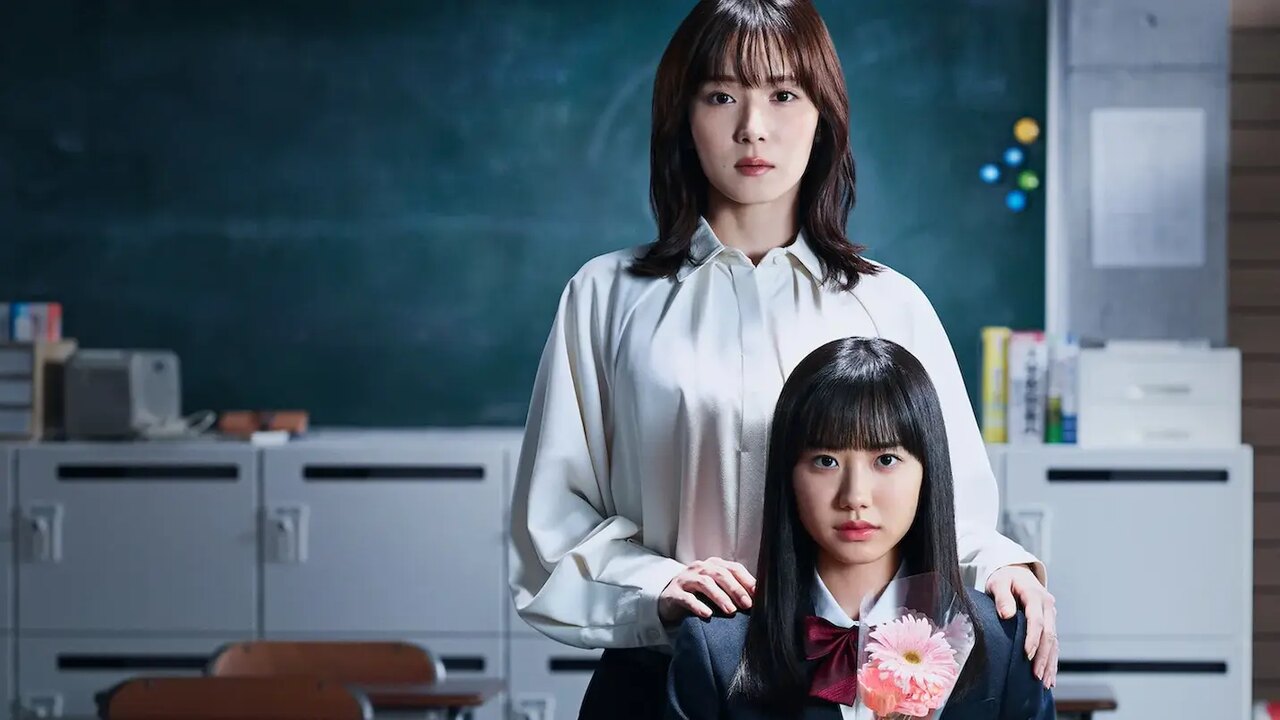
Mana Ashida plays Minami Minamida, an autistic young woman who graduates at the top of her law class at the University of Tokyo and passes the bar examination with the highest score. Her academic achievements should make her an obvious candidate for a legal career. Instead, employers' prejudices about autism leave her struggling to find work. She eventually joins the prestigious Hirokawa-Howard law firm, where her abilities attract attention but her communication difficulties make some colleagues question whether she belongs there. Her first major case involves an elderly couple and an alleged attempted murder, with Minami taking a position that challenges the conventional interpretation of the evidence.
What makes this an appealing premise is the contradiction at its centre. Minami has spent years mastering the formal rules of a legal system, yet she enters a profession where success depends on much more than knowing the law. Lawyers must understand how people communicate, recognise what they may be concealing, and respond to situations that rarely unfold according to plan. Minami's difficulties with social cues and unexpected changes complicate those demands. Her knowledge gives her an advantage, but it doesn't automatically tell her how to use it in a room full of people who don't think as she does.
I particularly like that Minami's intelligence isn't presented as a magical solution to every problem. She has an exceptional memory and an obvious passion for the law, but she is also a young professional who has to learn how to work with other people. The distinction matters. If every case simply required Minami to recall an obscure legal provision while everyone else looked astonished, the premise would become tiresome rather quickly. The more interesting possibility is watching her develop as a lawyer without the story suggesting that she must become someone else to deserve a place in the profession.
The first case provides a useful introduction to her way of thinking. The alleged attempted murder of an elderly husband by his wife gives Minami a situation in which the obvious interpretation of events may not be the correct one. She is willing to question assumptions that others appear ready to accept, and her approach puts her at odds with the expectations surrounding the case.
The challenge is making her legal reasoning convincing. A lawyer's job is not simply to notice something unusual; it is to establish why that observation matters and demonstrate its relevance to the case. The series will need to give its courtroom arguments enough substance to satisfy viewers who enjoy legal dramas for the reasoning as much as the eventual verdict. The premiere establishes the direction, although I want to see the cases become more complex before deciding how well the show handles the procedural side of the story.
The workplace dynamics are promising, too. Minato Funai, played by Fumiya Takahashi, works as a paralegal at the firm and becomes an important colleague in Minami's professional life. His warmth offers a useful contrast to the more sceptical reactions she encounters, while his position allows him to contribute to the practical work surrounding her cases. The supporting cast also includes Takuma Himi, played by Kanta Hosoda, and colleagues whose responses to Minami will shape how she experiences her new workplace.
I am glad the series has room for these relationships. Minami's story would become rather limited if every other character existed solely to underestimate her until she proved them wrong. Some people will be prejudiced, others will be curious, and some may genuinely want to help while misunderstanding what help looks like. Those differences are worth exploring. Good intentions don't always produce good outcomes, and an accommodating colleague can still make assumptions about an autistic person that they would never make about someone else.
The romance hinted at between Minami and Funai is another element I will be watching carefully. It could give Minami's life outside work some additional depth, provided the relationship develops at a pace that feels natural. Romance involving an autistic protagonist can become frustrating when the story treats affection as proof that the character has finally been accepted by society. Minami deserves a life that includes relationships, professional ambitions, and ordinary frustrations without every development being turned into a lesson about autism.
The series also has a responsibility in how it portrays autism. Minami's extraordinary memory and academic abilities are central to her character, but they should not become shorthand for autistic people generally. Autistic individuals have widely varying strengths, support needs, and experiences. A television drama cannot represent every one of those experiences, nor should it have to. It should, however, avoid suggesting that exceptional intellectual ability is what makes an autistic person worthy of respect. Minami's professional qualifications establish her competence as a lawyer. Her right to be treated with dignity should never depend on how impressive she is in court.
This is where I hope the Japanese adaptation will distinguish itself from its Korean predecessor. The original Extraordinary Attorney Woo became widely loved for its combination of courtroom cases, personal relationships, and a protagonist whose experiences challenged the people around her. The Japanese version inherits that foundation, but it also has the chance to bring its own sensibilities to the workplace, family relationships, and how Minami's colleagues respond to her.
The premiere's greatest weakness is that its emotional beats are sometimes too familiar. We know Minami is capable. We know that some colleagues doubt her. We know she will encounter a problem that allows her to demonstrate why her perspective matters. Those are the basic ingredients of the series, but they need more variation if the formula is going to sustain a full season. I want cases in which Minami makes mistakes, situations in which her first interpretation is wrong, and moments when she has to reconsider her approach rather than simply persuade everyone else to reconsider theirs.
That last point is especially important. A story about acceptance becomes more meaningful when the protagonist is allowed to be complicated. Minami can be brilliant and still have things to learn. She can be misunderstood without being right about every disagreement. Her colleagues can make mistakes without being irredeemable villains. The series will be much stronger if it allows those possibilities to coexist.
Still, I found the first episode engaging. Ashida gives Minami a clear personality, the initial legal case establishes the show's central appeal, and the workplace offers enough tension to support future episodes. I also appreciate that the story takes Minami's professional ambitions seriously. She wants to be a lawyer, and the drama treats that ambition as a legitimate goal rather than a device for teaching everyone else a lesson.
I can't yet say whether Extraordinary Attorney Minami will match the emotional impact of the original or find a voice that belongs entirely to it. One episode is too little evidence, particularly for a series built around recurring cases and relationships that need time to develop. But the premiere has made me curious about what comes next, and that is a reasonable place for a first episode to leave me.
Final Score- [7.5/10]
Reviewed by - Anjali Sharma
Follow @AnjaliS54769166 on Twitter
Publisher at Midgard Times




Hi Everyone, after a due consideration, we have decided that we will be open for donations to help us in managing our website. We will be greatful for any kind of amount we receive. Thanks!
— Midgard Times 🎬 (@Moviesr_net) January 4, 2026
PayPal- [email protected] pic.twitter.com/DlNNz5Npm5
Get all latest content delivered to your email a few times a month.
Bringing Pop Culture News from Every Realm, Get All the Latest Movie, TV News, Reviews & Trailers
Got Any questions? Drop an email to [email protected]



 © Copyrights MOVIESR.NET All rights reserved