


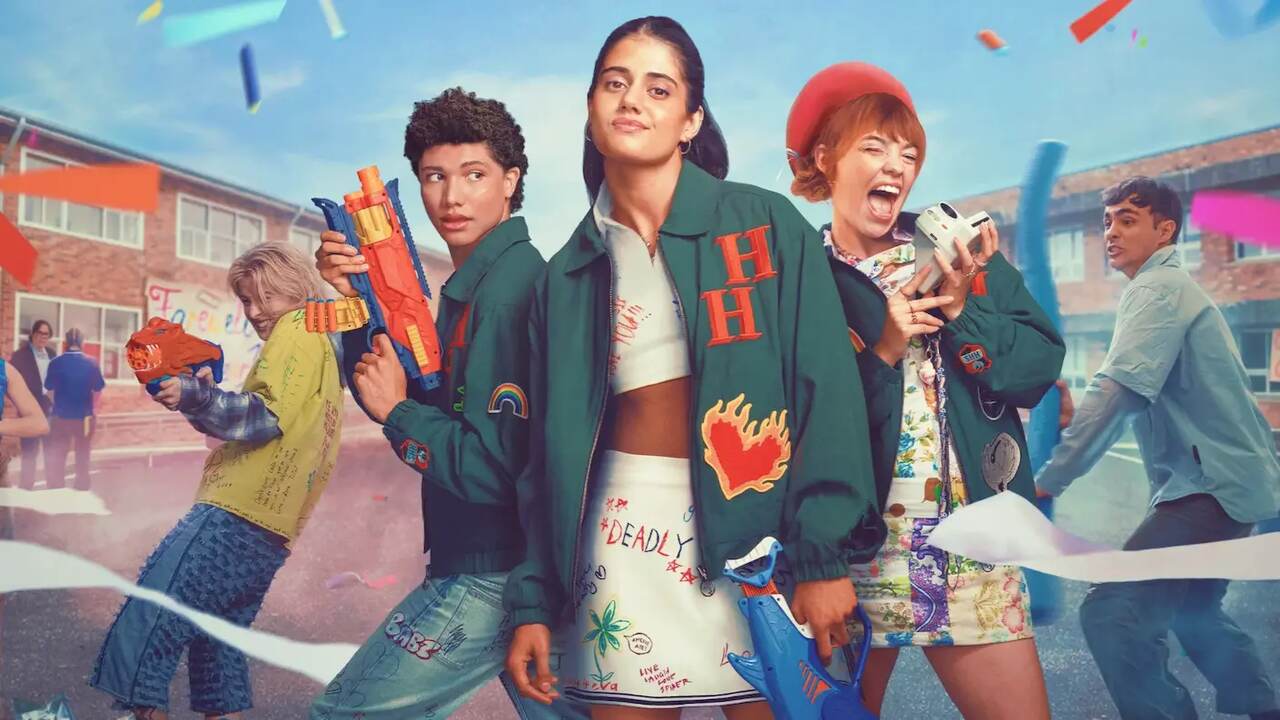
I went into Season 3 of Heartbreak High expecting chaos, closure, and at least one emotionally devastating moment—and it delivered on all three, though not always with the same consistency. As a final chapter, it feels deeply invested in its characters and their emotional trajectories, but it also occasionally stumbles under the weight of trying to tie everything together within a limited runtime. Still, I found myself genuinely engaged, often impressed, and ultimately satisfied by how it says goodbye.
The core premise this time is tight and effective: a revenge prank goes wrong early on, setting off a chain reaction that drives the narrative across the season. This isn’t just a plot device; it becomes a moral pressure cooker. The characters are forced into decisions that test loyalty, honesty, and self-preservation. What I appreciated most is that the show doesn’t treat the cover-up as a simple “teen mistake.” It explores consequences in a grounded way, letting guilt and paranoia seep into relationships. The writing understands that at this age, small decisions can feel life-defining, and it leans into that without exaggerating stakes unnecessarily.
Amerie remains the emotional anchor, and her arc this season is arguably the most layered the show has attempted. She’s juggling unresolved feelings for Malakai, a new romantic possibility, and the fallout of the prank. What stands out is how the show allows her to be inconsistent without punishing her for it. She makes questionable choices, avoids difficult conversations, and sometimes prioritizes the wrong things—but it all tracks psychologically. Her internal conflict feels earned, and the performance captures that push-and-pull between impulsiveness and growth.
The supporting cast continues to be one of the show’s biggest strengths. Darren, Quinni, Harper, and the rest are not reduced to side plots; they each get meaningful progression. Quinni’s storyline, in particular, remains one of the most thoughtfully handled arcs in the series. Her perspective is never treated as a narrative accessory—it actively shapes how we understand the group dynamic. Darren’s emotional journey also stands out, especially in how the show explores vulnerability without turning it into a dramatic spectacle.
What I found especially compelling is how relationships evolve rather than simply resolve. Friendships fracture and reform in ways that feel organic. The tension between Amerie and Harper, for example, doesn’t rely on exaggerated drama; it’s rooted in accumulated history and differing priorities. Similarly, the romantic arcs resist neat conclusions. There’s a willingness to let things remain uncertain, which feels appropriate for a story set at the edge of adulthood.
Stylistically, the show is as confident as ever. The visual language remains vibrant without becoming distracting. The use of color, costume, and setting continues to reflect emotional states and character identities in subtle ways. There’s a kinetic energy to how scenes are staged—especially group interactions—that makes even dialogue-heavy moments feel dynamic. The soundtrack is also well-curated, enhancing the mood without overwhelming it.
That said, the pacing is where the season occasionally falters. With only a handful of episodes, the narrative sometimes feels compressed. Certain plot developments—especially those tied to the central prank—move a bit too quickly, reducing their impact. There are moments where I wanted the show to sit longer with consequences or allow characters more time to process events. Instead, it occasionally rushes toward the next beat, as if aware of its limited runtime.
This compression also affects some secondary arcs. A few characters who had a strong presence in earlier seasons feel slightly sidelined here. Their storylines aren’t abandoned, but they lack the depth and attention they previously received. It’s not enough to break the season, but it does create an imbalance in how the ensemble is utilized.
Another minor issue is tonal consistency. While the show generally balances humor and drama well, there are moments where the shifts feel abrupt. A particularly heavy scene might be followed by a lighter, almost comedic beat that undercuts the emotional weight. This has always been part of the show’s identity, but in a final season where stakes are higher, the contrast can feel more pronounced.
Despite these flaws, what the season gets right is far more significant. It understands its characters deeply and trusts them to carry the story. It doesn’t rely on shock value or forced twists to maintain engagement. Instead, it builds tension through interpersonal dynamics and emotional stakes. That approach pays off, especially in the final stretch, where the narrative converges in a way that feels both inevitable and satisfying.
The ending, in particular, is handled with restraint. It doesn’t try to provide definitive answers for every character, which I appreciated. Graduation is treated less as a conclusion and more as a transition. The show acknowledges that these characters are still figuring things out, and it leaves them in a place that feels honest rather than artificially complete. Looking at the season as a whole, I’d describe it as slightly uneven but ultimately rewarding. It doesn’t reach the same level of freshness that made the first season stand out, and it occasionally struggles with pacing and balance. However, it compensates with strong performances, thoughtful writing, and a clear understanding of what makes these characters compelling.
What stayed with me after finishing it wasn’t the central plot or any single dramatic moment—it was the accumulation of small, character-driven scenes. Conversations that felt real, choices that felt consequential, and relationships that evolved in believable ways. That’s where the show continues to excel. As a final chapter, Season 3 doesn’t aim for perfection. Instead, it focuses on closure that feels earned, even if it’s a bit messy along the way. And honestly, that feels right for a series like this.
Final Score - [7/10]
Reviewed by - Anjali Sharma
Follow @AnjaliS54769166 on Twitter
Publisher at Midgard Times



Hi Everyone, after a due consideration, we have decided that we will be open for donations to help us in managing our website. We will be greatful for any kind of amount we receive. Thanks!
— Midgard Times 🎬 (@Moviesr_net) January 4, 2026
PayPal- [email protected] pic.twitter.com/DlNNz5Npm5
Get all latest content delivered to your email a few times a month.
Bringing Pop Culture News from Every Realm, Get All the Latest Movie, TV News, Reviews & Trailers
Got Any questions? Drop an email to [email protected]



 © Copyrights MOVIESR.NET All rights reserved