


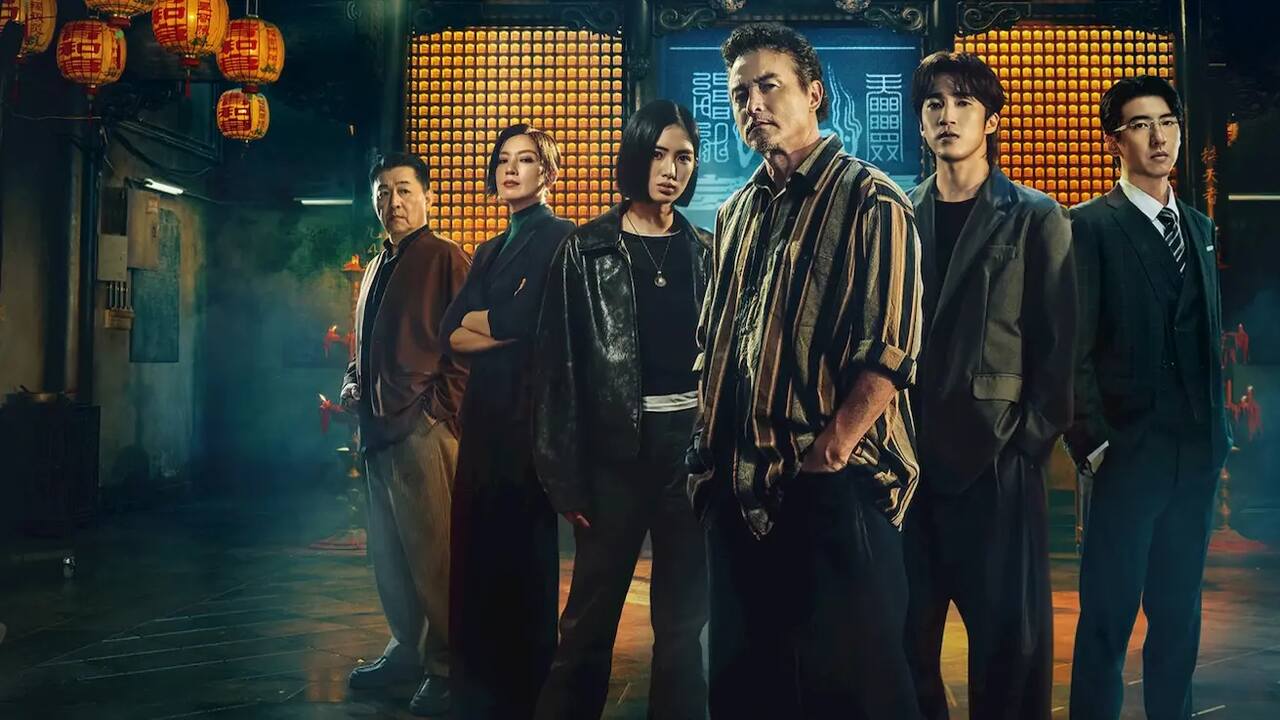
The Fixers has one of those premises that sounds ridiculous when you explain it, but becomes even more entertaining once you watch it. A secret organisation of fixers operates out of a traditional temple. They take jobs from criminals, politicians, and business elites. Their members clean up problems that inconveniently exist on both sides of the law. And their newest recruit is a broke, middle-aged former gangster who really, really would prefer not to be doing any of this. Oh, and his new partner is the arrogant son of a political dynasty. Naturally, this goes well. It doesn't. That's why I enjoyed it.
The biggest strength of The Fixers is that it has an actual personality. Netflix has produced plenty of action-crime series where you could replace the country, cast, and criminal organisation and end up with essentially the same show. This isn't one of them. Rooting the Fixers in Taiwanese temple culture gives the series a distinctive world almost immediately. The Ching He Temple isn't just a cool location; it functions as the organisation's headquarters, its source of legitimacy and almost its own character. I loved that idea. The series takes something deeply familiar—people going to a temple seeking help—and gives it a wonderfully criminal extension.
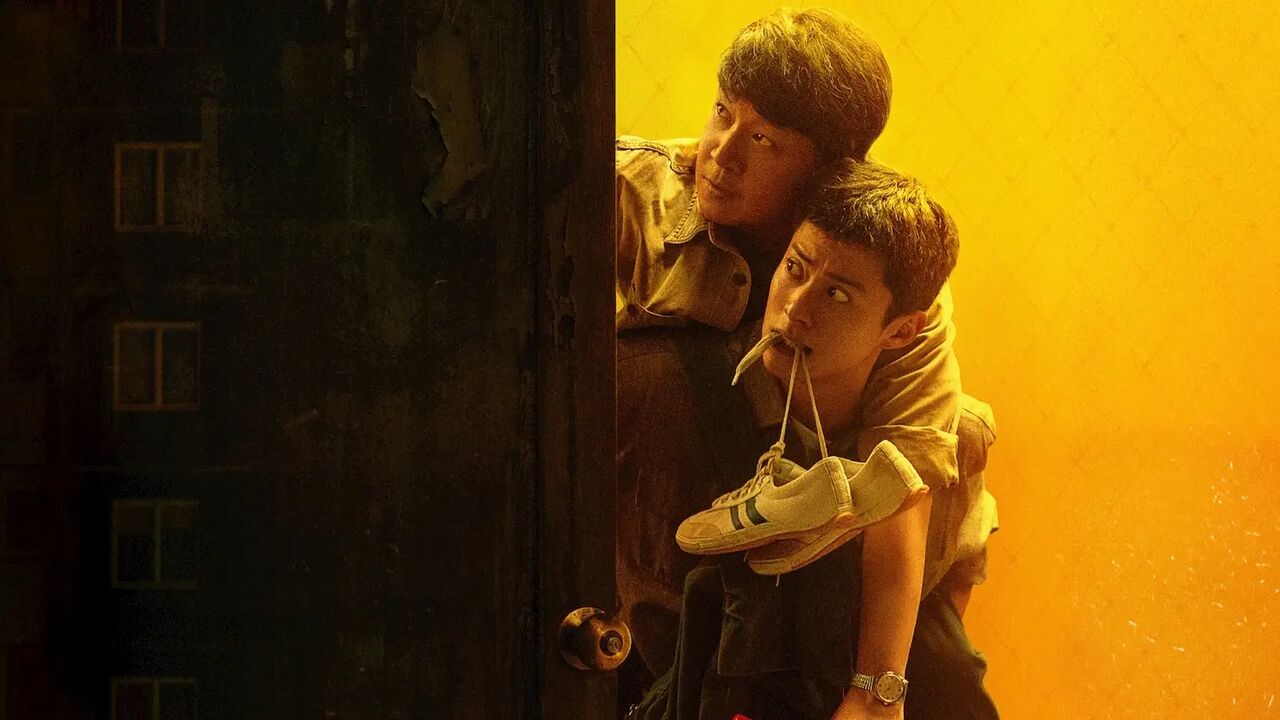
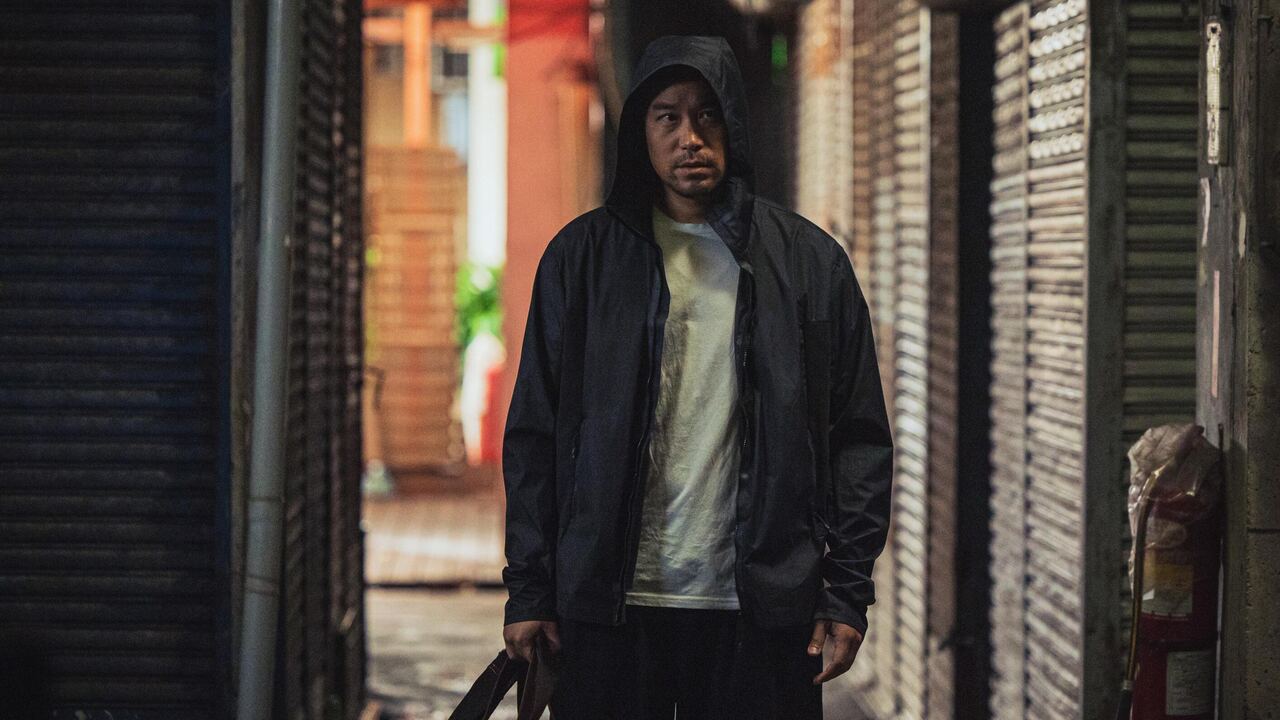
Christopher Lee is excellent as Felix Chiang, and he gives the series its emotional centre. Felix is not the glamorous criminal mastermind we've seen a thousand times. He's broke, tired, indebted, and stuck in the kind of midlife crisis that makes existential dread look like a luxury. He has also spent years trying to leave his gangster past behind. Naturally, the universe responds by giving him another gangster job. Lee plays Felix with an appealing lack of vanity. He isn't trying to make the character look cool every second. Felix gets beaten up. He gets humiliated. He makes mistakes. He occasionally looks like he'd rather be anywhere else. That makes the action considerably more enjoyable. He isn't an invincible action hero. He's a guy who knows how to survive. And then there's Shou Lou as Louis Hsueh.
If Felix is exhausted by the criminal world, Louis initially seems delighted by the fact that he has been born directly into one of its more privileged corners. He's the arrogant political heir, and the character could have become unbearable very quickly. Instead, Shou Lou leans into the entitlement while giving Louis enough intelligence and vulnerability to keep him interesting. The partnership between Felix and Louis is therefore exactly what you want from this kind of series. In other words, Netflix has once again discovered that putting two people who cannot stand each other in a car together is a television genre unto itself. And I'm not complaining.
The chemistry between Lee and Shou Lou is the reason the show can survive some of its more ridiculous plotting. Felix's cynicism bouncing off Louis's arrogance gives the series a comic rhythm that keeps the darker crime material from becoming oppressively grim. Regina Lei is equally important as Mina Shen, and I wish the show had given her even more to do. Mina is connected to the rival Yeh Yueh Tong organisation, and she operates with considerably more mystery than either of the male leads. She is not simply the obligatory female assassin who appears to look intimidating and then waits for the plot to remember her. Lei gives Mina enough ambiguity that you're constantly wondering what she actually wants. That uncertainty becomes increasingly useful as the rivalry between the two organisations expands.
The series doesn't always explore that question as deeply as it could, but it keeps returning to the idea that “justice” and “law” aren't necessarily the same thing. That becomes particularly interesting when the political world begins intersecting more heavily with the underworld. Louis's family isn't simply a convenient source of wealth and connections. His position as a political heir makes him part of the very establishment the Fixers supposedly operate outside of. Felix, meanwhile, comes from the opposite direction. One man has power because of where he was born. The other has spent his life paying for what he did before he was ready to grow up. Putting them together is a very efficient way of exploring the series' central idea about the blurry boundary between respectable society and organised crime.
The title's “fixers” are not necessarily the dirtiest people in the room. Sometimes they're just the people cleaning up after everyone else. And that is where the show gets its best satire. Politicians need them. Criminals need them. Business people need them. Everybody wants their hands clean. Nobody wants to be responsible for what happens underneath the table. So naturally, they hire people whose entire job is to crawl underneath it.
The action is another major reason to watch. The Fixers is not trying to be a grim prestige crime drama in which every gunshot requires a ten-minute conversation about trauma. When the violence arrives, the series generally lets itself have fun. There are chases, fights, shootouts, and some wonderfully inventive uses of the environment. The first episode's market sequence is a good example. Felix is introduced through a frantic chase after being caught cheating at an underground casino, and the scene immediately establishes the show's willingness to combine physical comedy with genuine action. That combination is important because this show is funny. Not occasionally amusing for a crime series. It actually wants to be a comedy. And I think that saves it.
There are moments when the plot gets increasingly complicated, and I found myself thinking, I have absolutely no idea which faction is betraying which faction anymore. Then Felix would say something completely deadpan, and I'd remember why I was still watching. The humour is particularly effective when it comes from character rather than punchlines. Felix's exhaustion is funny. Louis's entitlement is funny. The temple setting is inherently funny because everyone is treating this completely insane criminal organisation as though it is a perfectly normal workplace. I especially enjoyed the contrast between the sacred surroundings and the work happening inside them.
The biggest problem is that the larger conspiracy becomes increasingly complicated as the season progresses. The initial premise is wonderfully clean: Felix gets recruited, gets paired with Louis, and starts taking care of difficult jobs. Once the rival organisation, political families, and larger power struggle begin taking over, the storytelling becomes more conventional. The intimate odd-couple dynamic is often more interesting than the grand conspiracy. I cared more about whether Felix and Louis were going to learn how to work together than I did about which criminal faction controlled which part of the underground power structure. That isn't necessarily because the larger story is bad. It is because the smaller one is better.
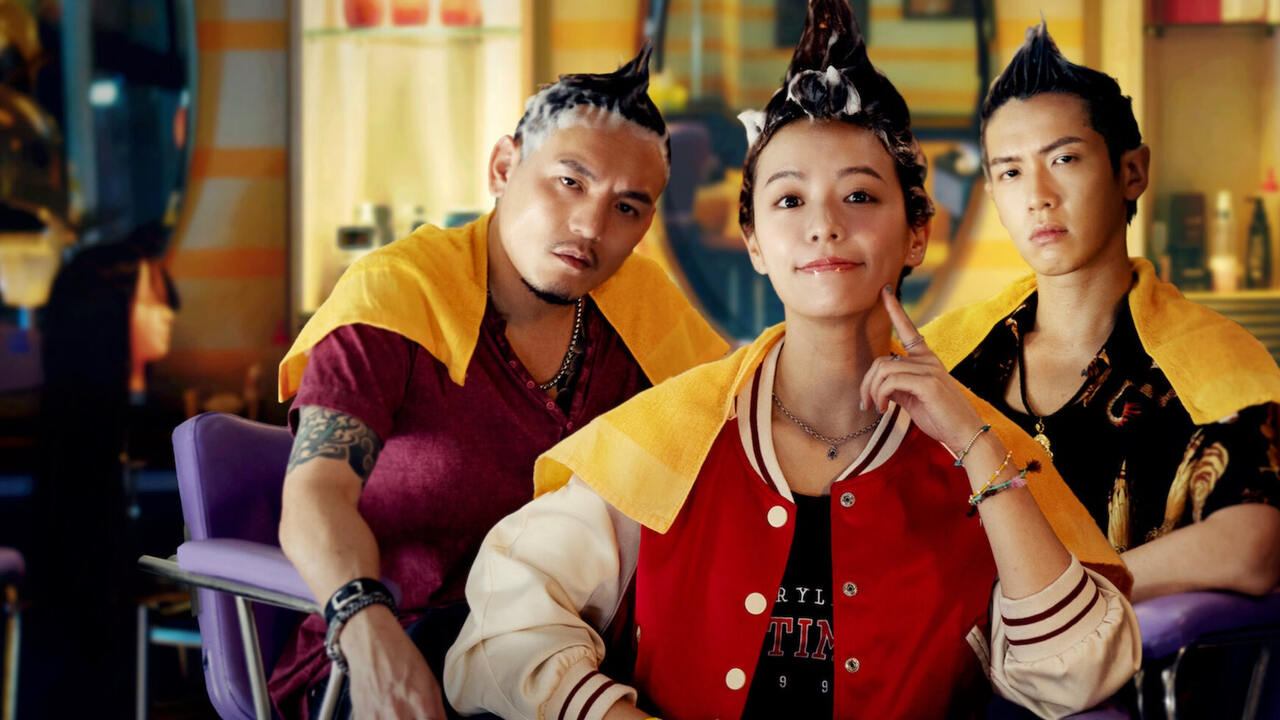
The series also occasionally pushes its tonal shifts too far. One moment you're watching a genuinely threatening crime sequence; the next, somebody is behaving as if they've wandered into a workplace sitcom. The supporting cast helps enormously. Fu Meng-po, Tou Chung-hua and Chang Yung-cheng add weight to the organisation, while Kelly Lin's presence as Madam Fan gives the rival faction a more formidable centre. Netflix's official material identifies Madam Fan as the leader of Yeh Yueh Tong, with Mina operating within that rival structure. The ensemble also makes the temple itself feel like a functioning organisation rather than simply a stylish set.
I also appreciated that Felix's personal story isn't simply an old gangster getting one last chance to be cool. His reluctance to return to violence matters. He has history with this world, and the series gradually reveals why leaving it behind wasn't as simple as he hoped. That gives the action an emotional consequence. When Felix fights, you're not just watching someone demonstrate that Christopher Lee can handle an action sequence. You're watching a man return to something he thought he had escaped. That's much better.
By the final stretch, The Fixers has turned the odd-couple partnership into the real heart of the show. The larger conflict between Ching He and Yeh Yueh Tong provides the action and stakes, but Felix and Louis provide the reason to care about the outcome. The finale ultimately gives that relationship a satisfying payoff without pretending they've suddenly become the same person. The Fixers is not reinventing the crime-action genre. Its conspiracy becomes more familiar as the season progresses, the mythology occasionally gets unnecessarily dense, and its tonal shifts won't work for everyone.
The Taiwanese temple setting gives it an identity. Christopher Lee and Shou Lou have excellent odd-couple chemistry. Regina Lei brings mystery and menace. The action is energetic without taking itself too seriously, and the comedy keeps the whole thing from collapsing under the weight of its own criminal politics. Most importantly, it understands that the best part of a crime series doesn't necessarily have to be the crime.
Final Score- [8/10]
Reviewed by - Anjali Sharma
Follow @AnjaliS54769166 on Twitter
Publisher at Midgard Times


Hi Everyone, after a due consideration, we have decided that we will be open for donations to help us in managing our website. We will be greatful for any kind of amount we receive. Thanks!
— Midgard Times 🎬 (@Moviesr_net) January 4, 2026
PayPal- [email protected] pic.twitter.com/DlNNz5Npm5
Get all latest content delivered to your email a few times a month.
Bringing Pop Culture News from Every Realm, Get All the Latest Movie, TV News, Reviews & Trailers
Got Any questions? Drop an email to [email protected]


 © Copyrights MOVIESR.NET All rights reserved