


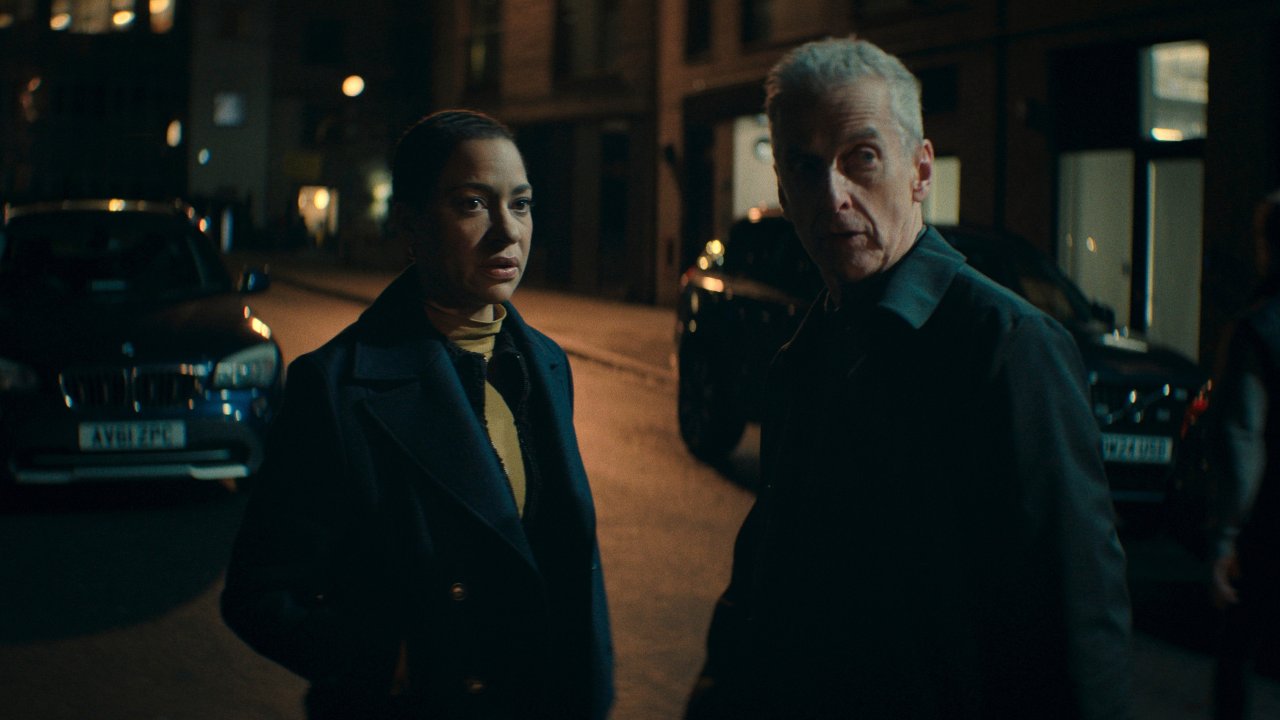
There’s a particular kind of restraint that Criminal Record thrives on, and “Firestarters” is a strong example of how the series prefers slow pressure over spectacle. I found myself pulled into the episode not because it throws major twists at you, but because it carefully tightens the net around its characters. It’s less about sudden shocks and more about watching people realize, step by step, that they’re already in deeper than they thought.
The episode picks up with the emotional and procedural fallout from the stabbing at the protest, and what I appreciated immediately is how seriously the show treats that incident. It doesn’t rush past it as just a plot trigger. Lenker carries the weight of that moment into every scene, especially in her interactions with the victim’s family and her growing frustration with the lack of clear leads. Cush Jumbo plays this with a grounded intensity that never feels forced. There’s a quiet focus in her performance that makes even the still moments feel active.
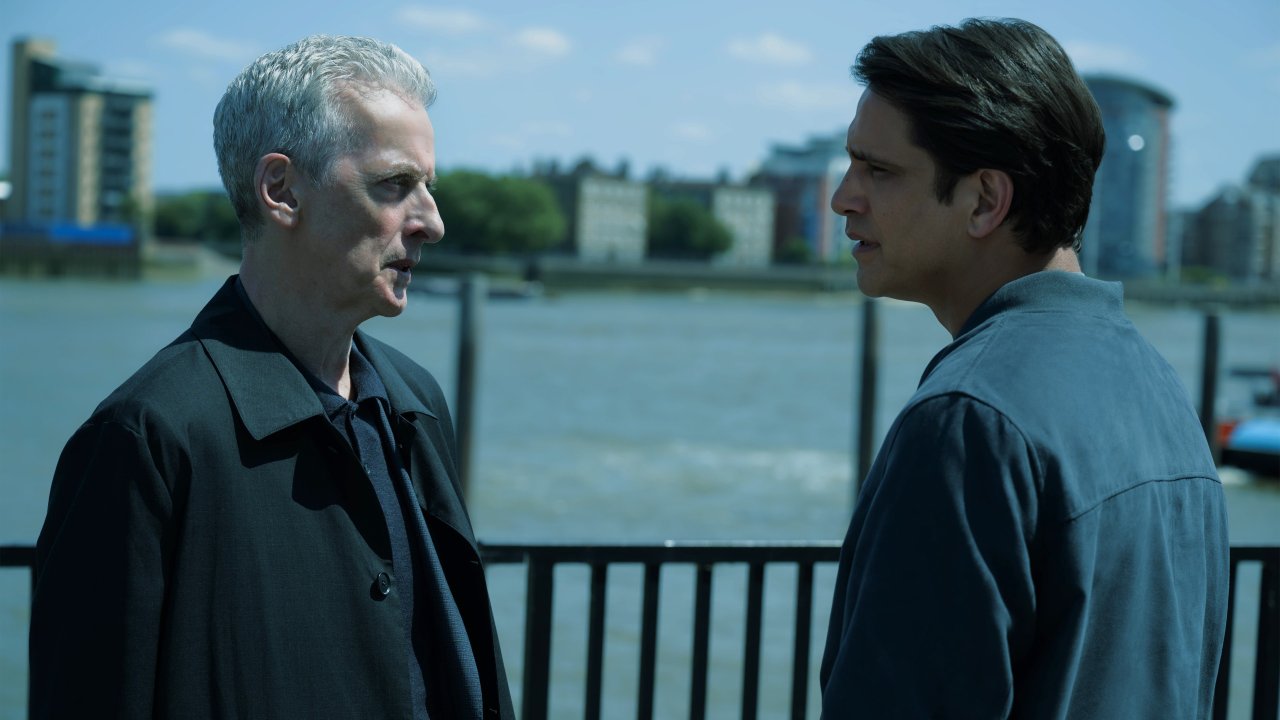
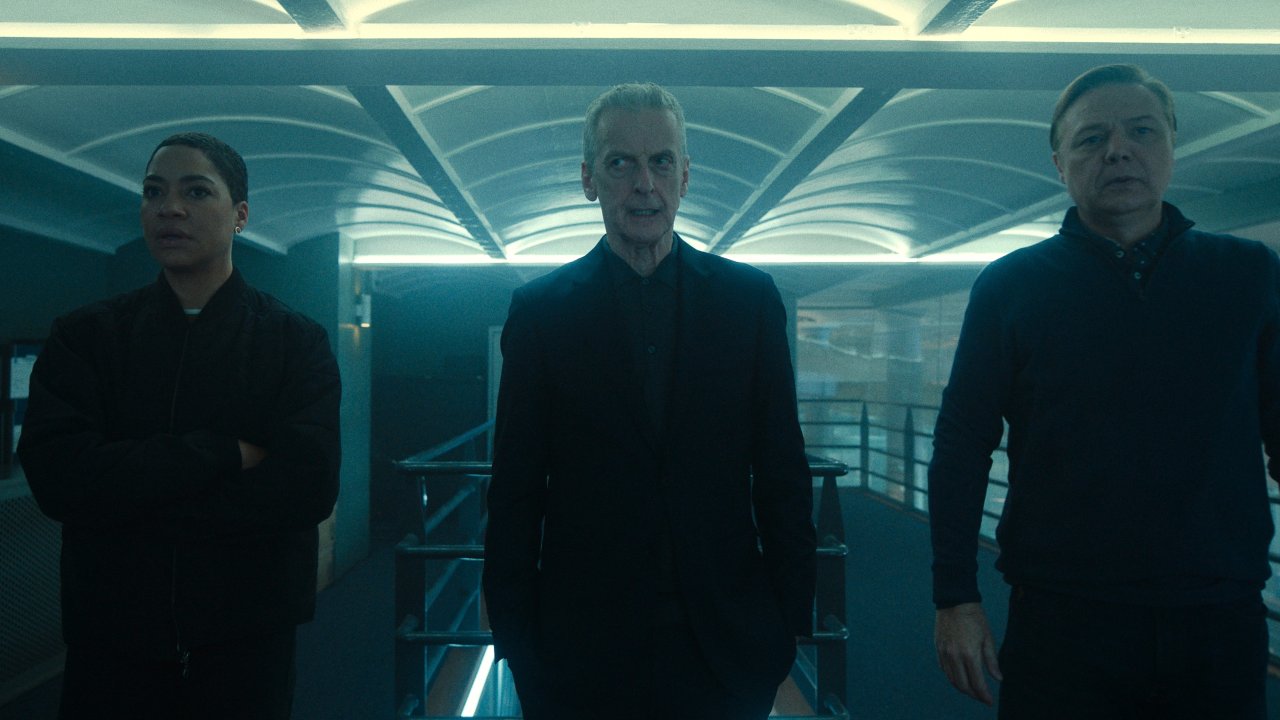
At the same time, Hegarty’s side of the story continues to expand in a more covert direction. Now embedded in counterintelligence, he’s tracking Cosmo Thompson and the wider network that may be forming around him. What makes this thread interesting is how it slowly intersects with Lenker’s investigation through Billy Fielding. The idea that a convicted murderer might now be positioned as a useful asset—or something close to it—adds a moral tension that the episode handles with care. Peter Capaldi leans into that ambiguity very effectively. He never signals clearly whether Hegarty is in control of the situation or just pretending to be.
One of the episode’s strongest elements is how it uses information. Rather than delivering clear answers, it presents fragments—blurred images, partial sightings, institutional roadblocks. Lenker’s fixation on the photo of the masked man she believes to be Billy Fielding becomes a central anchor. There’s a subtle but effective rhythm to how the show returns to that image, each time adding a bit more context but never enough to resolve it fully. It creates a steady sense of unease without needing dramatic set pieces.
The writing does a good job of balancing the procedural and the personal. Lenker’s determination is contrasted with her increasing isolation, both professionally and at home. Hegarty, meanwhile, operates in a space where the rules are less clear, and that tension is reflected in his interactions—especially when he proposes that he and Lenker work together. Their dynamic remains one of the most compelling aspects of the series. It’s not built on overt conflict in this episode, but on a mutual awareness that they approach the same problem in fundamentally different ways.
Visually, “Firestarters” sticks to the show’s established tone. The cinematography favors muted palettes and controlled framing, which reinforces the grounded, almost documentary-like feel. There’s nothing flashy here, but it’s precise. Scenes are composed to emphasize distance—between characters, between what’s known and unknown. It’s a style that supports the narrative rather than drawing attention to itself.
That said, the episode isn’t without its limitations. The pacing, while intentional, can feel a bit too measured at times. There are stretches where the investigation seems to circle the same points without adding much new information. I found myself wanting a slightly stronger sense of progression, especially in the middle section, where Lenker’s attempts to track Fielding hit repeated dead ends. The frustration is clearly part of the design, but it occasionally risks stalling the momentum.
The broader conspiracy angle, involving Thompson and the potential extremist network, is intriguing but still somewhat underdeveloped here. The episode hints at larger stakes, yet keeps them just out of reach. While that restraint can be effective, it also means that the narrative doesn’t fully capitalize on the tension it’s building. A bit more clarity—or even a sharper hint of what’s coming—would have strengthened the episode’s impact. Another minor issue is that some supporting characters feel underutilized. The institutional response to the protest incident, including the political and public pressure, is present but not explored in depth. It’s there as background texture rather than a fully integrated part of the story, which feels like a missed opportunity given how central that event is to the narrative.
Even with these drawbacks, the episode succeeds because of its performances and its commitment to tone. Jumbo and Capaldi continue to anchor the series with a level of control that keeps everything believable. Their scenes together, in particular, carry a quiet tension that suggests much more beneath the surface than what’s being said outright. What stayed with me most after watching “Firestarters” is how carefully it builds its world. It doesn’t try to resolve anything too quickly, and while that can be frustrating in places, it also makes the unfolding story feel more deliberate. The connections between the protest, Fielding, and the larger network are still forming, but the groundwork is solid.
Overall, this episode feels like a bridge—one that doesn’t deliver major payoffs, but sets up the conditions for them. It relies heavily on atmosphere, character work, and a slow accumulation of detail. For me, that approach largely works, even if it occasionally tests patience. It’s a confident piece of television that knows exactly what kind of story it wants to tell, even if it takes its time getting there.
Final Score- [7.5/10]

Hi Everyone, after a due consideration, we have decided that we will be open for donations to help us in managing our website. We will be greatful for any kind of amount we receive. Thanks!
— Midgard Times 🎬 (@Moviesr_net) January 4, 2026
PayPal- [email protected] pic.twitter.com/DlNNz5Npm5
Get all latest content delivered to your email a few times a month.
Bringing Pop Culture News from Every Realm, Get All the Latest Movie, TV News, Reviews & Trailers
Got Any questions? Drop an email to [email protected]



 © Copyrights MOVIESR.NET All rights reserved