



By episode three of Criminal Record’s second season, I’ve accepted something about this show that I probably should have understood back in season one. “Snakes and Ladders” takes that idea and pushes it further than the first two episodes, delivering an hour of television that is tense, intelligent, occasionally frustrating, and almost annoyingly good at making a cup of tea feel like evidence. I mean that sincerely. There’s a scene in this episode where someone pours tea in complete silence, and I was somehow more stressed than I’ve been during entire car chases in other crime shows. That’s Criminal Record. That’s also what makes it so compelling.
Episode three picks up with June Lenker, still navigating the political fallout of her increasingly public resistance to the old systems that shaped the department. Cush Jumbo continues to make June one of the most compelling detectives on television, not because she’s written as the smartest person in every room, but because she never feels invincible. June walks into conversations like someone who knows she’s right, knows she has evidence, knows she has instincts… and also knows none of that guarantees safety. That awareness gives the character weight.
In “Snakes and Ladders,” June is handed what initially looks like a new case, one involving a suspicious death connected to a private rehabilitation facility, missing records, and witnesses who suddenly seem very interested in forgetting details. Naturally, June immediately starts asking the kind of questions that make senior officers uncomfortable, politicians unavailable, and HR departments quietly update their paperwork.
I loved how the episode handles the investigation itself. There’s no flashy forensic montage. Nobody dramatically points at a digital screen and says, “Zoom in.” Nobody hacks a national database in six seconds while chewing gum. Instead, this show continues doing what it does best: paperwork, interviews, old files, body language, institutional memory, and conversations where the truth lives somewhere between what’s said and what’s deliberately ignored. That’s catnip for me. And Cush Jumbo is phenomenal throughout. There’s a quiet confidence in her performance that continues to evolve. June no longer feels like someone trying to prove herself. She feels like someone who’s already paid the price for telling the truth and has decided she might as well keep going. That’s dangerous. That’s also incredibly watchable.
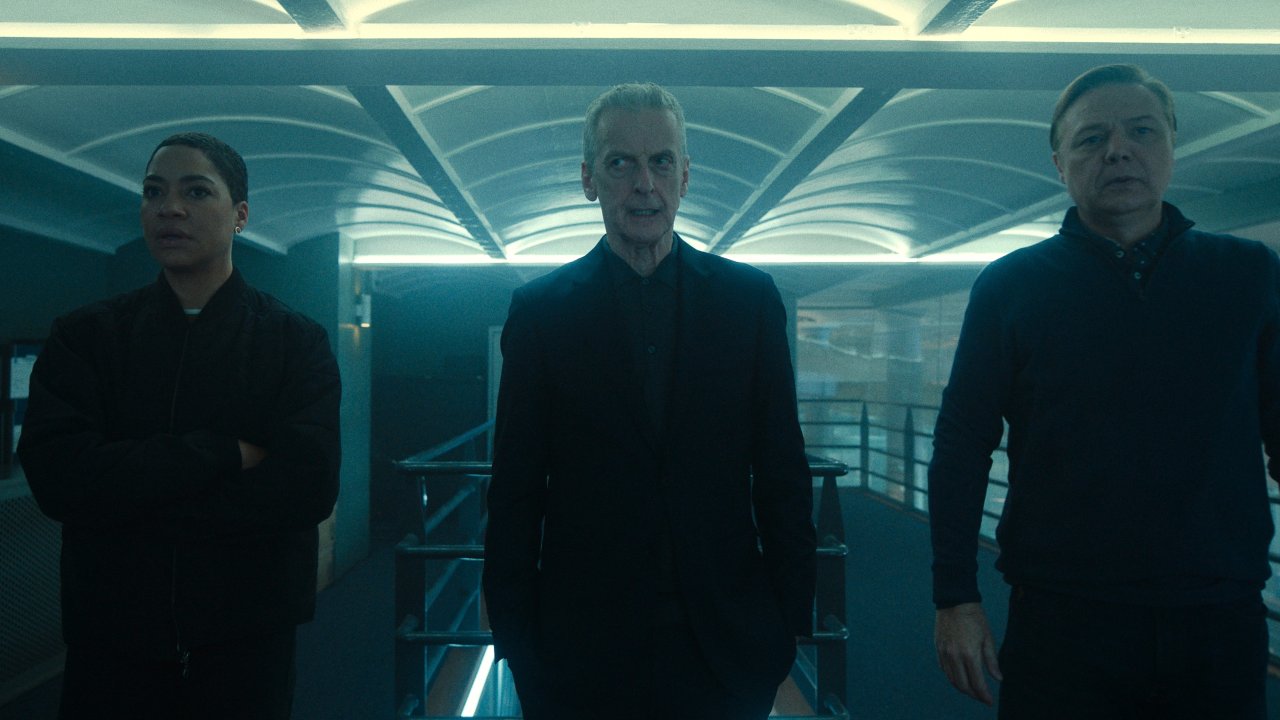
Opposite her, Peter Capaldi’s Daniel Hegarty remains one of the most fascinatingly exhausting characters on television. I say that with deep respect. Hegarty doesn’t need screen time to dominate an episode. Sometimes he just walks into a room, says eight words, adjusts his coat, and suddenly everyone else forgets how oxygen works. Capaldi plays him with terrifying restraint. There’s no cartoon villain energy here. No speeches. No dramatic threats. If anything, Hegarty becomes more unsettling the calmer he gets. And in this episode? He’s very calm. That should concern everyone.
What I appreciated most about “Snakes and Ladders” is how directly the title reflects what’s happening without ever becoming obvious. Every character seems to gain something… then immediately lose something else. One step forward, two professional disasters, one awkward meeting, and suddenly your pension might be in danger. It’s bleak. It’s smart. And somehow, it’s occasionally funny. Not “laugh-out-loud sitcom” funny. More “I can’t believe that line was delivered with that level of passive aggression” funny.
British crime television continues to understand that emotional damage is funnier when served with politeness. The supporting cast gets stronger material here, too, especially Aysha Kala as Sonya Singh, who’s slowly becoming one of the season’s most interesting wildcards. Sonya spends most of the episode caught between ambition, morality, and institutional pressure, and Kala plays that tension beautifully. You can see every internal calculation happening in real time. Does she tell the truth? Protect herself? Protect somebody else? Pretend she didn’t hear anything? Honestly… all of the above seem plausible.
Visually, this episode continues the show’s understated but highly effective style. London looks cold, lived-in, and quietly hostile. Police stations feel fluorescent and emotionally draining. Offices feel temporary, even when people have worked there for decades. Director Marc Evans keeps things intimate, often framing conversations in ways that make people look boxed in, even when they technically have plenty of space. That’s subtle visual storytelling. And it works. There’s one interrogation scene in particular—again, no spoilers—that’s shot so tightly I found myself sitting straighter, like posture might somehow improve witness cooperation. Spoiler: it did not.
The writing remains sharp, especially when dealing with institutional politics. This show understands that corruption doesn’t always look dramatic. Sometimes it looks like someone is cc’ing the wrong person. Sometimes it looks like a delayed phone call. Sometimes it looks like a meeting that mysteriously gets moved. And somehow, that’s terrifying. That said… this episode isn’t quite as airtight as the show clearly wants it to be. As much as I admired the thematic ambition, “Snakes and Ladders” occasionally becomes so committed to mood and procedural realism that momentum starts to slip. There’s a stretch in the middle where the investigation circles similar information without adding enough new emotional or narrative energy. Not boring. Never boring. But definitely slower than necessary.
I also think one supporting character’s sudden shift in loyalty lands a little too cleanly. I understood the motivation intellectually, but emotionally, it felt like the script needed a piece moved into position more than the character naturally arriving there. That’s rare for this show, which usually earns every shift with painful precision. There’s also a small issue with accessibility. Criminal Record is so confident in its layered storytelling—and I respect that—that occasionally it forgets not every viewer has a departmental flowchart open beside them. There were one or two scenes where names, ranks, past incidents, and political implications came flying in so quickly that I briefly considered taking notes, as if I were preparing for an internal affairs exam. I’m not saying that’s a flaw. I’m just saying my notebook now looks suspiciously professional. Still, even when the pacing dips or a subplot feels slightly engineered, the performances carry everything. And the final ten minutes? Excellent. Quiet. Brutal. The kind of television that doesn’t scream for your attention because it knows it already has it.
By the end of “Snakes and Ladders,” June isn’t just investigating a case anymore. She’s navigating a system that seems increasingly determined to punish curiosity. Hegarty isn’t just defending his legacy. He’s actively shaping what truth gets remembered. And every supporting character is starting to realize neutrality may no longer be an option. That’s where Criminal Record becomes more than just another detective drama. It becomes a show about memory, power, paperwork, and the terrifying fact that the most dangerous people in an institution often know exactly which forms need to disappear. Episode three may wobble slightly under the weight of its own complexity, and it occasionally lingers longer than it needs to, but it’s still smart, sharp, beautifully acted television that trusts its audience to pay attention. And after this episode… Trust me. You’ll be paying attention to everyone.
Final Score- [6.5/10]



Hi Everyone, after a due consideration, we have decided that we will be open for donations to help us in managing our website. We will be greatful for any kind of amount we receive. Thanks!
— Midgard Times 🎬 (@Moviesr_net) January 4, 2026
PayPal- [email protected] pic.twitter.com/DlNNz5Npm5
Get all latest content delivered to your email a few times a month.
Bringing Pop Culture News from Every Realm, Get All the Latest Movie, TV News, Reviews & Trailers
Got Any questions? Drop an email to [email protected]



 © Copyrights MOVIESR.NET All rights reserved