


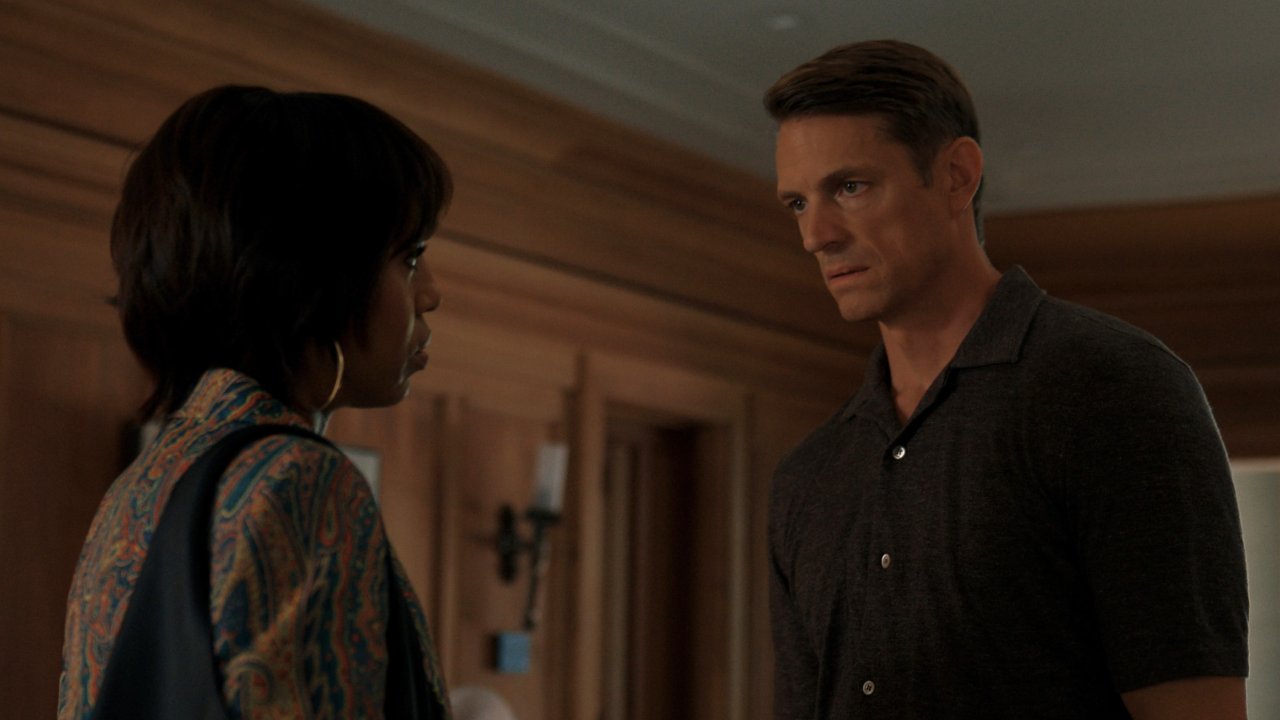
By the time “Monster” settles in, I found myself leaning forward more than I did in the first two episodes, not because the mystery suddenly accelerates, but because the show becomes more deliberate about how it wants me to read its characters. This episode feels like a pivot. It doesn’t radically change the structure, but it sharpens the intent behind it, especially in how it frames Eleanor.
What I appreciated immediately is how the episode leans into subjectivity without overexplaining it. The series has already established that each episode reframes the same emotional terrain through a different lens, and here that device becomes more pointed. Eleanor is no longer just a composed, high-functioning figure navigating fallout; she is someone actively confronting the gap between how she presents herself and what she has done. The writing trusts that tension. It doesn’t rush to clarify every detail, and that restraint works in its favor.
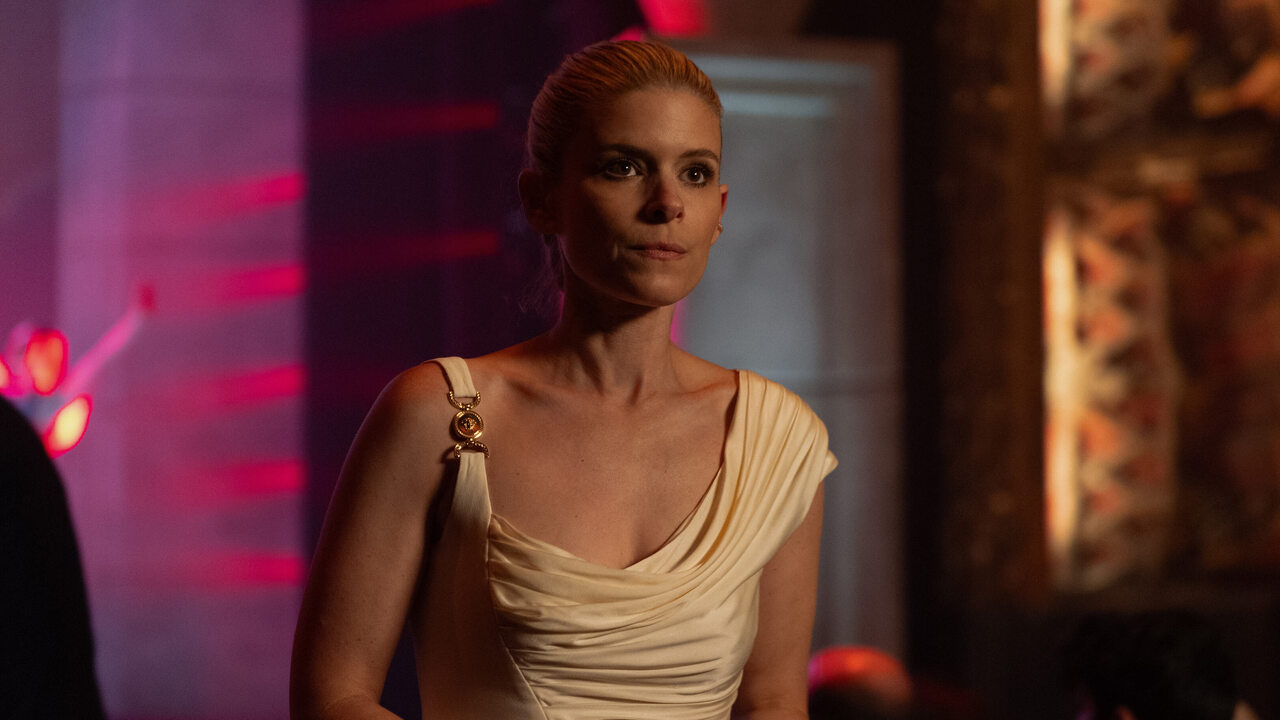
Kerry Washington carries a significant portion of the episode, and her performance is calibrated with precision. She plays Eleanor with a controlled exterior that doesn’t crack so much as subtly shift. Small changes in tone, pacing, and eye movement communicate more than any monologue could. When the episode nudges her toward self-reflection, especially around guilt and accountability—it feels earned because Washington avoids turning those moments into overt emotional displays. Instead, she lets discomfort sit in the silence, which aligns well with the show’s psychological framing.
Thematically, “Monster” is very clear about what it’s interrogating: the idea that moral failure isn’t always dramatic or obvious. The episode pushes the viewer to reconsider earlier assumptions, not by introducing shocking new information, but by recontextualizing what we already know. That’s a sophisticated choice. It suggests that the “monster” in the title is not a single person or act, but a shifting label shaped by perspective, memory, and self-justification. At the same time, I did feel the episode occasionally undercuts its own subtlety by stating its themes too directly. There are moments where the writing edges toward spelling things out rather than letting the audience arrive there independently. When a character explicitly frames themselves in moral terms, it slightly flattens the complexity the episode is otherwise trying to build. It’s not excessive, but it is noticeable, especially in a show that clearly has the tools to be more restrained.
Structurally, the pacing remains measured, which mostly works but occasionally drifts. The episode prioritizes psychological layering over plot progression, and while I appreciate that commitment, it does mean that certain stretches feel a bit static. The central mystery—the crime that disrupted this group—doesn’t move forward in a tangible way here. Instead, the episode deepens our understanding of the characters’ internal states. For viewers expecting narrative momentum, that trade-off might feel uneven. That said, the direction does a strong job of maintaining tension even when the plot isn’t advancing. Scenes are staged with a quiet unease, often allowing interactions to linger just a few seconds longer than expected. The camera frequently holds on faces after dialogue ends, which reinforces the idea that what matters isn’t just what is said, but what is withheld. It’s a simple technique, but it’s used effectively.
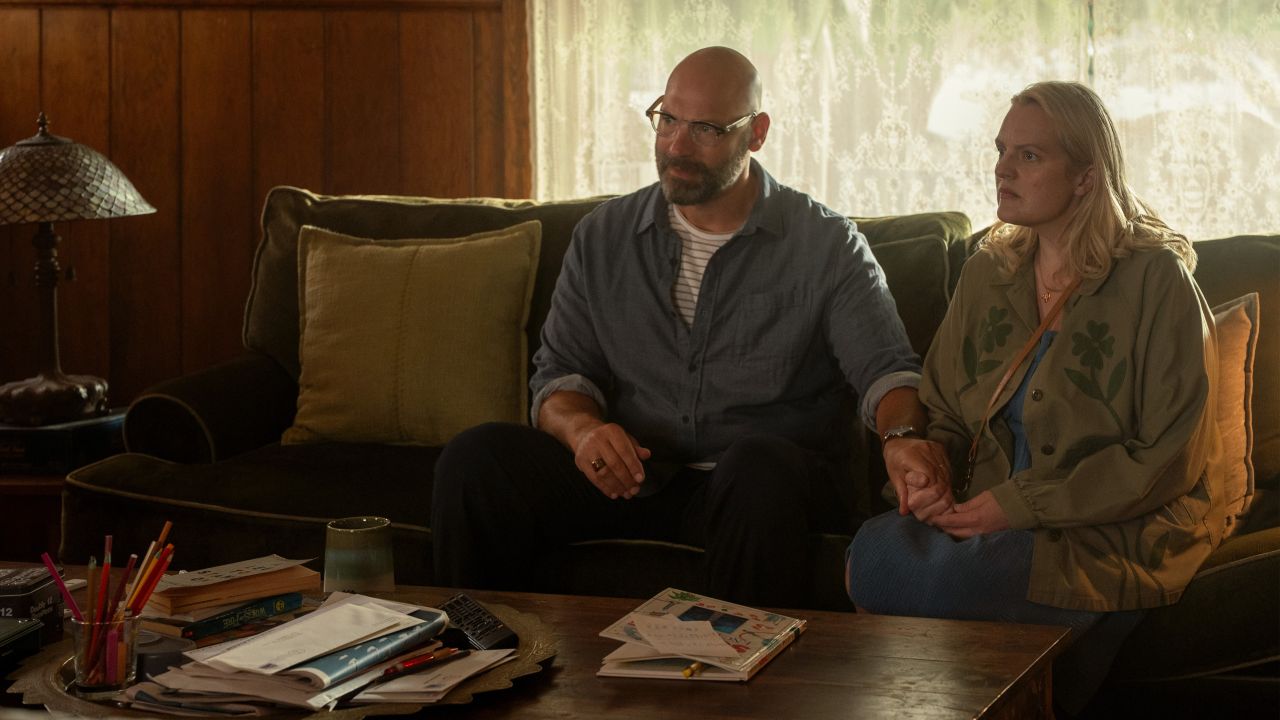
Visually, the episode continues the show’s controlled aesthetic. There’s a consistent emphasis on composed, almost sterile environments that contrast with the emotional messiness underneath. Interiors feel curated, even suffocating at times, which complements the idea that these characters are managing appearances as much as they are dealing with reality. The cinematography isn’t flashy, but it’s intentional, and that consistency helps anchor the narrative.
One of the more interesting aspects of “Monster” is how it complicates empathy. I found myself shifting my alignment with Eleanor multiple times. The episode doesn’t ask me to fully sympathize with her, nor does it push me to reject her outright. Instead, it places me in an uncomfortable middle ground where I can understand her reasoning without necessarily agreeing with it. That’s a difficult balance to strike, and the episode handles it well.
However, I do think the show occasionally leans too heavily on familiar psychological drama beats. Themes like betrayal, hidden resentment, and fractured friendship are compelling, but they’re also well-trodden territory. “Monster” elevates them through performance and structure, but it doesn’t completely escape the sense that I’ve seen variations of this dynamic before. The novelty lies more in execution than in concept.
Another minor limitation is how the supporting characters are used in this episode. While they contribute to Eleanor’s perspective, they don’t always feel fully realized in their own right here. They function more as mirrors or catalysts than as independent agents. This isn’t inherently a flaw—given the episode’s focus—but it does create a slight imbalance in the ensemble.
Even with those reservations, I found “Monster” to be the most cohesive episode so far. It has a clearer sense of purpose, both narratively and thematically. It knows what it wants to examine and commits to that exploration, even if it occasionally over-articulates its ideas. The episode doesn’t aim for shock or spectacle; it’s more interested in discomfort, in the slow recognition that people can rationalize almost anything when it suits them.
What stays with me most is the episode’s refusal to offer a clean moral resolution. It doesn’t identify a singular “monster,” nor does it neatly assign blame. Instead, it suggests that the label itself is unstable, shaped by who is telling the story and what they are willing to admit. That ambiguity feels central to the series, and here it’s handled with more confidence than before.
Overall, I came away from “Monster” more engaged with the show than I was after the premiere. It’s not flawless—there are moments where it overstates its themes or lingers too long without advancing the plot, but it demonstrates a stronger command of tone and character. If the series continues to build on this approach, especially by trusting its audience a bit more, it has the potential to become something genuinely compelling rather than just competent. Right now, it sits in an interesting space: not groundbreaking, but increasingly precise in what it’s trying to do. And in a genre that often relies on twists to maintain interest, something is refreshing about an episode that instead focuses on the quieter, more uncomfortable truths beneath the surface.
Final Score- [8/10]
Hi Everyone, after a due consideration, we have decided that we will be open for donations to help us in managing our website. We will be greatful for any kind of amount we receive. Thanks!
— Midgard Times 🎬 (@Moviesr_net) January 4, 2026
PayPal- [email protected] pic.twitter.com/DlNNz5Npm5
Get all latest content delivered to your email a few times a month.
Bringing Pop Culture News from Every Realm, Get All the Latest Movie, TV News, Reviews & Trailers
Got Any questions? Drop an email to [email protected]



 © Copyrights MOVIESR.NET All rights reserved