



After five seasons, For All Mankind has reached a point very few long-running science-fiction dramas ever manage to reach successfully: It still feels ambitious. Not “bigger for the sake of bigger” ambitious. Not the kind that shows mistakes, louder explosions, and more expensive visual effects for storytelling evolution. For All Mankind has always understood that people stay emotionally invested in this universe because science matters only when people matter. “This Land is Our Land” understands that completely. And as a season finale, it works remarkably well.
Not perfectly. There are still a few overly convenient dramatic turns and one or two storylines that feel slightly less emotionally developed than the material surrounding them. But as an emotional, political, and thematic culmination of everything season five has been building toward, this is one of the strongest finales the series has delivered in years. What impressed me most was that the episode never loses sight of scale without sacrificing intimacy. This is technically a story about competing settlements on Mars, political collapse, corporate power struggles, Titan exploration, militarized intervention, and the future ownership of extraterrestrial civilization. Emotionally, though, it’s about family.
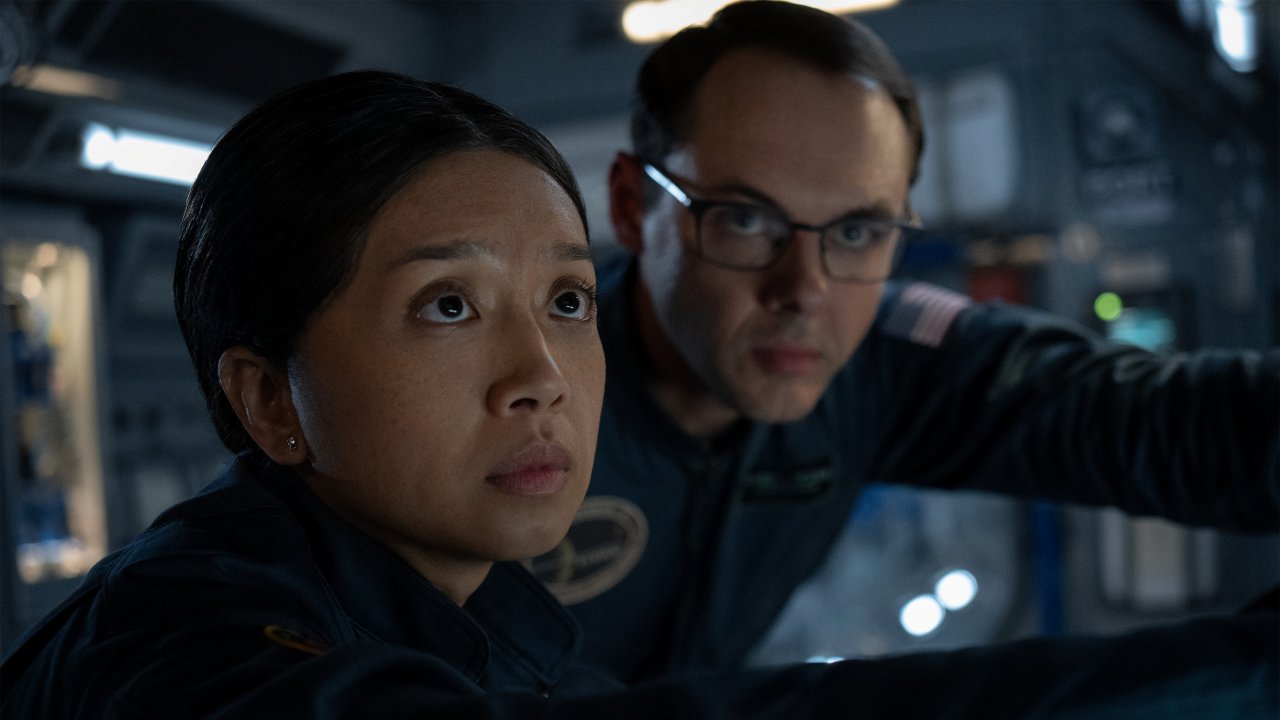
At the center of the episode is Kelly Baldwin, played by Cynthy Wu, and this finale fully confirms what season five has quietly been building all along: Kelly is now the emotional center of For All Mankind. Earlier seasons often positioned the Baldwins as larger-than-life astronaut mythology. Kelly represents something much more interesting—a generation forced to inherit the emotional consequences of humanity’s ambition. And this episode pushes her hard.
Following the setbacks and discoveries of episode nine, Kelly spends much of the finale balancing scientific responsibility against personal devastation. Cynthy Wu is excellent throughout because she never overplays the emotion. Kelly feels exhausted rather than inspired. Every decision carries weight. Every conversation feels shaped by years of expectation and pressure connected to the Baldwin legacy.
There’s a scene involving mission data and a personal recording that quietly became one of the season's best emotional moments for me. The writing wisely avoids melodrama and instead focuses on emotional restraint, which somehow makes everything hit harder. Joel Kinnaman also remains terrific as Ed Baldwin, whose role this season has been smaller but emotionally significant. What I appreciated most about Ed in the finale is that the show finally allows him to look old—not weak, not irrelevant, but emotionally aware that the future no longer belongs entirely to his generation. Kinnaman plays that realization beautifully. Ed has spent decades forcing history forward through stubbornness and instinct. Here, he increasingly feels like a man realizing history has developed momentum beyond his control. That gives the finale surprising emotional depth.
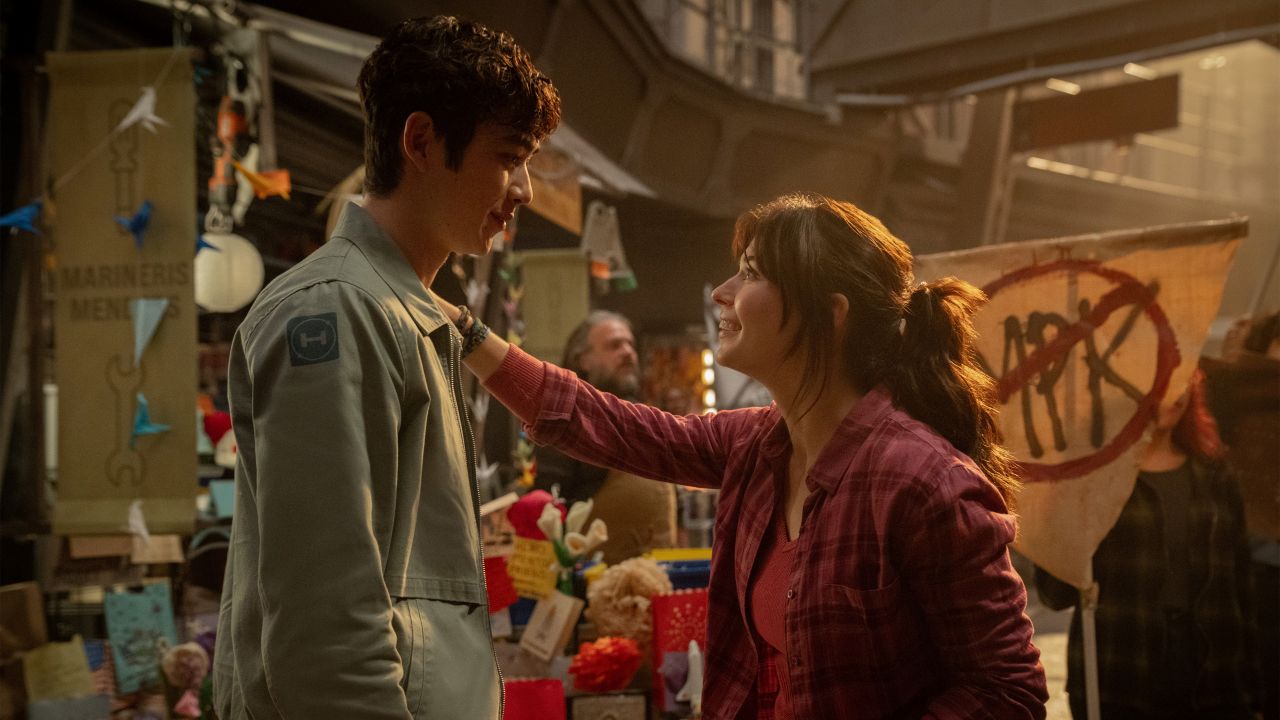
The Mars storyline is easily the strongest material in the episode. The escalating conflict around Dev Ayesa’s settlement finally pays off in a way that feels politically messy rather than simplistically heroic. One of season five’s smartest choices was refusing to frame Mars as purely utopian. By the finale, Mars feels like every human frontier eventually becomes: ideological, territorial, divided, frightened, and deeply uncertain about who gets to define its future.
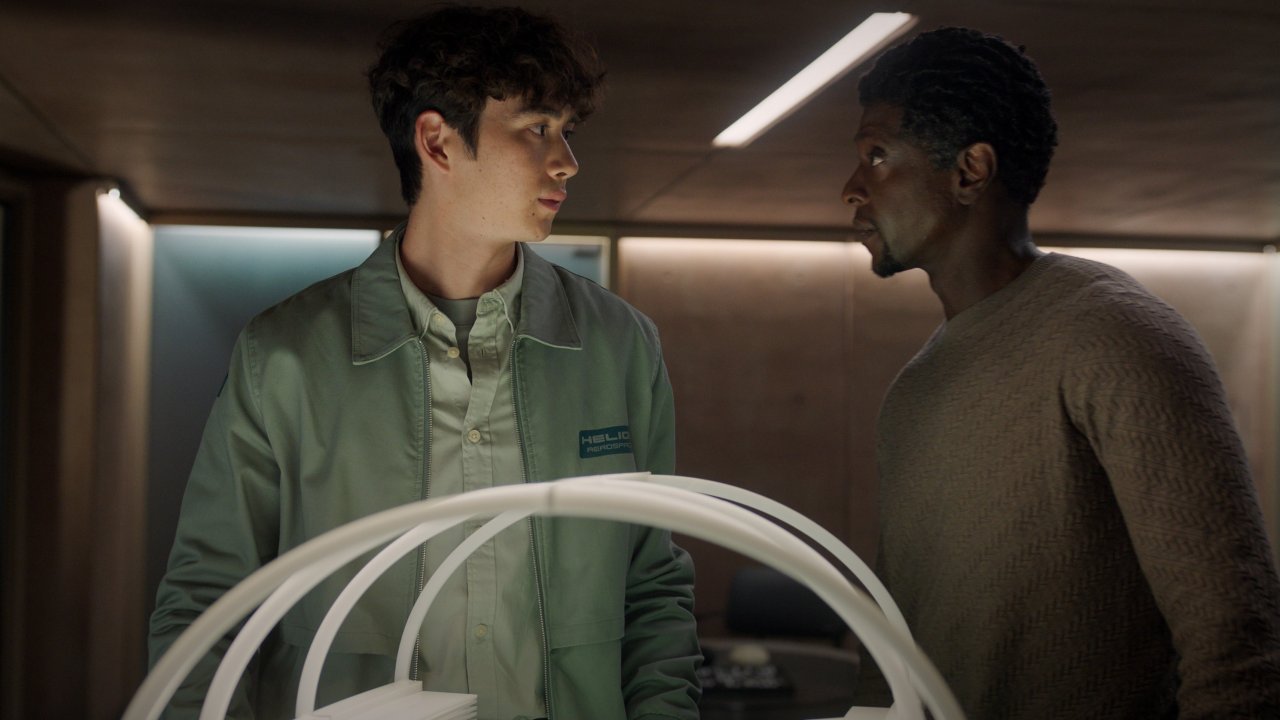
Edi Gathegi continues doing excellent work as Dev. The character has evolved far beyond the eccentric billionaire energy he initially carried when introduced earlier in the series. Here, Dev feels genuinely dangerous—not because he’s evil, but because he fully believes history justifies risk. Gathegi plays him with enough charisma and conviction that you understand why people follow him even when his decisions become increasingly reckless. That ambiguity makes the conflict far more compelling.
The sequences involving Alex, A.J., and Marcus are also extremely effective. One of the smartest things the finale does is show the human cost of ideological conflict on Mars without reducing everything to spectacle. Characters are frightened, confused, injured, exhausted, and making terrible decisions under pressure. The violence feels chaotic rather than triumphant. That realism matters.
Visually, the episode is fantastic. For All Mankind continues operating at a cinematic level most streaming science-fiction shows still struggle to match. The Mars sequences look extraordinary, especially during the compound standoff and underground tunnel scenes. The show remains excellent at making environments feel physically dangerous rather than digitally decorative. Titan also continues looking hauntingly beautiful. Even in shorter scenes, the icy landscapes and isolated habitats maintain the sense that humanity is still fundamentally fragile out there.
The sound design deserves enormous praise, too. Alarm systems, radio chatter, environmental hums, muffled explosions, distorted communications, and sudden silence are all used incredibly well throughout the finale. The episode constantly creates tension through atmosphere rather than relying entirely on action. The writing is strongest when dealing with ownership and identity. What does it actually mean to “settle” another world? Who owns Mars? Governments? Corporations? Scientists? Settlers? Are the people willing to die there? “This Land is Our Land” smartly refuses to offer clean answers. That thematic complexity elevates the entire finale.
I also appreciated how the episode avoided becoming purely cynical. Despite all the violence, institutional failure, and political collapse, the series still fundamentally believes humanity is capable of building something meaningful beyond Earth. It also believes humanity will bring all its emotional baggage into space with it, which feels accurate.
As strong as the Mars material is, the Titan storyline occasionally feels slightly compressed by comparison. Kelly’s emotional arc works beautifully, but some of the surrounding Titan developments move so quickly that they lose a bit of dramatic breathing room. I understood what the writers were aiming for structurally, but there were moments where I wished the episode had spent just a little more time letting those scenes settle emotionally.
There’s also one late survival development that feels slightly too convenient even by For All Mankind standards. The show generally earns its emotional payoffs through strong character work, but this particular moment briefly crossed into “the universe helping dramatic structure” territory. And while the episode’s thematic ambition is admirable, a few political conversations occasionally become slightly too explanatory. For All Mankind is usually very good at embedding ideology naturally inside character conflict. Here, there are moments where the dialogue edges a little closer to thesis-statement territory than usual. Still, those complaints feel relatively small because emotionally, the finale lands extremely well.
By the final scenes, the season’s larger themes become very clear. This was never simply a story about Mars or Titan or scientific advancement. It was about inheritance. About who gets to shape the future once institutions begin losing control of it. About whether humanity can build new worlds without repeating the emotional and political mistakes that damaged the old one. That’s fascinating science fiction. And this finale handles it with real confidence.
By the time the credits rolled, I wasn’t thinking about the technology, the military conflict, or even the political consequences nearly as much as I was thinking about legacy. About the exhausting reality that every generation in this series inherits both the achievements and the emotional damage of the one before it. That’s what gives For All Mankind its staying power after five seasons.
“This Land is Our Land” is tense, emotional, visually outstanding, and thematically ambitious, powered by excellent performances from Cynthy Wu, Joel Kinnaman, and Edi Gathegi. While the Titan storyline occasionally feels slightly compressed and one or two dramatic developments lean a little too heavily on narrative convenience, the finale succeeds because it never loses sight of the human cost beneath the science-fiction scale. It’s one of the show’s strongest season endings in years and a reminder that For All Mankind remains one of television’s smartest and most emotionally mature science-fiction dramas.
Final Score- [8/10]

Hi Everyone, after a due consideration, we have decided that we will be open for donations to help us in managing our website. We will be greatful for any kind of amount we receive. Thanks!
— Midgard Times 🎬 (@Moviesr_net) January 4, 2026
PayPal- [email protected] pic.twitter.com/DlNNz5Npm5
Get all latest content delivered to your email a few times a month.
Bringing Pop Culture News from Every Realm, Get All the Latest Movie, TV News, Reviews & Trailers
Got Any questions? Drop an email to [email protected]



 © Copyrights MOVIESR.NET All rights reserved