


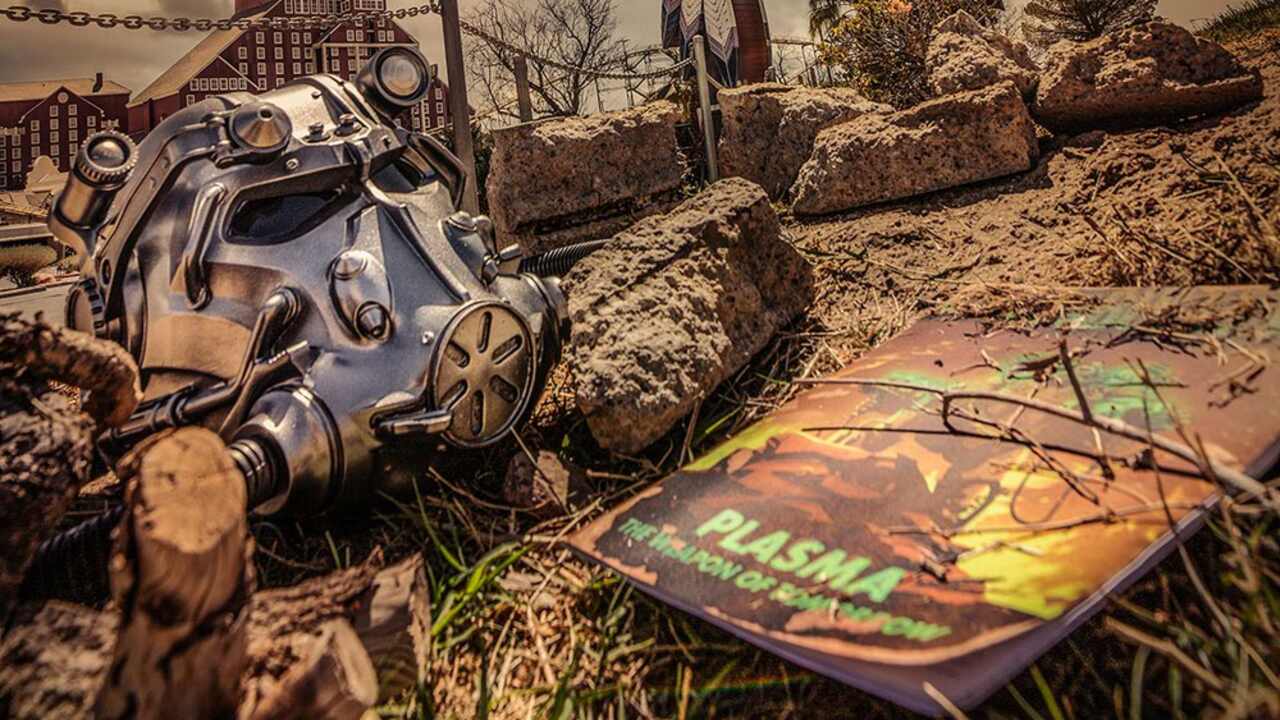
April 2026 marks exactly 50 years since the death of Howard Hughes, an American industrialist, aviator, and one of the most mysterious billionaires of the 20th century. His biography, shrouded in rumors, legends, and genuinely eccentric details, directly influenced the creation of Mr. House, one of the most memorable characters in the role-playing game Fallout: New Vegas (2010). For an entire generation of gamers, it was this digital counterpart that became their first introduction to the real Howard Hughes.
Why people are talking about this now
The developers of Fallout: New Vegas have repeatedly called Hughes the primary real-world inspiration for Mr. House. The parallels between them can be traced at every level: from family background and career trajectory to the “Vegas” chapter of his life and the habit of running an empire without leaving his own secluded refuge.
Mr. House and his place in post-apocalyptic Vegas
In the world of Fallout: New Vegas, Mr. House is the de facto ruler of New Vegas. He lives atop the Lucky 38 casino, communicates with the outside world through screens and an army of robots, and his real body is kept alive by a life-support system in a cryogenic capsule. The player sees only a projection: an elegant man in a 1950s-style suit with a neat mustache.
House presents himself as a technological visionary and strategist capable of determining the future of the Wasteland. Secrecy and distance from people aren’t a weakness of the character, but a deliberate part of his persona. One in-game faction mockingly calls him “Mr. Not-at-Home,” emphasizing his inaccessibility.
Inheritance, Hollywood, and Howard Hughes’s thirst for influence
Howard Hughes was born in Houston into the family of an industrialist. His father, Howard Hughes Sr., founded the Hughes Tool Company and patented a drill bit that became a gold mine during the Texas oil boom. After his father’s death in 1924, seventeen-year-old Hughes inherited the business, quickly secured financial independence, and moved to Los Angeles, intent on conquering Hollywood.
His producing projects, including Hell’s Angels (1930) and the first screen adaptation of Scarface (1932), cemented his reputation as a man who entered the industry not to fit in, but to remake it on his own terms. Money, ambition, and an unwillingness to put up with other people’s rules became Hughes’s trademark long before his Vegas period.
The sky, a crash, and the road to reclusion
In 1932, Hughes founded the Hughes Aircraft Company, which became a major defense contractor. The company built aircraft during World War II, including the legendary H-4 Hercules. Hughes himself set several speed records and was an avid pilot. However, a serious crash in 1945 left him with chronic pain and heightened his anxiety and paranoid tendencies.
In the final years of his life, Hughes moved to Las Vegas and began snapping up assets: casinos, hotels, newspapers, clubs. He bought the Desert Inn hotel and settled into a penthouse, rarely leaving his suite. It was this period that finally cemented the archetype of the reclusive billionaire in the public consciousness.
What the developers themselves said
In a 2011 Q&A, Fallout: New Vegas lead designer Joshua Sawyer talked about the real-life inspirations for the game’s factions and characters. According to him, Mr. House “was inspired most strongly by Howard Hughes.”
Writer John Gonzalez, the direct creator of the character, said in an interview with PC Gamer that at an early stage of development the team didn’t have the budget for research trips: “I just dove into books. One of the most fascinating Vegas stories, of course, involves Howard Hughes. And then Hughes kind of morphed into Fallout’s version of a tech mogul.”
Thus, the similarities between Hughes and House were conceived not as accidental Easter eggs, but as the foundation of the entire character.
Parallels and references—from broad biography to fine details
The parallels are built systematically:
● Origins and career: both are sons of owners of a tool business, were orphaned young, and achieved success before turning into “power behind the throne” figures.
● Appearance: Mr. House’s portrait in the Lucky 38 recreates a real photograph of Hughes posing against the backdrop of a military aircraft.
● The robot secretary Jane: an homage to actress Jane Russell, who starred in films that Hughes produced via the RKO company.
● Networks of influence: in public mythology, Hughes intersected with both government agencies and criminal circles; House similarly extends his reach into every organization in the game world.
● Life atop a casino: the Desert Inn penthouse is directly mirrored in the Lucky 38 tower.
● Behavioral touches: Hughes’s obsessive-compulsive disorder (OCD), his habit of ordering the same dish every day, or clearing out the remaining stock of his favorite Baskin-Robbins ice cream formed the basis of the overall characterization of an eccentric billionaire.
A legacy in stone and concrete
Hughes’s influence is not limited to pop culture. His Vegas acquisitions changed the city’s landscape and cemented the myth of a billionaire whose money reshapes entire neighborhoods. The company Howard Hughes Holdings, which grew out of his original holding company structure, continues to engage in real estate development and the management of master-planned communities, in particular in The Woodlands and the areas around Houston. The influence is still felt today.
Fallout tourism in Las Vegas as a phenomenon
The existence of a real-life inspiration with a tangible footprint prompts many fans of the game to come to Las Vegas to appreciate Hughes’s legacy and simply see what came “before” the events of Fallout: New Vegas. Since this installment of the game is considered no less iconic than the legendary Fallout 2, the stream of tourists hasn’t dried up. Professionals in the tourism industry note that Fallout: New Vegas has had a significant and long-term impact on tourism in Nevada, and this interest persists in 2026 as well.
Against the backdrop of declining interest in visiting brick-and-mortar casinos due to the growth of iGaming, this trend looks interesting and promising. The number of tourists who come to Las Vegas exclusively for gambling is decreasing every year. People simply don’t see the point in it, because they can easily go to an online casino website or download a mobile app. This makes it possible to step into a casino without ever putting your phone down. According to data from an online casino review site with a mobile app for the Lightning Storm show game, interest in this particular format has been growing recently. In addition to convenience and ease of use, many gambling platforms offer players bonuses.
The conclusions about Las Vegas’s ability to compete with online casinos are bleak. The city has focused on attracting tourists with different interests. The “fan” segment demonstrates stability, as well as a new wave of interest after the Amazon series premiered, so it receives a lot of attention. Moreover, it helps support not only Vegas itself, but also small towns in the state, such as Goodsprings and Primm.
How a biography becomes a gaming archetype
The 50th anniversary of Howard Hughes’s death is a reminder of how Fallout: New Vegas reshaped real history into a fictional archetype. An entrepreneur whose life already felt like a screenplay “moved” into one of the most recognizable figures in the gaming industry, and half a century later, this migration from reality to pixels still looks convincing.


Hi Everyone, after a due consideration, we have decided that we will be open for donations to help us in managing our website. We will be greatful for any kind of amount we receive. Thanks!
— Midgard Times 🎬 (@Moviesr_net) January 4, 2026
PayPal- [email protected] pic.twitter.com/DlNNz5Npm5
Get all latest content delivered to your email a few times a month.
Bringing Pop Culture News from Every Realm, Get All the Latest Movie, TV News, Reviews & Trailers
Got Any questions? Drop an email to [email protected]


 © Copyrights MOVIESR.NET All rights reserved