


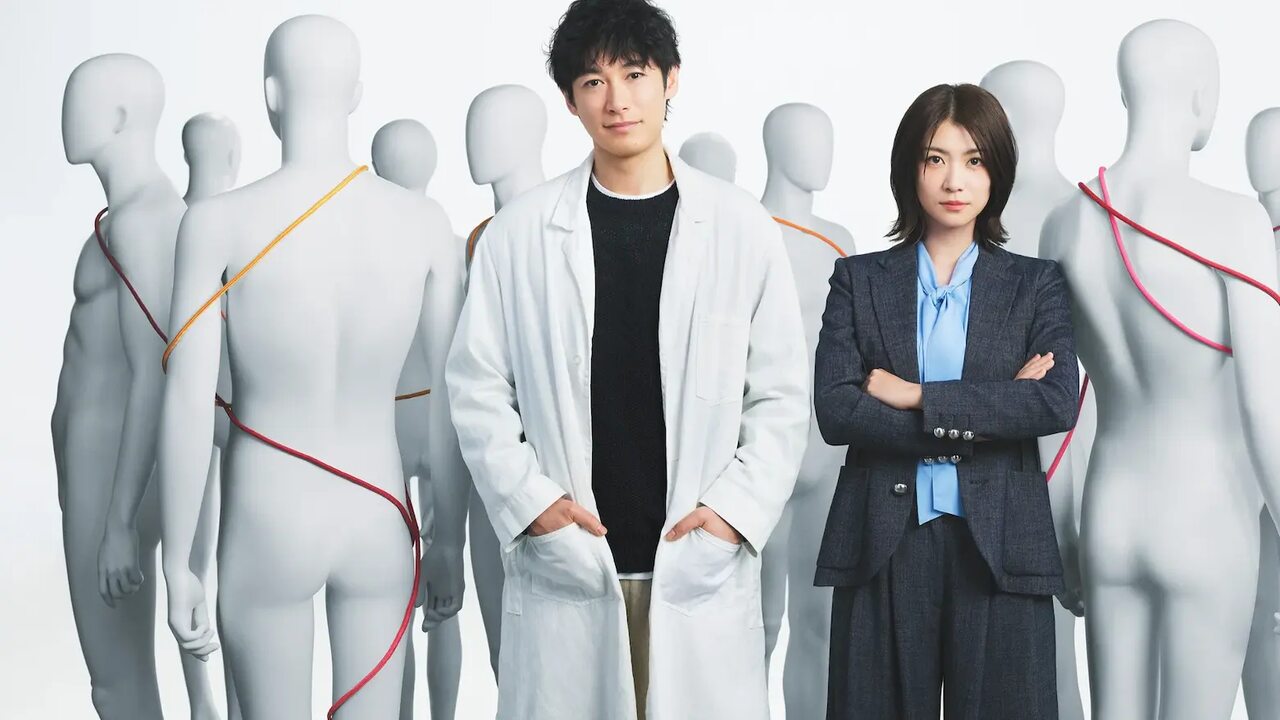
I’ll admit something right away: when I first heard the title Loved One, I made all the wrong assumptions. I pictured a quiet romance. Maybe a bittersweet family drama. Possibly a tearful reunion near a train station, someone holding an umbrella, two people silently regretting decisions from eight years ago. You know, standard emotionally devastating Japanese television. Instead, episode one opened with a dead teenager found face-down in shallow water, a room full of skeptical officials, and Dean Fujioka walking into frame looking like the kind of man who either solves crimes or quietly judges your handwriting. I was immediately interested.
After two episodes, Loved One has already established itself as one of the more confident, intelligent, and emotionally mature Japanese Netflix releases in recent memory. It’s a procedural, yes, but it’s also quietly political, surprisingly funny, occasionally uncomfortable, and much more human than the genre usually allows itself to be. It’s not really about death. It’s about what happens when systems become more convenient than the truth. And that’s a much better hook.
At the center of the story is Dr. Masumi Mizusawa, played by Dean Fujioka, and honestly, this role feels tailor-made for him. Mizusawa is not your standard television genius. He’s not socially broken. He’s not painfully awkward. He doesn’t speak exclusively in riddles while staring at blood samples under moody lighting. He’s actually… kind of funny. Not intentionally funny all the time, which makes it better. He’s calm, hyper-observant, occasionally blunt to the point of accidental insult, and carries himself with the confidence of a man who has spent years being the smartest person in rooms full of people who hate being corrected. Naturally, I loved him.
Mizusawa leads the newly formed MEJ—Medical Examiner Japan—an organization built around one deceptively simple principle: every unexplained death deserves proper forensic investigation. In a perfect world, that wouldn’t sound revolutionary. In this world, apparently, it’s close to an act of rebellion. That’s where Maho Kiryu comes in, played beautifully by Kumi Takiuchi. Kiryu is the bureaucratic counterweight to Mizusawa’s forensic obsession, initially entering the story as a ministry official whose job seems less about solving crimes and more about ensuring no one embarrasses the government. At least… that’s what I thought.
By the end of episode two, she becomes far more interesting than that. Kiryu starts practical, controlled, politically aware, and very clearly not thrilled about being assigned to what looks like a public-relations nightmare disguised as institutional reform. But what makes her work is that the show doesn’t rush her transformation. She doesn’t suddenly become a passionate truth-seeker after one inspiring speech and a tragic backstory. She watches. She listens. She quietly notices who’s lying. And then she starts asking dangerous questions. I respect that.
Episode one kicks things off with what initially appears to be a straightforward accidental drowning. A teenage boy is found dead in only forty centimeters of water—a fact that immediately made me stop, rewind, and say, “Nope. That’s suspicious.” Thankfully, Dr. Mizusawa agrees. What follows is one of the strongest pilot investigations I’ve seen in a procedural in a long time. The writing trusts the audience. Nobody overexplains forensic science. Nobody dramatically points at a monitor and yells, “Enhance!” Instead, the show lets pathology do the storytelling. Bruising. Lung tissue. Water content. Body position. Tiny inconsistencies. That’s where the truth lives. And honestly? It’s fascinating.
Episode two somehow gets even better by opening with a corpse that appears to have fallen from the sky. Now, I’m not saying that’s how you get me to immediately watch the next episode. I’m saying it worked. This second case expands the world significantly. The mystery is bigger, the institutional pushback is stronger, and the political implications become harder to ignore. Suddenly, MEJ isn’t just investigating suspicious deaths—they’re threatening people who’ve built careers on convenient conclusions. That’s where Loved One really comes alive.
The supporting cast is excellent too, especially the veteran detectives and ministry officials who all seem deeply committed to smiling politely while quietly sabotaging progress. Japanese workplace drama continues to understand that the most terrifying people are often the ones who bow before ruining your career. And this show uses that brilliantly. Visually, Loved One is gorgeous in a very restrained way. Director Hideo Nakata brings a clean, controlled style that never screams for attention. Hospital corridors feel sterile but tense. Government offices feel polished but emotionally cold. Autopsy rooms somehow feel more honest than conference rooms. Which, honestly, says a lot. The camera work is patient, precise, and confident. There’s no unnecessary movement. No flashy editing. No “look how cinematic we are” energy. Just good framing. Good performances. Good silence. And yes—this show knows how to use silence. A lot of silence. Sometimes beautifully. Sometimes… perhaps a little too enthusiastically.
As much as I admired the pacing, there were moments—particularly in episode two—where scenes linger just a little longer than necessary. I’m all for characters processing information, staring at evidence, or silently realizing they’ve been lied to. But there were one or two stretches where I genuinely checked whether my stream had frozen. It had not. Dean Fujioka was just thinking. Very intensely. And to be fair, he does think well. Still, momentum occasionally takes a small hit because the series becomes so committed to atmosphere that it risks slowing its own investigations.
There’s also a slight accessibility issue. Loved One throws a lot of institutional terminology at you early, and while I personally enjoy bureaucratic tension probably more than is medically advisable, I can see some viewers needing an episode or two to fully settle in. At one point, I realized I was mentally tracking government chains of command like I was preparing for civil service exams. Not a complaint. Just an observation. Another minor issue is that some secondary characters still feel more symbolic than fully developed. Two episodes in, that’s not a dealbreaker, but there are a few people who currently feel less like individuals and more like “Obstacle Number Three.” I’m assuming that changes. I hope it does. Because the core cast deserves equally strong opposition. Still, when Loved One works—and so far, it works more often than not—it’s exceptional. What I appreciate most is that the title isn’t sentimental. It’s forensic.
Everybody on that table belonged to somebody. And that quiet emotional truth gives every investigation weight. By the end of episode two, I wasn’t just curious about the next case. I was invested in MEJ surviving long enough to solve it. That’s a big achievement for a show that's only two episodes in. Loved One is intelligent, sharply acted, visually elegant, quietly funny, emotionally grounded, and refreshingly uninterested in cheap procedural shortcuts. It occasionally lingers a little too long in its own atmosphere, and some supporting threads are still finding their footing, but its central performances, strong forensic storytelling, and institutional tension make it one of the most promising Japanese series Netflix has released this year. And if episode three opens with another body falling from somewhere physically impossible… I’m absolutely watching immediately.
Final Score- [7/10]
Reviewed by - Anjali Sharma
Follow @AnjaliS54769166 on Twitter
Publisher at Midgard Times


Hi Everyone, after a due consideration, we have decided that we will be open for donations to help us in managing our website. We will be greatful for any kind of amount we receive. Thanks!
— Midgard Times 🎬 (@Moviesr_net) January 4, 2026
PayPal- [email protected] pic.twitter.com/DlNNz5Npm5
Get all latest content delivered to your email a few times a month.
Bringing Pop Culture News from Every Realm, Get All the Latest Movie, TV News, Reviews & Trailers
Got Any questions? Drop an email to [email protected]


 © Copyrights MOVIESR.NET All rights reserved