



I went into Gangs of Galicia Season 2 expecting a straightforward continuation of the first season’s revenge-driven narrative, but what I got instead was something more ambitious, more chaotic, and, at its best, far more emotionally engaging. This season significantly widens its scope, pushing Ana into a much larger, more volatile criminal ecosystem while testing how far both she and Daniel can stretch before they break under the weight of loyalty, guilt, and survival.
The time jump works immediately in the show’s favor. When we meet Ana again, she is no longer the same reactive outsider who stumbled into Galicia’s drug networks. She has built a life elsewhere, trying to maintain some distance from the past, even raising her daughter with a sense of normalcy. That fragile stability is disrupted quickly, and the show wastes no time reintroducing danger. Her return to Galicia feels inevitable rather than forced, and the writing handles this transition with a level of restraint that I appreciated. It doesn’t dramatize her decision unnecessarily; it simply lets the circumstances tighten around her.
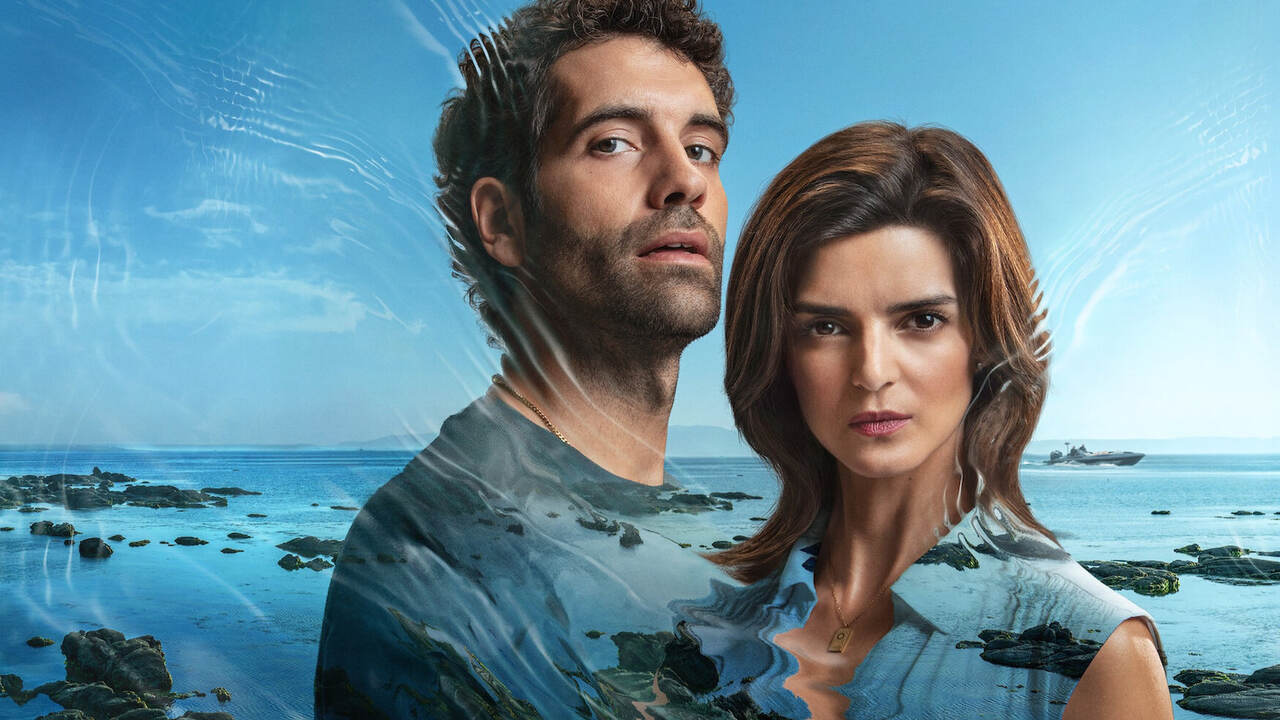
What makes this season compelling is how it places Ana in a position that feels almost absurd on paper but works because of the emotional logic behind it. She is recruited to help establish a large-scale cocaine operation, something she is clearly not trained for. On the surface, it sounds like a stretch, but the show frames it less as competence and more as desperation. She isn’t suddenly capable; she is cornered, and that distinction matters. Clara Lago plays this beautifully, grounding the character in a mix of determination and visible uncertainty. You can see the calculation behind every decision she makes, and that tension carries through the entire season.
Daniel’s arc runs parallel but never feels secondary. His release from prison sets up one of the more interesting conflicts in the series. He wants out, or at least he believes he does, but the show is honest about how difficult that actually is. His connection to his family, particularly his father and the Padín legacy, is not something he can just walk away from. Tamar Novas brings a quiet intensity to Daniel that works especially well in this season, where much of his struggle is internal. He isn’t making grand declarations; he is constantly negotiating with himself.
The dynamic between Ana and Daniel remains the emotional core, and the series is at its strongest whenever it returns to them. Their relationship has evolved in a way that feels earned. There is history, but there is also distance, mistrust, and a shared understanding that neither of them is entirely innocent anymore. The scenes they share are charged without being overstated, and the show wisely resists turning them into a conventional romance. Instead, it treats their connection as something complicated and, at times, inconvenient.
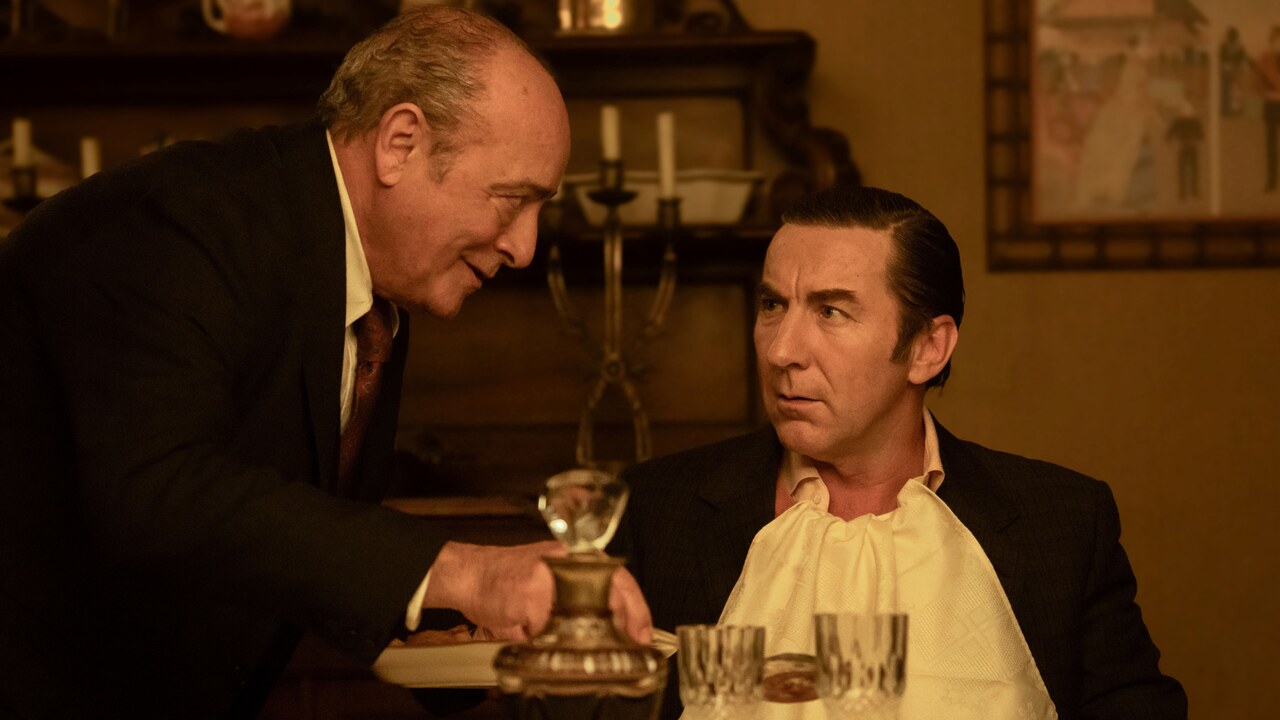
Where Season 2 really expands is in its portrayal of the wider criminal network. New players like Macario and El Curilla introduce fresh tension, and the shifting alliances add a sense of unpredictability. The Padín family, once firmly in control, now feels vulnerable, and that shift in power dynamics is one of the more interesting developments. The attempted assassination of José Padín and his subsequent survival underscore this perfectly. He is still alive, but his authority is no longer absolute, and the show leans into that instability.
Visually, the series continues to impress. Galicia is not just a backdrop; it is an active presence in the storytelling. The coastal settings, the muted color palette, and the deliberate pacing of certain scenes give the show a grounded, almost tactile quality. The direction favors long takes and quiet moments, allowing tension to build naturally rather than relying on constant action. When the violence does arrive, it feels sudden and consequential.
That said, the season does struggle under the weight of its own ambition. There are too many moving parts at times. Multiple subplots compete for attention, and not all of them are given enough space to fully develop. I found myself occasionally losing track of secondary characters or needing a moment to reconnect with certain storylines. The series tries to juggle family drama, cartel politics, personal relationships, and larger criminal operations all at once, and while that complexity can be engaging, it also leads to moments where the narrative feels crowded.
The pacing suffers slightly because of this. Some episodes move with precision, balancing tension and character development effectively, while others feel uneven, either rushing through important developments or lingering too long on less impactful scenes. The melodrama also creeps in more frequently this season. It doesn’t completely derail the experience, but there are moments where the emotional beats feel a bit overstated compared to the otherwise restrained tone of the show.
Even so, I kept coming back to it, and that says a lot. The series understands how to keep its central conflicts engaging, even when the structure becomes a bit tangled. The writing, while occasionally overextended, still delivers sharp character moments and meaningful turning points. Daniel’s refusal to fully detach from his family, despite being offered a way out, is a particularly strong example of this. It reinforces the show’s central idea that leaving this world is not just about choice; it’s about identity.
By the time the season reaches its conclusion, it doesn’t offer clean resolutions, and I’m glad it doesn’t try to. The ambiguity around who ordered the hit on Padín, the unresolved tensions between rival factions, and the uncertain future for Ana and Daniel all point toward a story that is still very much in motion. It feels like a midpoint rather than an ending, but one that leaves enough impact to justify the journey.
Overall, I found Season 2 to be a confident, if occasionally overstuffed, continuation of the series. It takes risks with its narrative scale and character arcs, and while not all of those risks pay off smoothly, the core of the show remains strong. The performances, especially from Clara Lago and Tamar Novas, anchor the story in a way that keeps it engaging even when the plot threatens to spiral. It’s the kind of season that demands a bit of patience but rewards it with moments of genuine intensity and emotional clarity. I didn’t always agree with its choices, and I did wish for a tighter narrative in places, but I was consistently invested in where it was going. And for a show built on instability, shifting loyalties, and characters who rarely make the right decision, that level of engagement feels like a success.
Final Score- [7.5/10]
Reviewed by - Anjali Sharma
Follow @AnjaliS54769166 on Twitter
Publisher at Midgard Times



Hi Everyone, after a due consideration, we have decided that we will be open for donations to help us in managing our website. We will be greatful for any kind of amount we receive. Thanks!
— Midgard Times 🎬 (@Moviesr_net) January 4, 2026
PayPal- [email protected] pic.twitter.com/DlNNz5Npm5
Get all latest content delivered to your email a few times a month.
Bringing Pop Culture News from Every Realm, Get All the Latest Movie, TV News, Reviews & Trailers
Got Any questions? Drop an email to [email protected]



 © Copyrights MOVIESR.NET All rights reserved