



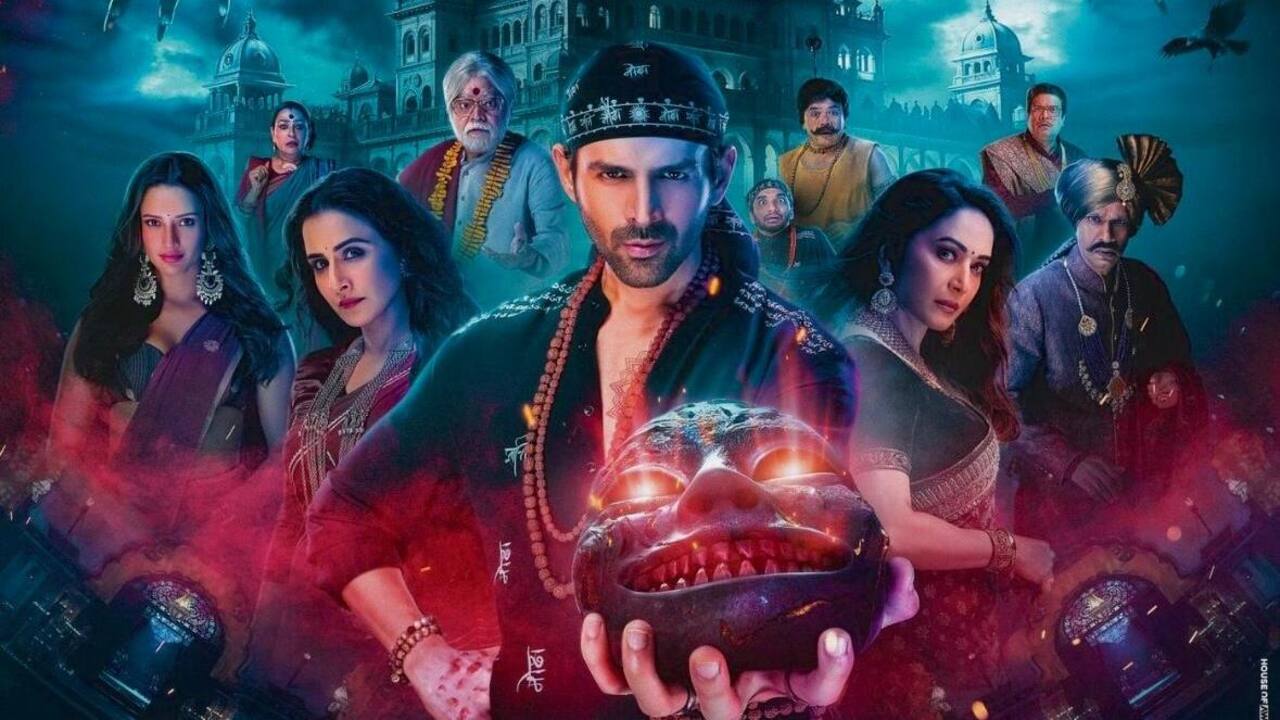
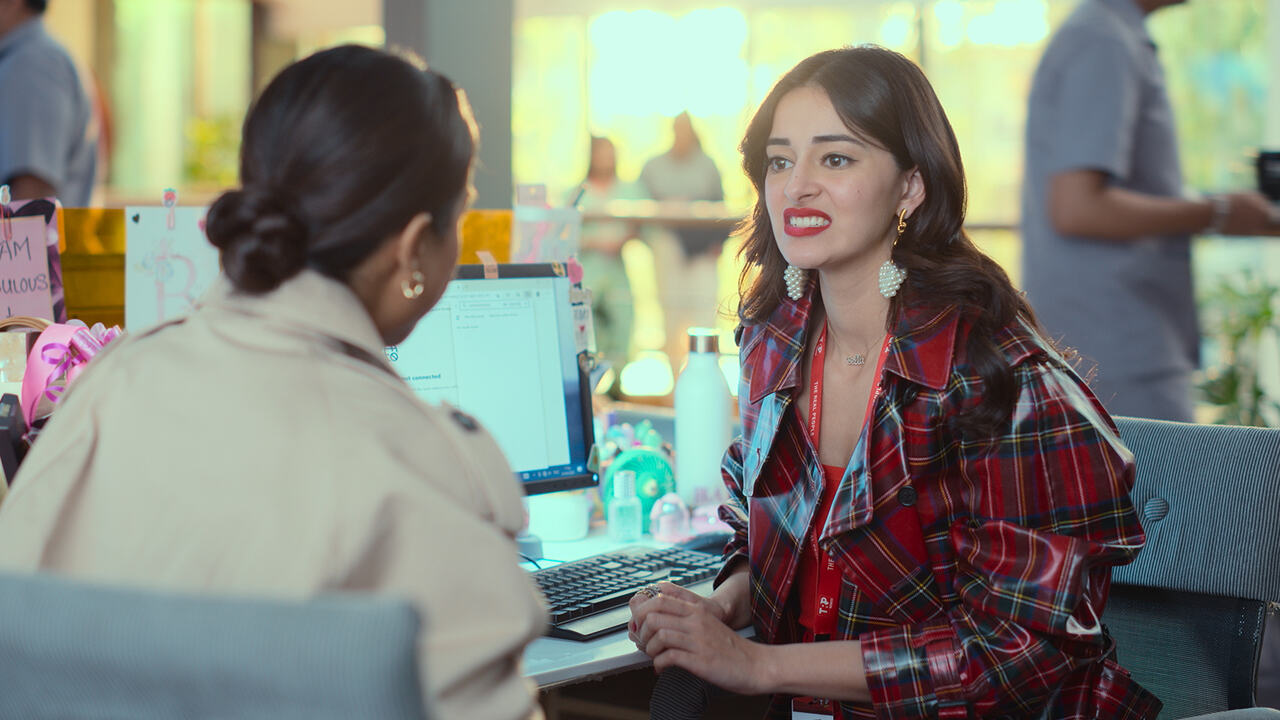
Everything in Tu Meri Main Tera Main Tera Tu Meri is designed to be provocative. When Rehaan "Ray" Mehra (Kartik Aaryan) gets on Rumi Wardhan Singh's (Ananya Panday) nerves with his mansplaining and cocky attitude, the movie pokes fun at self-declared feminists in the audience. When Ray asserts that writers should embrace ChatGPT instead of protesting against AI tools, the film inflames wordsmiths who see AI as a threat to their profession. And when Rumi, despite Ray's self-possessed—or "I am sexy, and I know it"—attitude, falls for him, TMMTMTTM enrages viewers who search for logic in mainstream Bollywood. Yet there is something resembling substance beneath the film's fluffiness. Its superficial, easy-breezy tone is a façade that conceals more mature outlooks. Even the long, clunky title seems engineered to turn off audiences—or rather, to invite mockery from the social media crowd.
The pre-interval portions, in fact, give you precisely the film promised by the teasers and posters. Easygoing yet forgettable songs, eye-pleasing visuals, and low-IQ humor leave little to look forward to in the post-interval portions. This tone, these casual rhythms, however, turn out to be a trap. In its second half, TMMTMTTM transforms into a different movie altogether. That movie still resembles what came before the interval, but first, it is worth discussing the changes.
For starters, writer Karan Shrikant Sharma begins to coast along the surface of questions such as: Should children be selfish in pursuing their dreams, or should they sacrifice those dreams for their parents? Rumi's father, Col. Amar Wardhan Singh (Jackie Shroff), suffers from sleepwalking, which makes him vulnerable to dangerous accidents when he wanders the streets at night. In such circumstances, he requires the support of either one of his daughters or a full-time caretaker.
TMMTMTTM might want to be progressive, but it isn't progressive enough to imagine a story where a parent is left in the care of a nurse. Traditional Indian values treat hired caretakers as an insult—an abomination. How dare your children hire help? Get them married instead and secure yourself a free maid, a free caretaker (as if weddings happen without spending a dime). Since Ray wants to settle in the USA and Rumi's sister, Jia (Chandni Bhabhda), has chosen a boy who plans to move to Canada, Rumi decides to sacrifice her romance. After all, she cannot ask Jia to stay back, having already spent most of her life looking after Amar. Now it is Rumi's turn to be the dutiful daughter. Yet, given how careless she is—she loses her passport and even forgets to remind Amar to take his BP medicine—it would arguably be wiser for her to hire a caretaker.
Here comes the twist: Amar has no issue with nurses and eventually even agrees to move to Los Angeles. What keeps him rooted to Agra is his wife—her memories and her ashes. Still, for the sake of his daughter's happiness, he agrees to leave his home. Rumi, however, understands that Amar will never be truly happy living abroad, away from the country he loves. And since he has already made his share of sacrifices for his daughters, Rumi does not want to burden him further with her own selfish desires. Isn't attachment to a place, a material object, even in the name of love, absurd? Prioritizing emotions without interrogating the logic behind them turns you into a fool. The moment you begin finding meaning in material goods, you become regressive and close-minded—you tether yourself to a small space and grow oblivious to real happiness. This is what Ray's mother, Pinky (Neena Gupta), ultimately realizes. She tells Ray that it doesn't matter whether they live in Agra or Los Angeles; what matters is the presence of true love.
It is a terrific message, but thanks to the Dharma Aesthetic, it arrives without bite or force. What is this Dharma Aesthetic? Good-looking stars occupying expensive locations, wearing branded costumes, exuding empty glitter—a glitter extended to plain, conventional images that merely record the action. Ray runs a wedding planning business, and Rumi runs a restaurant. Yet there is no discussion of finances, no insight into daily operations, no meetings, no appointments. At one point, Jia's soon-to-be mother-in-law mocks Amar for preponing the wedding, assuming he is trying to cut costs. But how much money is Amar actually spending? What financial strain does the ceremony place on him? Does Rumi's restaurant even generate sufficient profit? And what about Ray? He buys the company hired to plan Jia's wedding. Does this acquisition not require formal discussions with other stakeholders? Is this family business—apparently worth 450 crores or so—run solely by mother and son? How do they manage such a massive operation when Ray is mostly seen flirting, traveling, and showing off? In other words, he is never shown doing any actual work.
These questions matter because, by refusing to address them, TMMTMTTM trivializes Ray's and Pinky's sacrifices. Since their business exists merely as a decorative plot device, it doesn't matter whether they operate from India or abroad. As a result, all the film's progressive ideas flatten into narrative conveniences that simply move the characters around like puppets.
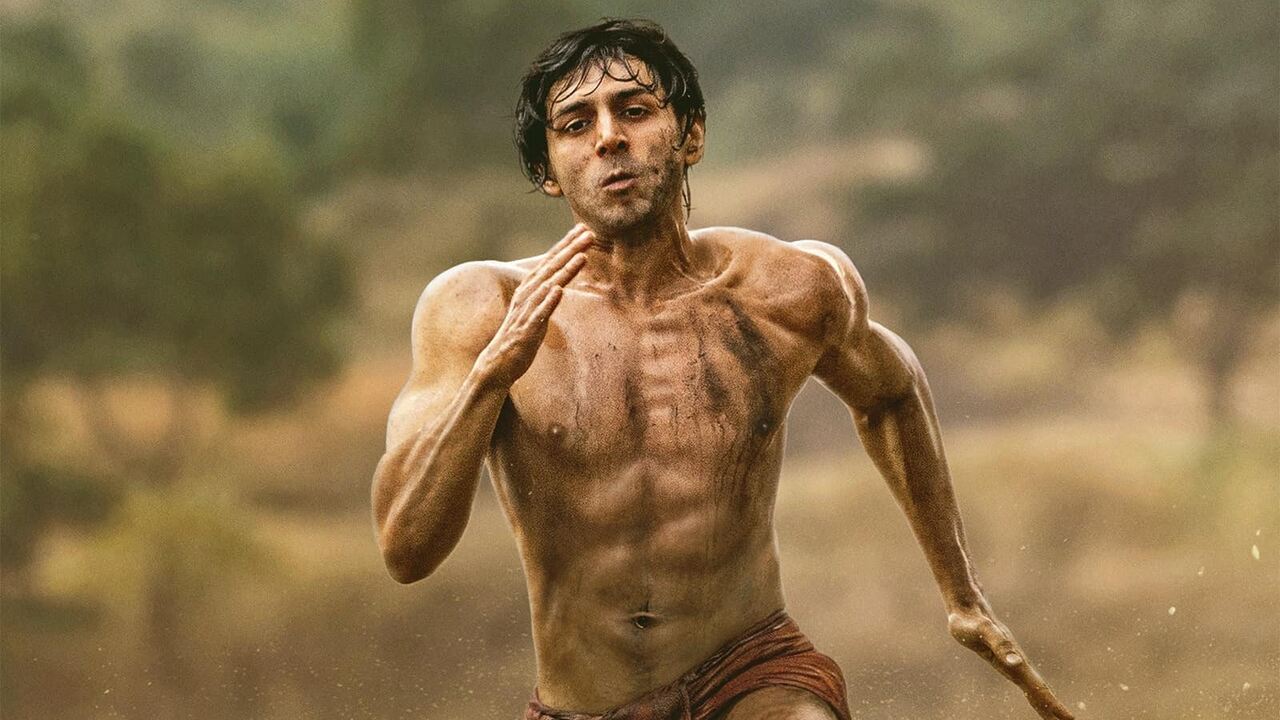
It doesn't help that the lead actors share zero chemistry. Both Panday and Aaryan are capable of greater depth—Satyaprem Ki Katha proved that Aaryan, in particular, has significant potential—but here they seem to be performing in isolation. I was also unconvinced by Rumi as a writer. All she does is scribble, "And just like that, she fell in love…", and we are expected to accept her as a published author. Rumi lacks the focus required for the profession. No wonder her book receives negative reviews—it is the most convincing detail in this rom-com.
Final Score- [3.5/10]
Reviewed by - Vikas Yadav
Follow @vikasonorous on Twitter
Publisher at Midgard Times


Hi Everyone, after a due consideration, we have decided that we will be open for donations to help us in managing our website. We will be greatful for any kind of amount we receive. Thanks!
— Midgard Times 🎬 (@Moviesr_net) January 4, 2026
PayPal- [email protected] pic.twitter.com/DlNNz5Npm5
Get all latest content delivered to your email a few times a month.
Bringing Pop Culture News from Every Realm, Get All the Latest Movie, TV News, Reviews & Trailers
Got Any questions? Drop an email to [email protected]


 © Copyrights MOVIESR.NET All rights reserved