



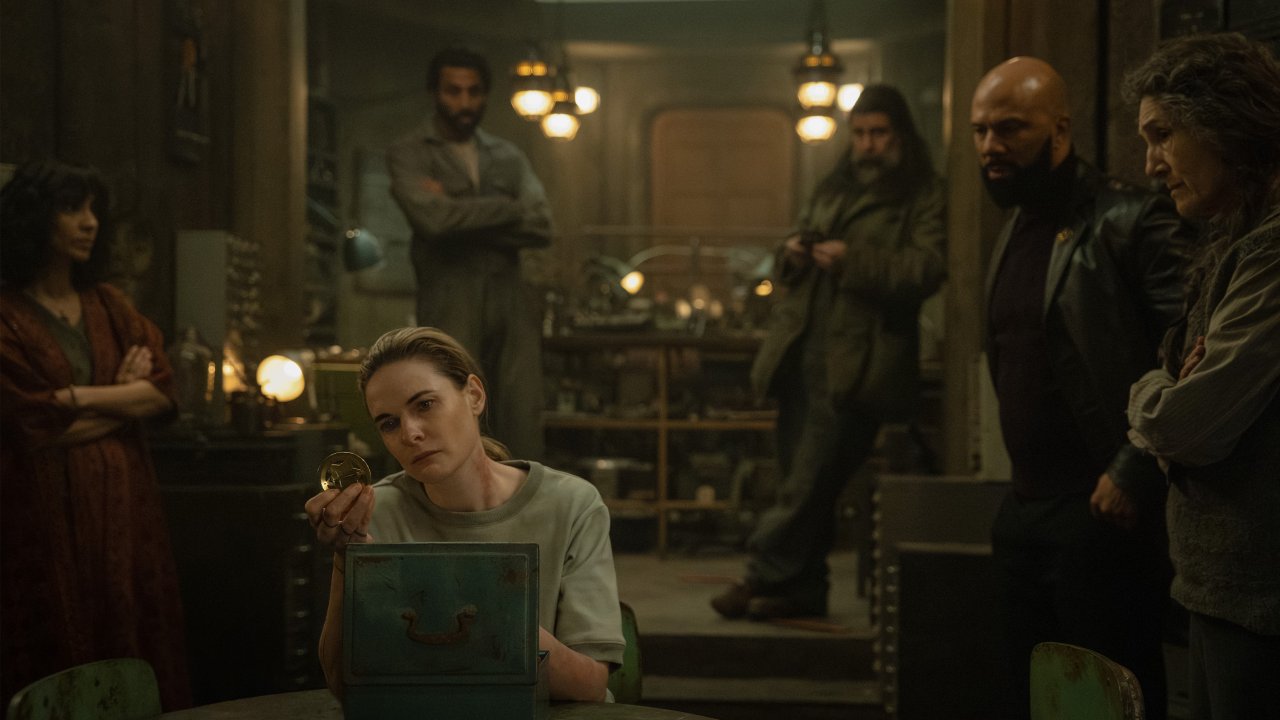
When Juliette returned to Silo 18 at the end of Season 2, many of us expected her to finally reveal the truth about the outside world to everyone. However, as the trailers had hinted, she remembers nothing — not even her closest friends. The season 3 premiere opens by quickly calming the excitement surrounding Juliette’s return as it begins three months after the events of Season 2. Juliette has recovered from her burns and has been made the new Mayor, but she still has no memory of her past. Bernard has disappeared, and Camille has taken over as head of IT.
When Juliette appears on the screens and delivers the message “It’s not safe outside,” the budding rebellion is immediately defused. As the story progresses, it’s revealed that Juliette was secretly given memory-suppressing drugs throughout her three-month recovery, which is why she has no recollection of what happened outside. The season is split between two timelines — one following events in the present-day Silo 18, and the other set in the distant past, before the Silos even existed. It starts relatively calm but gradually builds momentum, laying the groundwork for what the show refers to as the start of a rebellion.
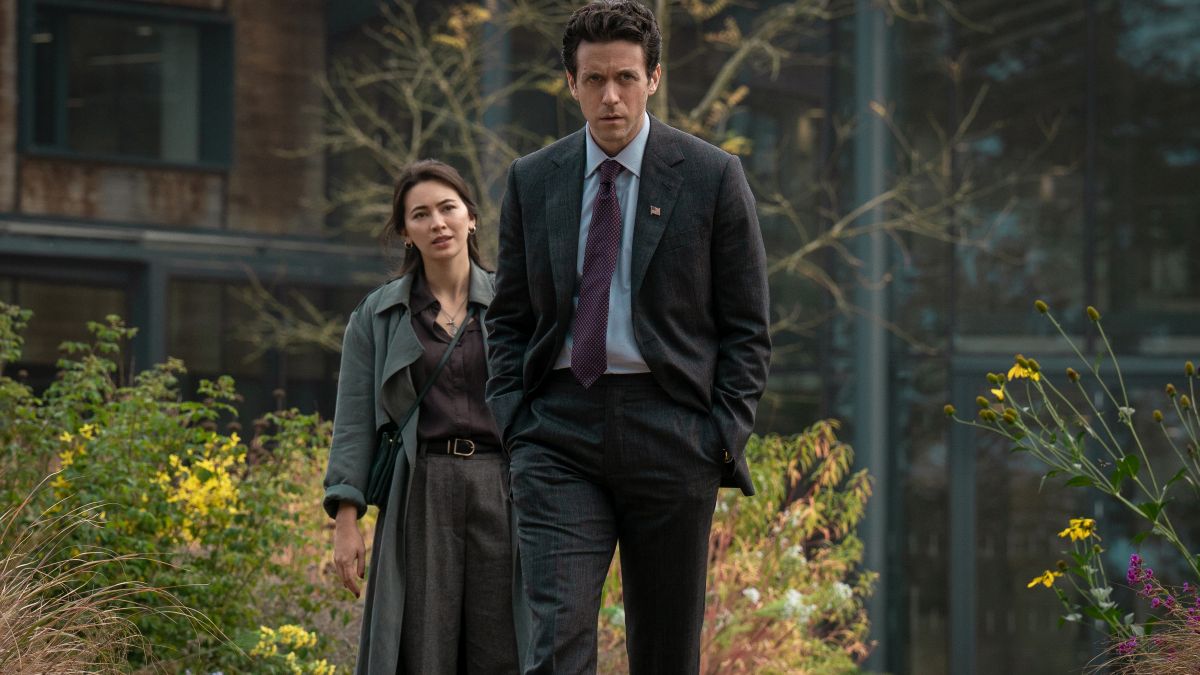
The premiere is immediately gripping, creating the constant feeling of a ticking time bomb that could go off at any moment. Juliette continues to experience flashbacks, which keep us hopeful that she might be regaining her memory, while also making us wonder if she’s simply putting on an act to deceive IT. From the very first episode, the memory storyline is steadily built up, delivering several key revelations along the way. In the past timeline, Jessica Henwick’s Helen and Ashley Zukerman’s Daniel are investigating a mysterious accident involving Daniel’s sister. As they dig deeper, they’re being followed and monitored by shadowy agents who are determined to stop them from uncovering the truth.
In the first half of the season, both timelines move in the same direction and complement each other very effectively. While the Silo 18 storyline focuses on investigating the memory drug and its effects on Juliette, the past timeline gradually reveals what the drug actually does and how it was developed. The two threads work in tandem — one side asks the questions while the other quietly provides the answers. This structure creates strong dramatic irony. The audience slowly begins to understand the truth, while the characters in Silo 18 remain in the dark. We also finally get a clear picture of why the Silos were built in the first place. The reason turns out to be quite similar to the purpose behind the Vaults in Fallout — a controlled environment designed to protect (or contain) humanity under false pretenses. While this motivation feels somewhat predictable once it’s revealed, it still works well because the people living inside the Silo have no idea about the larger truth behind their existence.
While watching, I realized that not a single minute of this season feels skippable. Every moment is gripping, and the past timeline is present in nearly every episode, continuously adding new layers of revelations. The biggest reveal, however, happens inside Silo 18 — you just have to be patient until the second half of the season. I especially loved the way Juliette interacts with people. Rebecca Ferguson makes even the simplest lines feel deeply emotional. For example, when she asks someone, “How are you keeping, James? How’s your family?”, it doesn’t come across as generic small talk — she makes it feel warm and sincere. Meanwhile, Daniel and Helen act as our present-day investigators. He’s a congressman, and she’s a journalist, and together they’re trying to uncover something that powerful people want to keep hidden, even though they’re not always careful in how they go about it.
Silo Season 3 feels surprisingly connected to real-world tensions. Right from the first episode, we see bombers flying over Iran and dropping payloads in the mountains. At the time the season was written, there was no active war between the US and Iran, though tensions had always remained high. When the jets come under attack, it initially feels like the show is building toward a narrative where Iran possesses a secret weapon of mass destruction — one that would later be revealed as the cause of the surface world’s extinction. However, Season 3 never explains what actually triggered the attacks. Instead, it simply makes it clear that this event was always inevitable.
As the season progresses, the atmosphere becomes so immersive that you start to feel like you’re actually living inside the Silo. You catch yourself wanting to escape just to see the stars, and you find yourself genuinely hoping the rebellion succeeds. Alexandria Riley gives a strong, compelling performance as Camille, who serves as the season’s primary antagonist. However, she is not the true villain — and she was never meant to be. The previous season already revealed who the real enemy is, and this season largely follows Juliette as she works to bring people together against that common threat.
The storytelling across both timelines was executed with exceptional precision and emotional weight. Every thread felt purposeful, tightly woven, and consistently engaging from start to finish. In my view, the season is a clear step above the "Fallout" series — more ambitious in its world-building, more confident in its pacing, and far more willing to explore the deeper implications of its premise. Season 3 leans much harder into science fiction than the previous two seasons. While the earlier installments kept a relatively grounded, almost procedural tone, this season fully embraces its speculative roots. By the final episodes, the story moves into territory that feels increasingly detached from real-world logic (cryosleep, extremely advanced nanotech), yet it never loses its grip on the audience. Instead of providing easy answers, it continues to provoke the same haunting questions that have defined the series: How and why?
The rebellion storyline is only just beginning to take shape. The season plants the seeds carefully and leaves the movement in its earliest, most fragile stage. With Season 4 confirmed as the final chapter, it’s clear the show is saving its biggest confrontations and escalations for the end. The people of Silo 17 didn't die by accident or because the rebellion failed; it was a well-executed genocide. One of the smartest choices here is that Silo 18 itself doesn’t learn this truth by the end of Season 3. The major revelation is reserved almost entirely for the audience, creating a powerful layer of dramatic irony and setting up what should be an incredibly tense final season as the characters slowly catch up to what we already know.
Final Score: [10/10]
Published at Midgard Times
Note: All 10 episodes of Season 3 are screened for this review.
Premiere Date: July 3, 2026, on Apple TV with its first episode, while the rest will release weekly every Friday

Hi Everyone, after a due consideration, we have decided that we will be open for donations to help us in managing our website. We will be greatful for any kind of amount we receive. Thanks!
— Midgard Times 🎬 (@Moviesr_net) January 4, 2026
PayPal- [email protected] pic.twitter.com/DlNNz5Npm5
Get all latest content delivered to your email a few times a month.
Bringing Pop Culture News from Every Realm, Get All the Latest Movie, TV News, Reviews & Trailers
Got Any questions? Drop an email to [email protected]



 © Copyrights MOVIESR.NET All rights reserved