


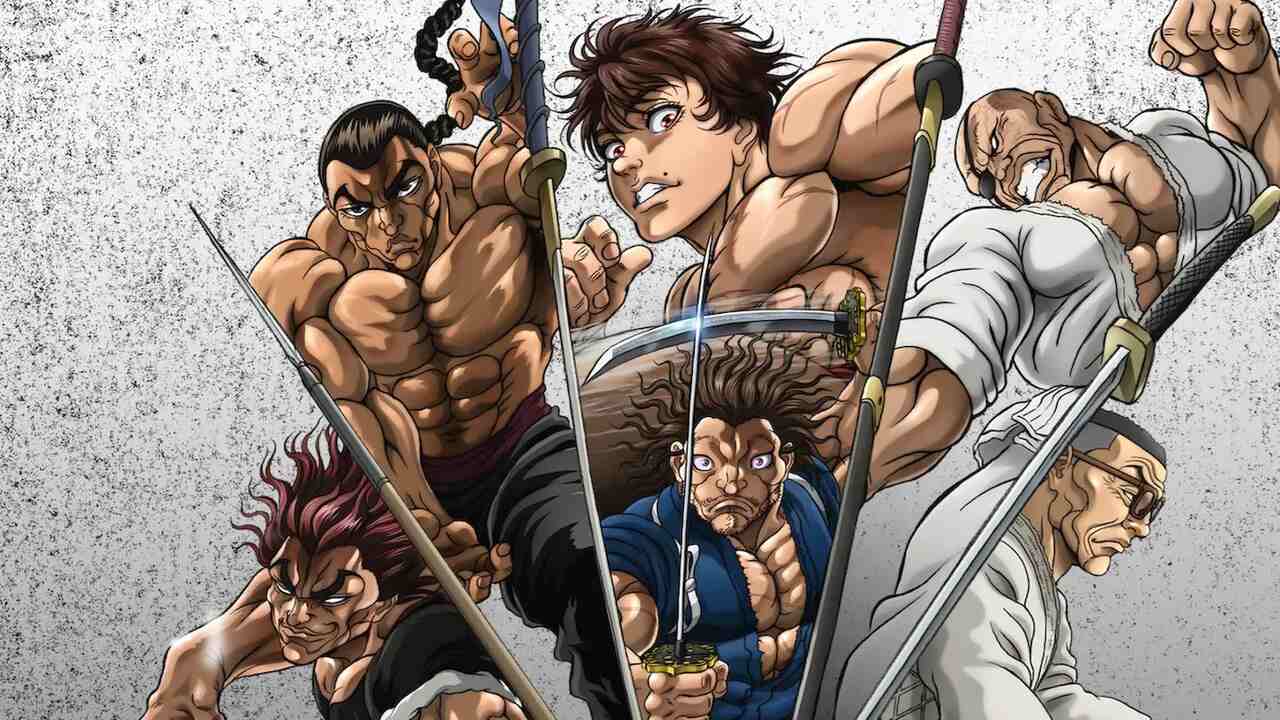
Jumping back into the brutal, sweat-soaked world of Baki on Netflix, BAKI-DOU: The Invincible Samurai delivers exactly what longtime fans have been waiting for: relentless confrontations, bold sequences, and a new kind of threat that pushes the envelope of what the franchise can offer. Picking up after the huge climax of Baki Hanma, where Baki finally squared off against Yujiro, this new chapter finds our hero not defeated but oddly adrift. He’s still the strongest known fighter, yet something about that victory has hollowed him out, leaving his appetite for challenge unsatisfied. This sets up the core tension of the series: what motivates a fighter who has conquered his ultimate target, and what happens when you stir legend itself back into life. The resurrection of Miyamoto Musashi, Japan’s most iconic swordsman, via scientific means is an audacious narrative move that feels strange on paper but becomes a compelling engine as the episodes unfold. The idea of Musashi, steeped in centuries of combat lore and blade mastery, dropped into the bare-knuckle chaos of Baki’s underground world is audacious and serves as an effective catalyst for some genuinely creative fight choreography and thematic exploration of different combat philosophies. The contrast of modern unarmed brutality and the timeless precision of a sword wielder gives the series an almost conversational tension between old and new schools of martial prowess. That tension pays off in extended sequences where Musashi’s elegance seems both poetic and terrifying against fighters who exist to break bones with their bare hands.
The character work here is a strong point, and I found the series earned its depth through subtle shifts rather than melodramatic speeches. Baki’s restlessness after what should have been the emotional peak of his life feels very believable, and watching him grapple with that boredom adds a rare psychological layer to a series often defined by physical extremes. He’s not just fighting others; he’s fighting a sense of purposelessness, and that internal thread grounds even the most outrageous battles. Supporting figures like Doppo Orochi, Kaoru Hanayama, and Jack Hanma return with their distinct energies intact, each bringing different styles and egos that broaden the palette of confrontation. Every time the narrative dips into their perspectives, it reinforces that this is a community of warriors, not just a single-man show. Watching these personalities play off Musashi’s serene intensity and uncompromising sword logic gives the ensemble a dynamic feel that keeps things fresh across multiple episodes.
On the technical side, the animation and direction deserve applause for how confidently they present each bout. The studio behind the series delivers smooth motion, impactful frames, and consistently clear action, which is no small feat for a show that thrives on densely packed fight sequences. The sound design and score punctuate these moments with appropriate weight, whether it’s a blade slicing the air or a punch connecting with primal force. For an anime of this genre, striking the right balance between visual fidelity and kinetic energy is crucial, and BAKI-DOU largely nails that balance throughout its run.
That said, the series isn’t without its imperfections. The science-fiction angle behind Musashi’s resurrection leans into pulpy territory that won’t land with every viewer. Some scenes involving the lab, the ethics of cloning, and the motives of the government agents behind it feel like they were included because the plot demanded them rather than because they naturally fit into the world’s logic. It’s not bad storytelling, per se, but it does inject moments that can feel incongruous with the otherwise visceral and grounded combat narrative. I had to suspend disbelief at several points, not because of the fights themselves — those are pure Baki — but because of the scaffolding around how and why this legendary figure has arrived. A touch more restraint or better connective tissue between realities would have made those beats more satisfying.
Another quirk that may vex some viewers is the weight of prior knowledge required to fully appreciate what’s happening. If you jump into BAKI-DOU without familiarity with the earlier arcs, particularly the emotional and narrative beats of Baki Hanma, some character reactions and overarching motivations might feel underdeveloped or opaque. The series assumes you know these fighters, their histories, and why their personal stakes matter. That makes sense for a direct sequel, but it still means that newcomers could find themselves playing catch-up, especially early on. The story eventually stands on its own once the Musashi arc gains momentum, but the first few episodes wade through exposition and references that might slow the initial pace for less seasoned watchers.
Despite these minor drawbacks, the series earns its momentum as it progresses, turning what could have been an overstuffed concept into a focused exploration of combat, legacy, and what it means to face the unthinkable. The voice performances, especially in the English dub, give distinctive personalities to characters both familiar and new, and the decision to lean into character contrast — the silent confidence of Musashi against the visceral grunts and cries of the underground fighters — enriches the viewing experience. I was consistently engaged by how the series respected its roots while daring to experiment with its core premise.
In the end, BAKI-DOU: The Invincible Samurai feels like a triumphant yet measured addition to the Baki saga. It knows what it is: a visceral celebration of martial skill, personal drive, and the spectacle of unrestrained combat — but it also dares to ask why these fights matter beyond spectacle. That combination is what makes this series genuinely exciting and, at its best moments, deeply resonant. If you’re invested in the characters and the world they inhabit, BAKI-DOU feels like a long-awaited continuation that respects the past while pushing the narrative forward, even if it occasionally stumbles over its more outlandish storytelling choices. It’s a thrilling ride, and one that leaves me eager to see where Baki’s path leads next.
Final Score- [7/10]
Reviewed by - Anjali Sharma
Follow @AnjaliS54769166 on Twitter
Publisher at Midgard Times


Hi Everyone, after a due consideration, we have decided that we will be open for donations to help us in managing our website. We will be greatful for any kind of amount we receive. Thanks!
— Midgard Times 🎬 (@Moviesr_net) January 4, 2026
PayPal- [email protected] pic.twitter.com/DlNNz5Npm5
Get all latest content delivered to your email a few times a month.
Bringing Pop Culture News from Every Realm, Get All the Latest Movie, TV News, Reviews & Trailers
Got Any questions? Drop an email to [email protected]



 © Copyrights MOVIESR.NET All rights reserved