


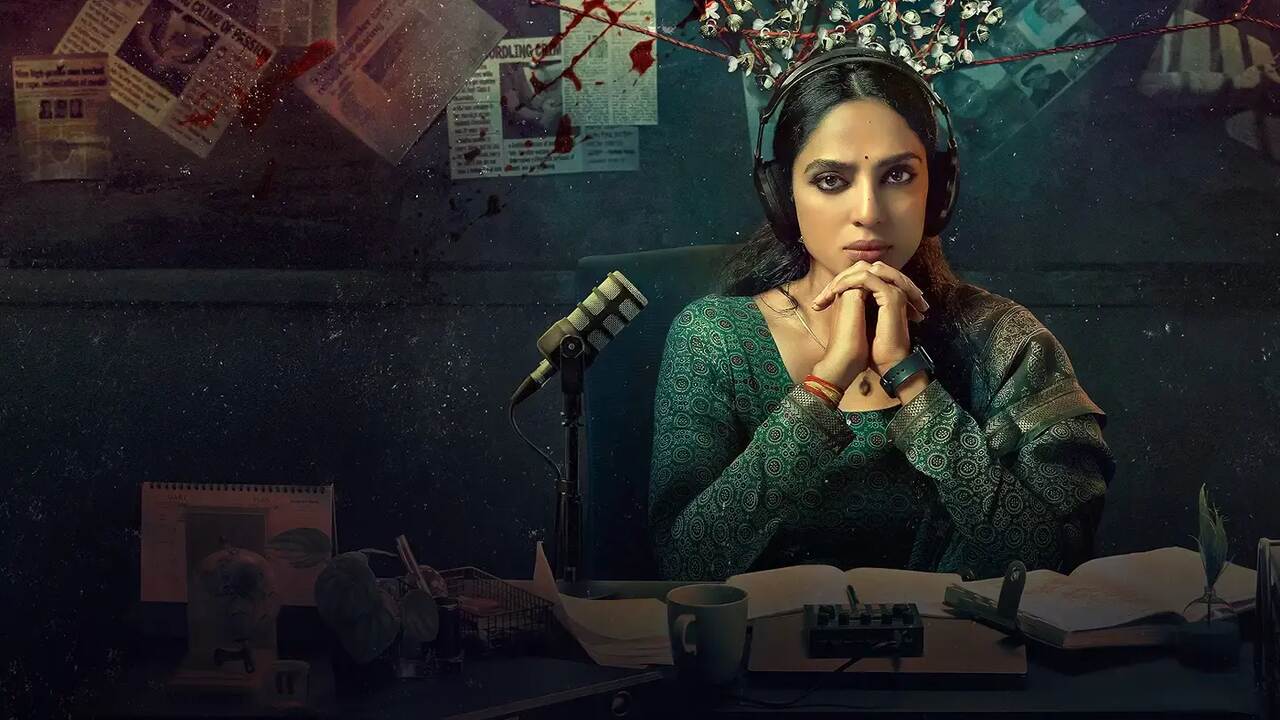
Movies like Cheekatilo get attention for two reasons: the presence of well-known actors and good intentions. These two things, by themselves, are fairly insubstantial, but in a country where mediocrity has become the norm, they are often just enough for some critical acclaim and box-office success—or at least social-media buzz. In the case of Cheekatilo, the primary attraction for most viewers would be Sobhita Dhulipala. Her face would lead them to click the play button. The rest of the work—the responsibility of keeping the viewer glued to the screen—would have to be done by the film's content. And yes, that "content" is nothing but "good intentions." That is all director Sharan Koppisetty has to offer his audience. He repeatedly tells us that rape is bad and that the rapist is usually someone close to you—a family friend or a family member. What Koppisetty is saying is undoubtedly true, but it is also the only thing he manages to say in Cheekatilo.
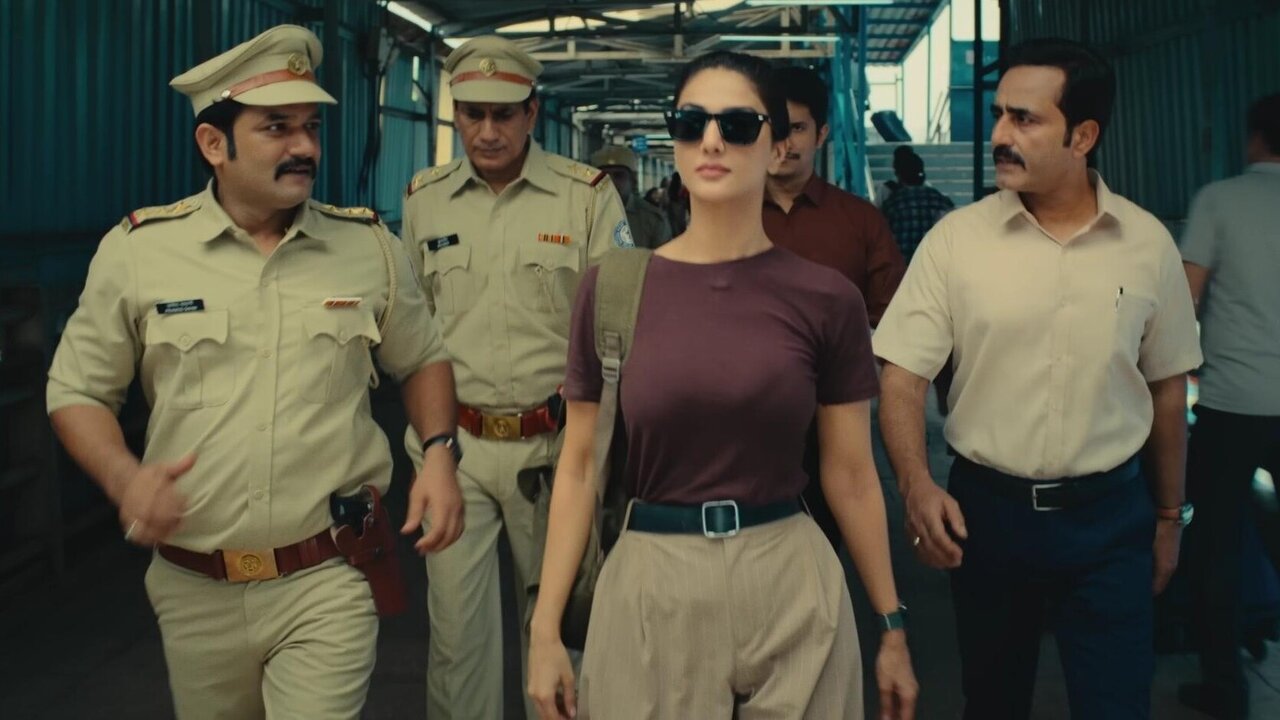
The tragedy lies in the way Koppisetty lays down these thoughts. His cinematic voice is utterly dull, impersonal, and unoriginal. His scenes unfold without rhythm, and whatever momentum they possess comes from the editor, who is tasked with cutting shots like seconds-long Instagram reels so the film can move swiftly forward. Koppisetty is also extremely literal-minded. The images are neither imaginatively shot nor dramatically composed. They merely convey textual information—information already written into the screenplay. The logic guiding each scene seems to be that it simply needs to show that something has happened. Sandhya (Sobhita Dhulipala) knocks on a victim's door; the victim refuses to talk to her; then the victim's uncle speaks to Sandhya. When did Sandhya get in touch with the uncle? When did they decide on a meeting location? What does Sandhya feel internally when she hears the woman's story?
These elisions underline Koppisetty's "highlight reel" approach to direction. He is preoccupied with final results, not steps, not processes. Sandhya encounters no real difficulty transitioning from TV anchor to podcaster. She simply buys a mic and starts talking about rape cases. Given her background, one would expect her to start a YouTube channel—so why podcasting? Because that is what a colleague dreams of doing with her. Did they discuss alternatives? Koppisetty shrugs his shoulders. This criticism extends to other areas of the film as well, most notably the performances. Everyone appears rigid and tightly controlled; they merely speak whatever has been fed to them. Dhulipala's one-note performance barely registers. When she is happy, she smiles. When she is sad or disturbed—and she is mostly sad and disturbed—she adopts a monotonous, dour expression. If good acting involves reacting, then everyone in Cheekatilo comes across as an amateur. The actors speak, wait for their cues, speak again, and the film moves forward. Koppisetty tethers them to his narrow demands, treating them as puppets—mouthpieces engineered to fulfill his surface-level requirements.
As a result, when Sandhya launches into a rant in front of her family about how women are expected to behave and control themselves, the moment doesn't feel explosive. Instead, it feels like Koppisetty is venting his own frustrations. Had he managed to channel this anger through his story, his aesthetics, and his characters, Cheekatilo might have worked. Instead, the film and the filmmaker remain detached from each other. The Koppisetty, who is angry at rapists, is unable to pour that anger out through Koppisetty the director. This is why Cheekatilo never becomes anything more than an excuse—a platform for a man to voice his concerns. Since the characters are nearly blank (we know nothing about Sandhya's interests beyond journalism, or what she finds appealing about her boyfriend, or what they do together when they aren't concerned with serial killers), we don't truly care about them. At best, we offer basic sympathy. Koppisetty relies heavily on this sympathy to do the heavy lifting. He wants us to point at the screen and exclaim in horror, "Look, the sexual harassers are among us."
Sandhya quits her TV job because her motto is "No sensationalism." Koppisetty, however, does not strictly follow this rule. He has no qualms about cheap manipulation. At a press conference, when irritated journalists accuse Sandhya of wasting their time and begin to leave, a victim suddenly makes an appearance. Isn't this sensationalism? Isn't Koppisetty deliberately trying to excite the audience? At one point, Sandhya asks, "Where's empathy?" and Koppisetty, in his own inept way, attempts to respond. He, of course, fails because his empathy is merely theoretical. He blames both genders for spreading evil, but when dealing with men, he falls back on familiar serial-killer clichés, and when dealing with women, he hastily inserts a flashback that feels designed solely to maintain balance. Cheekatilo is not held together by dramatic conviction. It operates like a set of bullet points that mostly state the obvious. In this sense, it is not very different from Rahul Ravindran's The Girlfriend. There, too, we were given stick figures and obvious bullet points, with Ravindran depending on basic human decency to make us cheer for Bhooma. Yes, the rapists, thieves, and criminals are among us—but bad movies that use good intentions as a shield are also quite common. We do point at the screen and exclaim in horror. Only this time, our words are: "Look, another mediocre production has found its way among us."
Final Score- [2.5/10]
Reviewed by - Vikas Yadav
Follow @vikasonorous on Twitter
Publisher at Midgard Times

Hi Everyone, after a due consideration, we have decided that we will be open for donations to help us in managing our website. We will be greatful for any kind of amount we receive. Thanks!
— Midgard Times 🎬 (@Moviesr_net) January 4, 2026
PayPal- [email protected] pic.twitter.com/DlNNz5Npm5
Get all latest content delivered to your email a few times a month.
Bringing Pop Culture News from Every Realm, Get All the Latest Movie, TV News, Reviews & Trailers
Got Any questions? Drop an email to [email protected]


 © Copyrights MOVIESR.NET All rights reserved