


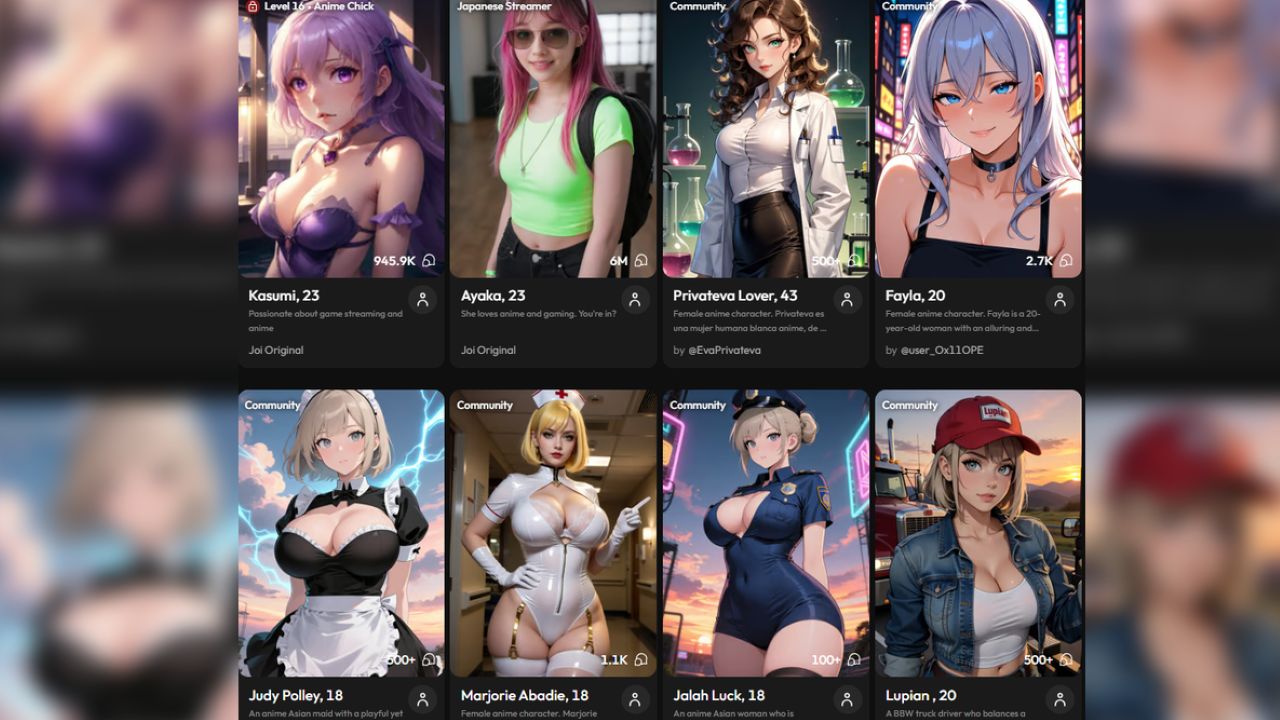
Anime AI generators feel a little like magic the first time you use them. You type a few words — “silver hair, golden eyes, moonlit city, soft smile” — and within moments, an image appears that looks as if it stepped out of a dream or a film opening. But behind that instant spark is not magic at all. It is a carefully layered process where language, style recognition, pattern learning, and image synthesis all work together. JOI AI’s anime generator is a good example because its page clearly shows the core idea: users can create anime-style characters from text prompts, customize visual details, generate portraits, and even transform photos into anime-inspired artwork.
At the heart of the experience is the prompt. The prompt is the starting signal, the blueprint, the creative DNA of the final image. When a user writes a description, the system does not “see” the character the way a human artist does. Instead, it breaks the request into meaningful visual concepts. Hair color becomes one visual cluster. Eye shape becomes another. Clothing, mood, pose, lighting, background, and expression all become separate but connected instructions. On JOI AI’s page, this process is described in simple terms: you can specify hair color, eye shape, outfit, and personality traits, and the generator turns that text into anime-style artwork. That sounds effortless on the surface, but it reveals the real engine of AI art — converting language into visual structure.
The second layer is style. Anime is not just “drawing a face with big eyes.” It is a whole visual language. Different anime-inspired looks can feel soft, dramatic, glossy, cinematic, cute, mysterious, futuristic, or painterly. An anime AI generator has to understand those patterns well enough to produce something that feels coherent. That means it has learned from enormous numbers of images and stylistic relationships: how bangs fall over a forehead, how highlights are placed in expressive eyes, how school uniforms differ from fantasy armor, how pastel shading creates innocence, and how sharper contrast creates tension. The user may only write one sentence, but the model has to fill in hundreds of artistic decisions in a split second. That is why the best results often feel surprisingly complete, as though the image already existed somewhere and the AI simply uncovered it.
Then comes synthesis — the moment when the image is actually built. This is where the generator moves from description to form. It does not usually paste pieces together like a collage. Instead, it generates a fresh image by predicting what pixels and shapes should appear based on the requested traits and the learned anime aesthetic. That is why two prompts with tiny wording differences can lead to dramatically different results. Change “sunset” to “neon dusk,” and the mood may turn from romantic to cyberpunk. Change “gentle smile” to “confident smirk,” and suddenly the entire personality shifts. An anime AI generator is not only responding to nouns like “girl” or “kimono”; it is reacting to atmosphere, emotional tone, and visual storytelling. In that sense, prompting becomes less like typing and more like directing.
What makes tools like JOI AI (https://joi.com/generate/anime-ai-generator) especially engaging is that they do not stop at one simple generation. The page emphasizes customization, meaning the generator is built for iteration. That matters because AI art is rarely about a single perfect first attempt. It is about refinement. A user creates one character, tweaks the hair, changes the outfit, adjusts the expression, adds a new background, and slowly discovers the exact version that matches their imagination. JOI AI also presents its tool as a way to generate custom anime girls, realistic anime portraits, and text-to-anime scenes, which shows that the system is designed not just for random outputs but for controlled creative exploration.
Another fascinating feature is the transformation from photo to anime style. This changes the role of the generator entirely. Instead of inventing a character from zero, the AI starts with an existing visual reference and reinterprets it through an anime lens. This is where the system has to preserve identity cues — proportions, pose, mood, perhaps even facial structure — while reimagining texture, shading, line quality, and stylization. It is a balancing act between resemblance and reinvention. Too much realism, and it feels like a filtered photo. Too much stylization, and the original subject disappears. When it works, however, the effect is striking: a real-world image becomes part of a stylized universe, as if reality briefly slipped into animation. JOI AI explicitly says users can create gorgeous AI images from photos and transform an existing photo into an anime-style picture, which points to exactly this hybrid process.
There is also a psychological reason these generators are so compelling. They compress the distance between imagination and result. In traditional art, the journey from idea to finished image takes skill, time, and repetition. With an anime AI generator, the first draft arrives almost instantly. That speed changes the emotional rhythm of creativity. It becomes playful, impulsive, experimental. A user can test five moods, six outfits, three backgrounds, and two different character archetypes in minutes. Instead of waiting for technical mastery before expressing an idea, people can explore visual storytelling right away. The AI becomes less like a replacement for imagination and more like an amplifier for it.
Still, the illusion of ease can hide how much the user matters. The generator is only as interesting as the direction it receives. Vague prompts usually produce vague images. Strong prompts create stronger worlds. The best users learn to think like writers and art directors at the same time. They do not just ask for “an anime girl.” They ask for “a quiet warrior with rain-soaked black hair, violet eyes reflecting city lights, wearing a modern coat over traditional armor, standing alone on a rooftop before dawn.” That kind of prompt gives the AI something to build emotionally, not just visually. The real secret of anime AI generation is not only the model. It is the collaboration between human intention and machine interpretation.
Of course, every serious AI image tool also has boundaries. JOI AI’s page includes FAQ language explaining that it follows community guidelines and applies restrictions on generated content. That is an important part of how these systems work in practice. AI generators are not totally open-ended machines without rules. They are shaped by platform decisions, safety policies, moderation systems, and product design. Those limits affect what can be generated, how prompts are handled, and what kind of creative space the tool wants to encourage. Even that is part of the story: an AI generator is not just a model, but an ecosystem of technology, interface, and rules.
So, how does an anime AI generator work, really? It begins with language, translates that language into visual instructions, applies a learned understanding of anime style, synthesizes a new image, and then invites the user into an ongoing loop of revision and discovery. On a platform like JOI AI, this process becomes accessible, fast, and emotionally charged. You are not merely clicking a button. You are shaping mood, character, fantasy, color, and atmosphere through words. The machine does the rendering, but the human still provides the spark.
That is why anime AI generators feel so captivating. They turn imagination into something visible before the excitement of the idea has time to fade. They offer the thrill of creation without the old barriers of technique. And perhaps most importantly, they make creativity feel immediate again. You think of a character, describe a world, press generate — and suddenly the invisible has a face.
Hi Everyone, after a due consideration, we have decided that we will be open for donations to help us in managing our website. We will be greatful for any kind of amount we receive. Thanks!
— Midgard Times 🎬 (@Moviesr_net) January 4, 2026
PayPal- [email protected] pic.twitter.com/DlNNz5Npm5
Get all latest content delivered to your email a few times a month.
Bringing Pop Culture News from Every Realm, Get All the Latest Movie, TV News, Reviews & Trailers
Got Any questions? Drop an email to [email protected]

 © Copyrights MOVIESR.NET All rights reserved