


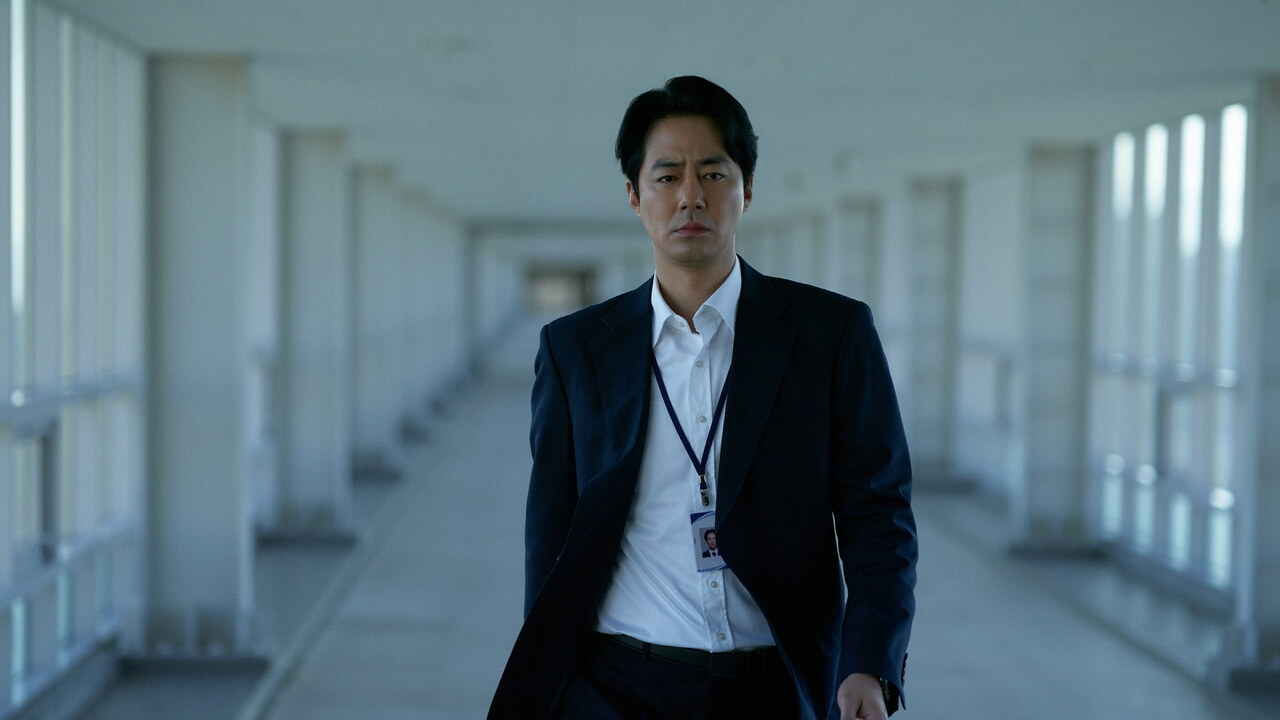
Ryoo Seung-wan's Humint opens with a strong emotional hook. Manager Zo (Zo In-sung), who works for the South Korean National Intelligence Service, interrogates a trafficked woman and promises that he and his team will rescue her, but he is forced to back out due to the logistical constraints of the operation. For starters, Zo's team must first send a video recording of the woman's confession back to the agency, and only after the agency deems the information valuable will it dispatch a rescue chopper. Zo initially begins to walk away reluctantly, but when he witnesses the brutal assault inflicted on the woman by the men exploiting her for profit, he intervenes. Zo kills the culprits but is ultimately unable to save the victim. She dies.
Throughout the film, clouds of guilt hang over Zo as he carries out his mission. In-sung ensures that we glimpse a layer of regret beneath his character's stone-cold exterior. With that emotionally charged opening, Seung-wan also establishes his own thematic mission: to present government agents—at least the more conscientious ones—differently from the institutions they serve. Many of Zo's co-workers display little sympathy for their informers. One colleague even remarks that, in their line of work, people must be treated as disposable. You cannot grow attached to everyone. What distinguishes agents like Zo, his colleague Im (Jeong Eu-gene), and Park Geon (Park Jeong-min) is their ability to empathize with the suffering of others. They behave like humans.
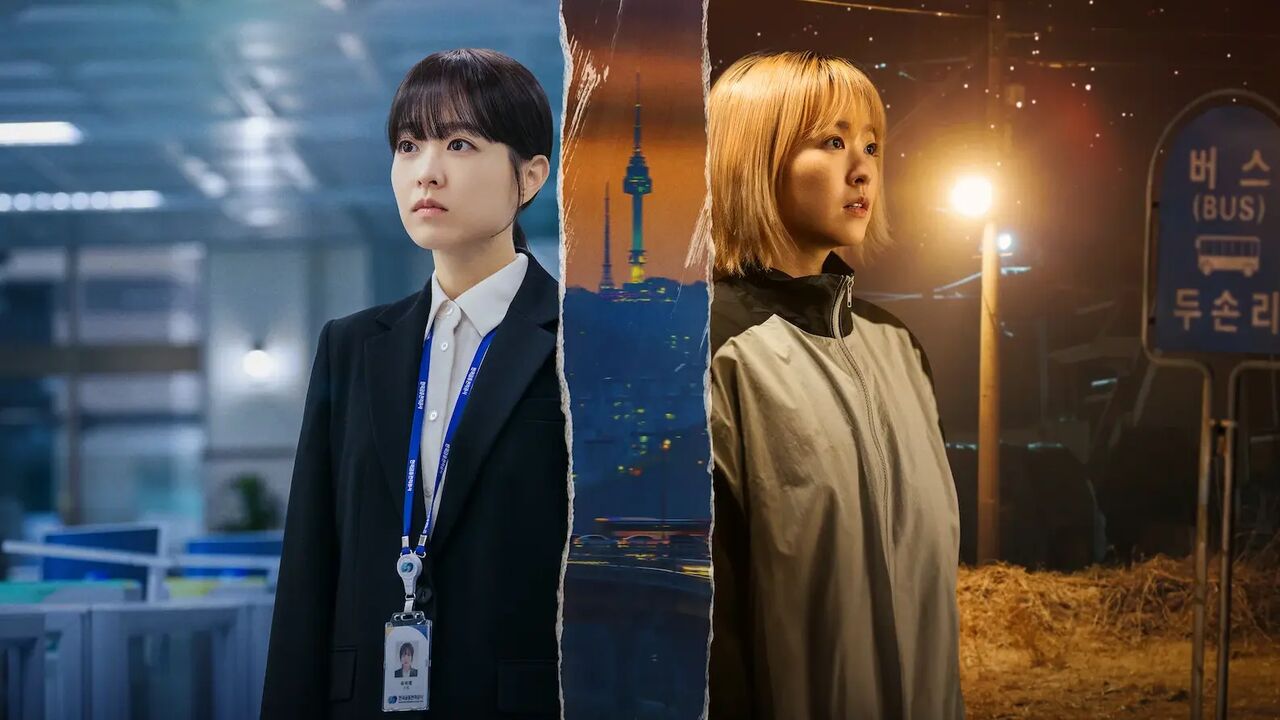
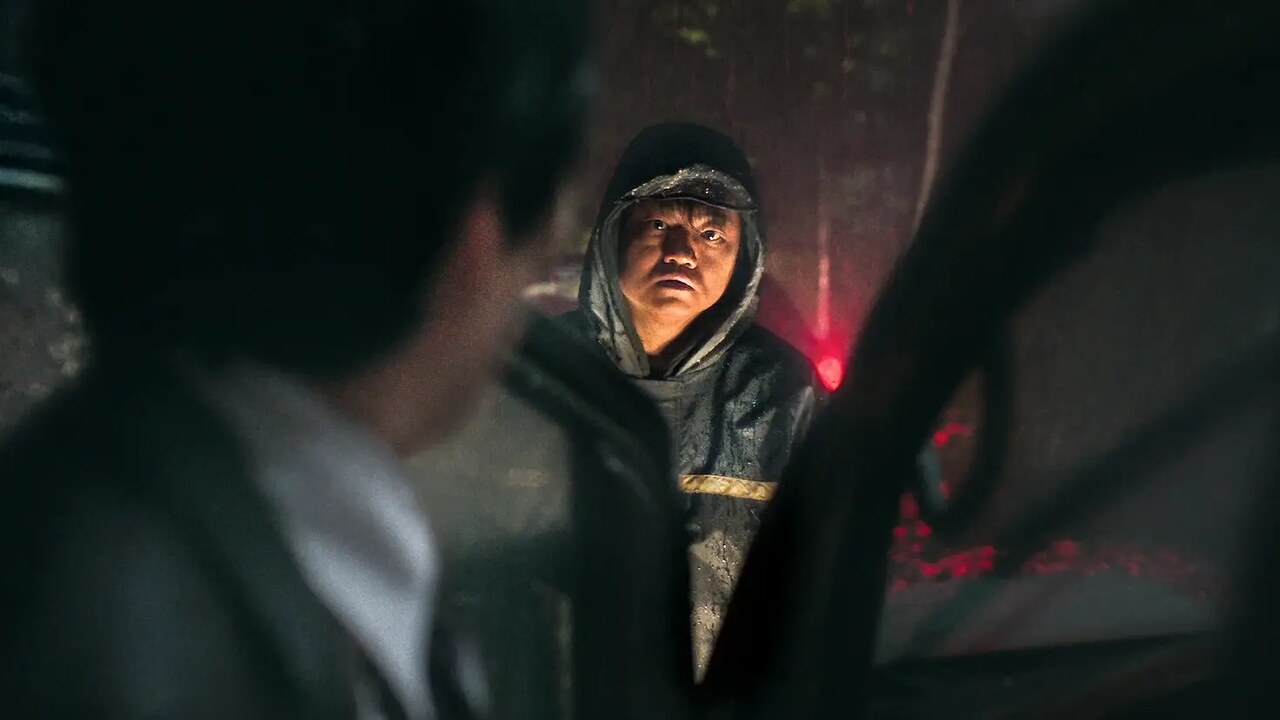
Complicating matters further, Zo and Park serve agencies from countries that are hostile to one another. Zo represents South Korea, while Park is an official in North Korea's State Security apparatus. Their paths intersect in the cold, forbidding terrain of Vladivostok, Russia. Despite their political opposition, both men share a connection to Chae Seon-hwa (Shin Se-kyung), a worker at a North Korean restaurant. Zo sees in her an opportunity for redemption, while Park shares with her a tempestuous romantic past. Seung-wan proves competent in handling these emotional and political dynamics. He accomplishes the task, though much of the weight is carried by the excellent performances, which lend substance to material that might otherwise feel clichéd or overly melodramatic. Even Robert Maaser manages to make his one-dimensional Russian villain convincingly disturbing (at one point, he shoots a woman multiple times with chilling sadistic pleasure).
The collaboration between South and North Korean characters appears designed to highlight the shared humanity that exists across political divides. When examined closely, the differences between the two Koreas seem less pronounced at the level of individual citizens. In one scene, a character sarcastically references the Korean Unification flag, yet Seung-wan himself does not appear ironic about the prospect of reconciliation. If anything, the film suggests that cooperation between the two nations could lead to greater success in confronting common threats. Ultimately, it requires the combined efforts of characters from both sides to defeat the movie's villains.
Whatever Seung-wan's broader intentions, he unquestionably excels at staging action sequences. I nearly covered my eyes when two characters tumbled down a flight of stairs, and it is a testament to Seung-wan's craftsmanship that he sustains tension during an extended climactic shootout that might otherwise have become monotonous. I was also struck by a torture scene in which Seon-hwa is repeatedly forced to write her confession; I cannot recall encountering a similar sequence elsewhere. The opening and closing shots appear clearly inspired by Le Samouraï, Jean-Pierre Melville's classic crime thriller. Humint may not be a great film, but it performs its function effectively. It delivers sufficient drama and suspense, and remains consistently engaging. Most importantly, Seung-wan demonstrates that clichés cease to be problematic when handled with style, care, and genuine craft.
Final Score- [7/10]
Reviewed by - Vikas Yadav
Follow @vikasonorous on Twitter
Publisher at Midgard Times


Hi Everyone, after a due consideration, we have decided that we will be open for donations to help us in managing our website. We will be greatful for any kind of amount we receive. Thanks!
— Midgard Times 🎬 (@Moviesr_net) January 4, 2026
PayPal- [email protected] pic.twitter.com/DlNNz5Npm5
Get all latest content delivered to your email a few times a month.
Bringing Pop Culture News from Every Realm, Get All the Latest Movie, TV News, Reviews & Trailers
Got Any questions? Drop an email to [email protected]



 © Copyrights MOVIESR.NET All rights reserved