


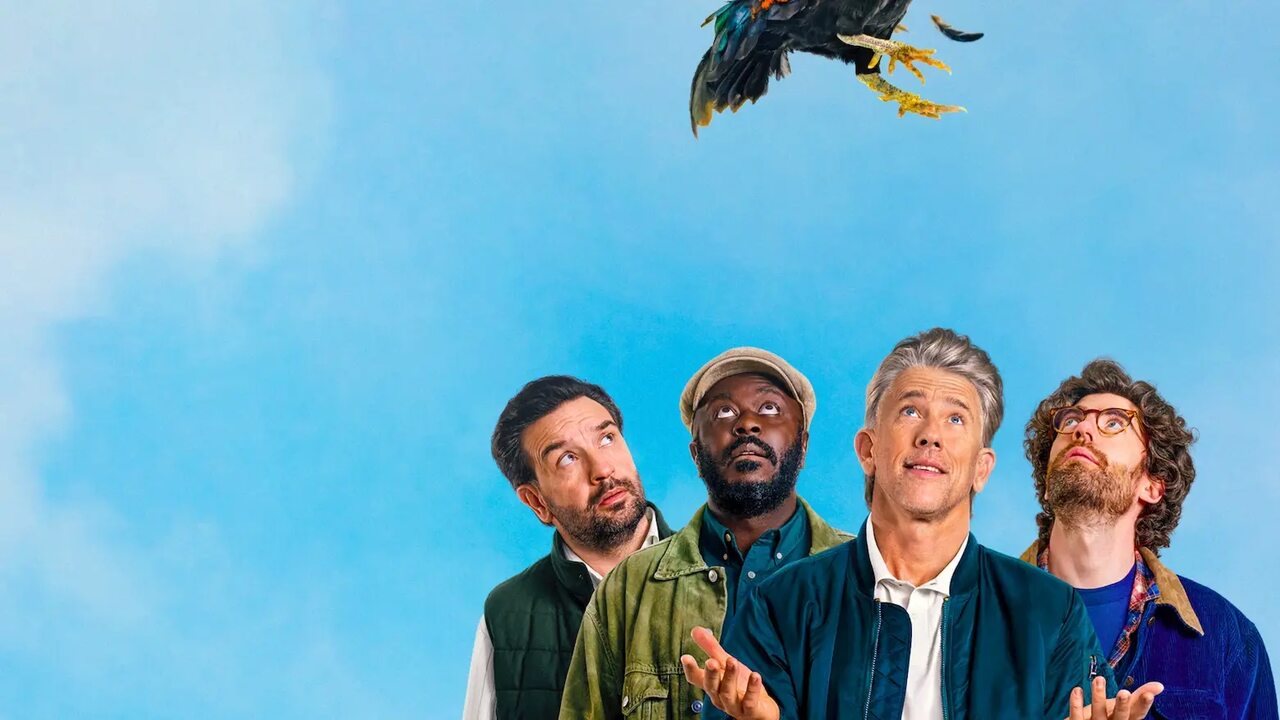
I’ll admit something immediately: I went into season two of Roosters expecting exactly what season one trained me to expect—grown Dutch men making bad decisions with complete confidence, saying emotionally irresponsible things over beer, panicking whenever feelings enter the conversation, and somehow turning basic life events into social disasters. What I did not expect was to actually care this much. Again. That’s probably the biggest compliment I can give Roosters as it returns for its second season. It’s still messy, still chaotic, still proudly committed to awkward masculinity and painfully relatable social humiliation—but beneath all the jokes about aging bodies, relationship politics, career insecurity, and men who think “I’m fine” qualifies as emotional communication, there’s a surprising amount of heart. And thankfully… Season two knows it.
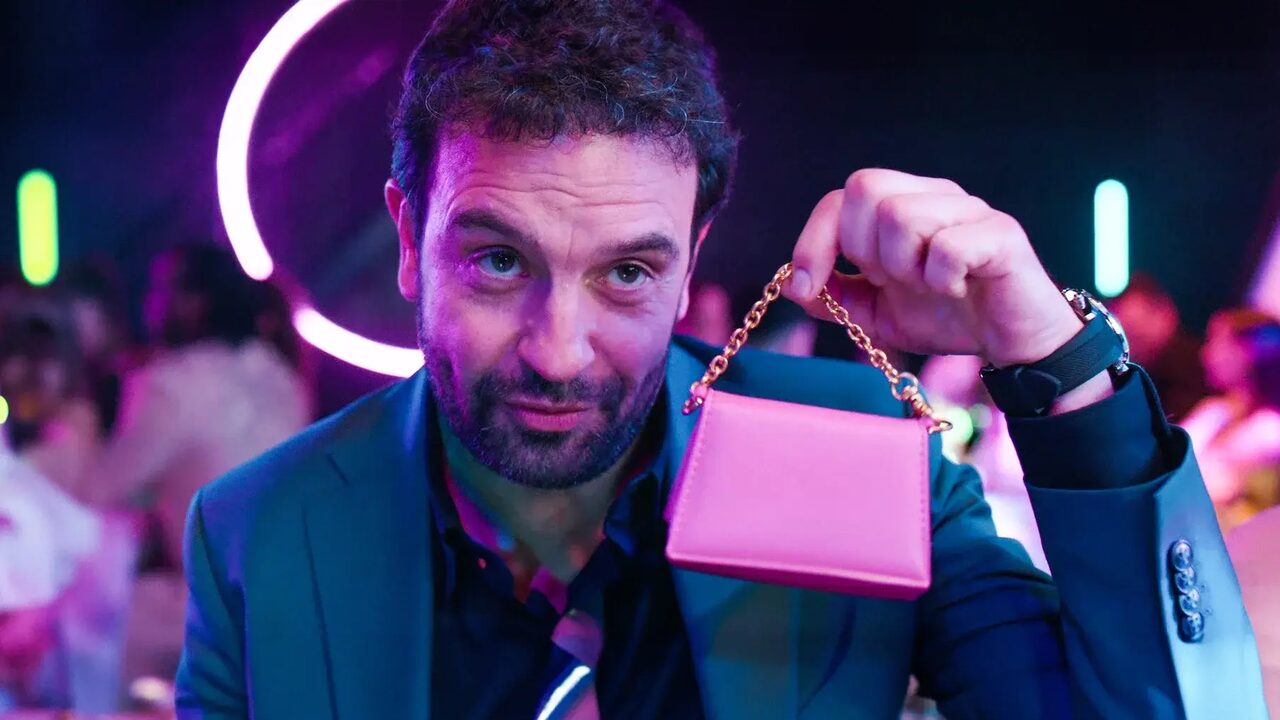
If season one was about introducing these four emotionally undercooked adult men and showing us how spectacularly they struggle with modern life, season two is about something much scarier: Growth. Or at least… The horrifying possibility of it. At the center of the chaos, once again, is Mike, played brilliantly by Jeroen Spitzenberger, who continues to master the very specific art of looking confident while clearly having no idea what’s happening. Mike enters season two trying very hard to project stability. He has plans. He has goals. He has opinions. He has what appears to be a structured approach to rebuilding parts of his personal and professional life. Naturally… None of it survives the first two episodes. I loved that.
Mike remains the easiest entry point into the group because his problems are painfully recognizable. Career anxiety. Aging. Financial pressure. Parenting decisions he pretends are intentional. Trying to stay relevant in a world where younger colleagues casually understand technology makes him visibly suspicious. Relatable. Deeply relatable. And Jeroen plays all of it with fantastic comic timing. Then there’s Ivo, played with wonderfully dry energy by Waldemar Torenstra, who might honestly be my favorite this season. Not because he’s the most emotionally healthy. He absolutely is not. But because season two gives him the most interesting emotional material.
Ivo’s story dives deeper into marriage, emotional vulnerability, professional insecurity, and the deeply male habit of turning every uncomfortable conversation into a logistical discussion. Watching him try to express actual feelings while clearly wishing someone would just discuss mortgage rates instead… Honestly? Excellent comedy. And slightly painful. Daan and Greg continue rounding out the group beautifully, each bringing their own specific flavor of adult dysfunction. One is constantly overthinking. The other acts first and emotionally apologizes much, much later. Sometimes. If reminded. Together, the four leads still have fantastic chemistry, and that remains the Roosters’ biggest strength. They don’t feel like sitcom characters. They feel like real friends. Friends who interrupt each other. Forget birthdays. Judge parenting choices. Offer terrible advice. Then show up anyway. That matters. And season two leans into that history much more confidently.
What impressed me most this season is how willing the show is to make these men look ridiculous without making them feel pathetic. That’s a difficult balance. And Roosters usually nail it. There’s an episode involving a wellness retreat that genuinely had me laughing out loud—not because the jokes were loud or obvious, but because every man involved was so clearly trying to appear emotionally evolved while actively falling apart internally. At one point, one of them says something about “embracing discomfort” while visibly panicking about herbal tea. I felt seen. There’s also a workplace storyline involving generational conflict, digital branding, and social-media embarrassment that’s painfully current without ever feeling like the writers googled “millennial problems” five minutes before production. That’s a relief. Too many modern comedies try to feel relevant by mentioning apps. Roosters actually understand behavior. That’s much harder. And much funnier.
Visually, the series continues looking clean, warm, and deceptively polished. Amsterdam is beautifully shot—not in a touristy way, but in a lived-in, practical, slightly chaotic urban way. Apartments feel authentic, Offices feel emotionally draining, Restaurants feel overpriced, which feels accurate. Direction-wise, the show understands when to let scenes breathe. Arguments don’t always become punchlines. Sometimes characters sit with discomfort. Sometimes they fail to. Usually spectacularly.
The writing is still sharp, especially when it comes to male friendships. The dialogue feels lived-in, messy, interrupted, unfinished. Nobody delivers perfect speeches. Nobody suddenly becomes emotionally fluent because the episode needs closure. These men still struggle. And that honesty keeps the comedy grounded. There’s one conversation late in the season—no spoilers—between Mike and Ivo that starts as an argument about football and quietly becomes a conversation about fear, aging, and whether they’ve become people their younger selves would actually respect. That scene caught me off guard. And it’s one of the strongest moments in the season.
As much as I enjoyed season two, it’s not flawless. And this is where things get a little more complicated. For starters, Roosters occasionally becomes so comfortable with its characters’ dysfunction that it starts repeating certain rhythms. Not exact jokes. Not exact storylines. But emotional patterns. Man lies. Friend covers. Partner notices. Awkward silence. Public embarrassment. Emotional breakthrough. Repeat. It still works.
But by the middle episodes, I started noticing the machinery a little more than I did in season one. There’s also one subplot involving a younger romantic interest that never fully clicks for me. I understood its narrative purpose. I understood what it was trying to say about validation, insecurity, aging, and ego. I just never fully believed it emotionally. Compared to the sharper friendship and family material, it felt slightly more functional than organic. Not bad. Just noticeably weaker. And pacing occasionally dips. Particularly in the middle stretch. Nothing dramatic.
But there are one or two episodes where the show spends a little too long setting up emotional payoffs that you can see coming from several scenes away. I still enjoyed the ride. I just knew where we were parking. Also—and this is a very personal complaint—there’s one karaoke scene that goes on approximately two minutes longer than any adult man should be allowed to publicly process feelings through 90s pop music. I understood the symbolism. I did.
These are relatively small complaints in a season doing so much right. Because what Roosters understands better than most male ensemble comedies is that growing older doesn’t automatically make you wiser. Sometimes it just makes your mistakes more expensive. That’s funny. That’s painful. And increasingly relatable.
By the end of season two, I wasn’t just laughing at these men. I was rooting for them, even when they were being idiots. Especially when they were being idiots. Roosters season two is funny, warm, emotionally sharper than expected, filled with terrific ensemble chemistry, and refreshingly honest about friendship, masculinity, and the exhausting process of becoming a slightly better adult. It occasionally repeats familiar emotional beats, a few subplots feel less inspired than others, and the pacing dips slightly in the middle, but when the season locks in, it’s smart, relatable, and often genuinely hilarious. If four men in their forties say, “This will be simple”… Leave immediately.
Final Score- [7/10]
Reviewed by - Anjali Sharma
Follow @AnjaliS54769166 on Twitter
Publisher at Midgard Times


Hi Everyone, after a due consideration, we have decided that we will be open for donations to help us in managing our website. We will be greatful for any kind of amount we receive. Thanks!
— Midgard Times 🎬 (@Moviesr_net) January 4, 2026
PayPal- [email protected] pic.twitter.com/DlNNz5Npm5
Get all latest content delivered to your email a few times a month.
Bringing Pop Culture News from Every Realm, Get All the Latest Movie, TV News, Reviews & Trailers
Got Any questions? Drop an email to [email protected]


 © Copyrights MOVIESR.NET All rights reserved