



There is a particular kind of sadness that comes with hearing a song you haven't heard in years. The song itself hasn't changed, but you have. Suddenly, you're not listening to music so much as being transported back to a version of yourself you had quietly assumed was gone. Sinagtala understands that feeling very well. Its central idea is simple: what happens when the people who once knew you best are suddenly standing in front of you again, carrying memories you thought you'd successfully outgrown?
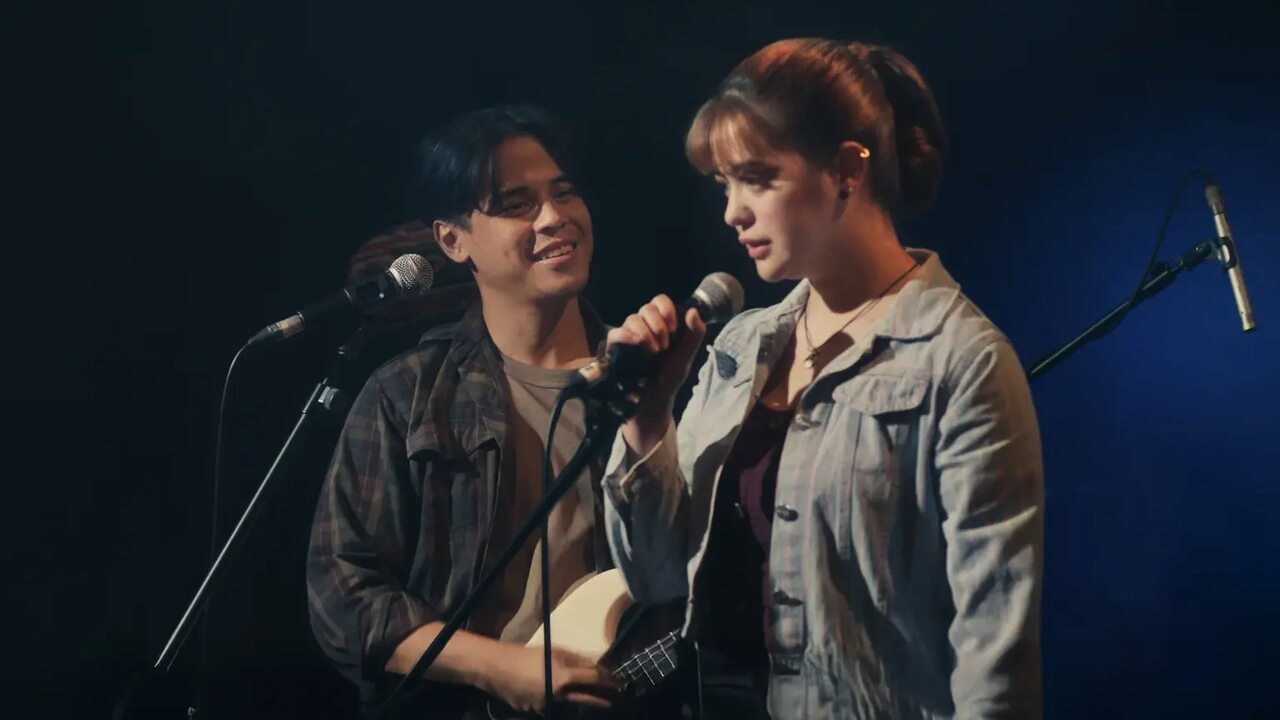
The film follows a former college band whose members reunite years after going their separate ways, prompted by an unexpected video message. It is an extremely familiar setup for a reunion drama, but Sinagtala isn't particularly interested in pretending otherwise. This is a movie about old friends, old songs, old wounds, and the deeply inconvenient fact that time does not necessarily resolve anything. Sometimes it just gives people more years to avoid talking about it. What makes the film work is its ensemble.
Glaiza de Castro, Rhian Ramos, Rayver Cruz, Arci Muñoz, and Matt Lozano have enough individual presence to keep the characters from blending into the generic "friends who haven't seen each other in years" archetype. The film is particularly effective when it lets their personalities clash rather than forcing everyone into a single emotional register. Reunion stories can become exhausting when every character exists solely to deliver another speech about friendship and regret. Sinagtala occasionally gets close to that territory, but the cast gives the material enough texture to pull it back.
Glaiza de Castro is especially good at grounding the more emotionally charged material. There is restraint in her performance that I appreciated because the screenplay is sometimes quite eager to tell me exactly what everyone is feeling. She doesn't need to announce every emotion. A look or a pause can do considerably more work. Rhian Ramos brings a different energy, giving the ensemble some of its sharper edges, while Rayver Cruz fits comfortably into the film's more nostalgic register. Arci Muñoz and Matt Lozano also contribute to the sense that this is an actual group with history rather than five actors waiting for their individual dramatic turns. And obviously, the music matters.
Thankfully, Sinagtala doesn't treat its musical component as background decoration. Songs are tied to memory and identity, which gives the performances within the film an emotional purpose. The cast themselves have spoken about the importance of particular songs in their own lives while promoting the film, which fits neatly with what the movie is trying to explore: music isn't merely something these characters used to perform together; it is part of the emotional archive they share.
The best musical moments therefore aren't necessarily the biggest ones. I found myself more interested in the way a song changes the atmosphere between characters than in whether the performance itself is technically spectacular. The film understands that people don't always say what they mean to one another, but they can sometimes sing it. That said, Sinagtala does occasionally lean too heavily into the emotional shorthand of the reunion drama. There are moments when I could practically see the screenplay reaching for a box labelled IMPORTANT MEMORY and opening it directly in front of me. The film has a tendency to underline emotions that were already clear. When a character has a complicated history with another character, I usually don't need three separate reminders that their history is complicated.
The middle section is where the film feels most vulnerable to repetition. Once the characters are reunited, the basic dramatic machinery becomes fairly apparent: someone has unresolved feelings, someone has unresolved guilt, someone has moved on more successfully than the others, and eventually everybody has to confront whatever they have spent years avoiding. None of this is particularly surprising. But I don't think predictability necessarily hurts Sinagtala as much as it could have, because the movie's appeal isn't really dependent on discovering what happens next. It's dependent on whether you care about these people when it happens.
There is something genuinely appealing about the film's focus on friendship rather than making romance the automatic centre of everyone's life. These people had identities before they became whatever adults they are now. They had ambitions, rivalries, insecurities, dreams, and stupid decisions. The reunion forces them to confront not only their relationships with one another but also the gap between who they thought they would become and who they actually became. That gives the film a surprisingly mature emotional thread.
The passage of time is also handled with a degree of honesty. The movie doesn't suggest that reconnecting with old friends magically restores the past. In fact, part of the discomfort comes from recognising that the people you remember aren't necessarily the people standing in front of you anymore. Neither are you. A reunion can therefore be both comforting and unsettling: you're meeting someone familiar while simultaneously discovering how much you no longer know about them.
Mike E. Sandejas directs the film with enough restraint to let that idea breathe. The filmmaking isn't particularly showy, and I think that's the right decision. Sinagtala is at its strongest when the camera stays with the actors and allows the relationships to generate the drama rather than trying to manufacture significance through visual flourishes. I did, however, wish the screenplay trusted its audience a little more. Some of the emotional conclusions arrive with very clearly marked signposts, and there are stretches where the dialogue sounds less like five people having a conversation and more like five people helping the audience complete a thematic worksheet.
What I liked most about Sinagtala is that it doesn't treat nostalgia as automatically beautiful. Nostalgia can be cruel. It can make the past look better than it was, make old relationships seem deeper than they actually were, and make you mourn versions of yourself that perhaps weren't even particularly happy. The film understands that looking backwards can be comforting, but it can also reopen things you thought were safely closed.
A song can preserve a moment with terrifying precision. You can forget someone's face and still remember exactly what was playing when you met them. You can forget the conversation but remember the chorus. Sinagtala builds its emotional identity around that very specific power of music. It isn't an especially radical film, and there are moments when its sentimentality gets the better of it. But I would much rather watch a reunion movie that is genuinely interested in why people drift apart than one that simply uses nostalgia as an excuse to put attractive people on stage and make everyone cry. Sinagtala occasionally tells me how to feel when I was already getting there on my own. But when it stops explaining and simply lets the music, performances, and history between these characters do the work, it becomes quite moving.
Final Score- [7.5/10]
Reviewed by - Anjali Sharma
Follow @AnjaliS54769166 on Twitter
Publisher at Midgard Times

Hi Everyone, after a due consideration, we have decided that we will be open for donations to help us in managing our website. We will be greatful for any kind of amount we receive. Thanks!
— Midgard Times 🎬 (@Moviesr_net) January 4, 2026
PayPal- [email protected] pic.twitter.com/DlNNz5Npm5
Get all latest content delivered to your email a few times a month.
Bringing Pop Culture News from Every Realm, Get All the Latest Movie, TV News, Reviews & Trailers
Got Any questions? Drop an email to [email protected]


 © Copyrights MOVIESR.NET All rights reserved