



The Chestnut Man: Hide and Seek features clearly drawn characters, effective story arcs, and an engaging mystery. Like the first season, the identity of the main culprit is not something you'll easily predict or see coming from a mile away, though Season 2 arrives with a more twisted killer and a more gripping finale that leaves you holding your breath. Based on Søren Sveistrup's book Hide and Seek, the second season of The Chestnut Man has a clear objective in mind, and it pursues it dutifully from start to finish. The characters end up where they must; the killer gets their comeuppance appropriately. The series bears the marks of meticulous craftsmanship. Such assiduity produces an enjoyable crime mystery, but what it lacks is a warm, beating heart, which means the human relationships never rise above feeling vague or generic.
It's revealed that after the events of Season 1, Naia (Danica Curcic) and Mark (Mikkel Boe Følsgaard) actually got together and started dating. They were in a relationship for a few months when, one day, Mark walked away suddenly. What happened? All we get is a line from Naia accusing Mark of abandoning things midway whenever situations become emotionally distressing. Mark assures Naia that he will explain himself to her daughter, Le (Ester Birch), when the time is right, but that moment never arrives. The series doesn't even delve into the past to show us what this romance was really like. How happy were they together? Did the relationship ever affect their work? How much did they fight? Was the breakup triggered by an ugly argument? Without such specifics, the Naia-Mark angle comes across as generalized. This also means that not much of a passionate spark emerges between the two characters, leaving the actors to generate chemistry largely through sheer screen presence. They are left doing all the heavy lifting.
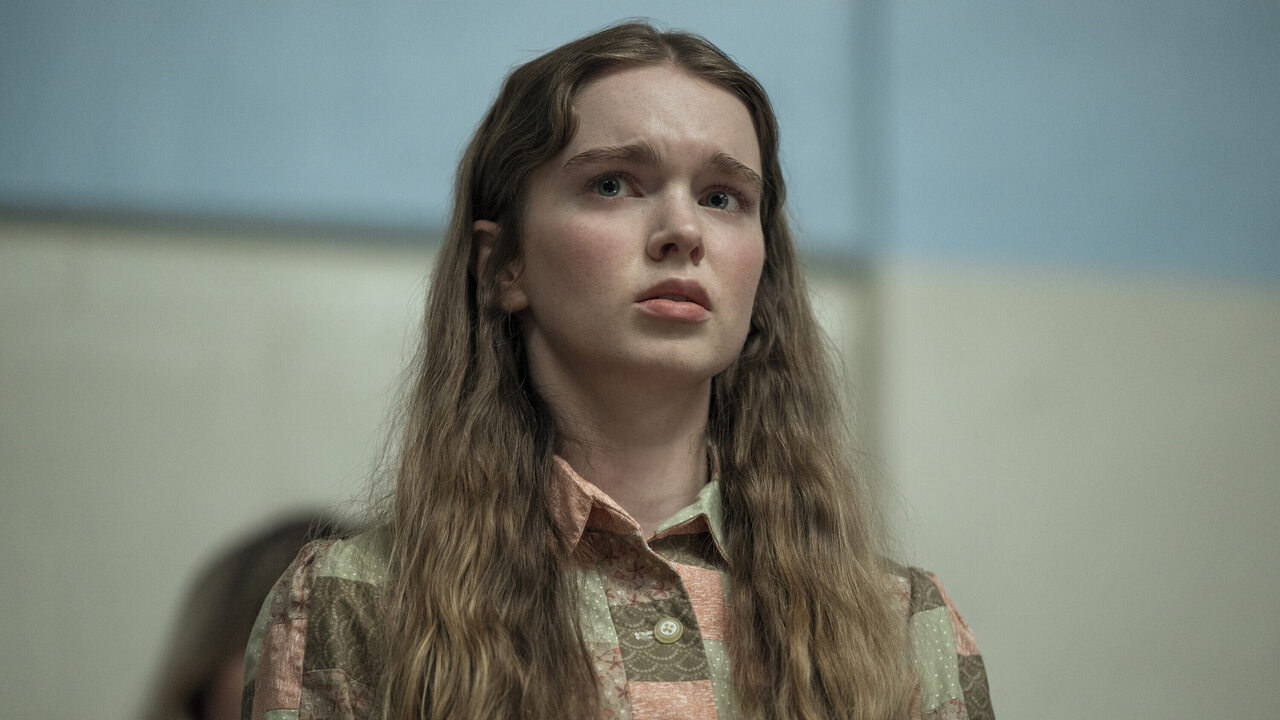
This turns out to be a major problem because of a shocking scene that, instead of landing like a punch to the gut, feels mechanically engineered to provoke a temporary reaction. Its power derives more from the breaking of a convention than from any genuine emotion. Hide and Seek treats its human affairs with a workmanlike energy. Only the details that can be neatly slotted into the script's tightly controlled machinery are allowed to surface on the screen. Even the casual conversations rarely move beyond the basics: How are you? Do you want to have coffee? And so on. The characters don't converse; they regurgitate whatever has been fed to them. They function as the writer's mouthpieces, sincerely dispensing exposition. There's another version of The Chestnut Man: Hide and Seek lurking within this series—one that focuses, with palpable emotion and intense subjectivity, on a grieving mother struggling to remain within the boundaries of reality, thereby straining her relationship with her kids. It also dives into the headspace of a fatherless teenager experiencing extreme emotional turmoil because of a father figure she adores, only for him to drift in and out of her life without warning. That father figure has his own issues to confront, his own demons to fight. That version of Hide and Seek would also have explored the murderer's twisted psychology more deeply—it would have dramatized it rather than bluntly and blandly explaining it.
The show currently streaming is far from inventive or imaginative. It treats its best aspects as mere plot ornaments that tease you without ever becoming truly stimulating. Season 2, like Season 1, is simply formulaic. And while the formula is executed soundly, the result is nonetheless more conventional than innovative. The Chestnut Man: Hide and Seek is not bad. It simply wastes its potential to become something more distinctive. That, in the end, is the real tragedy.
Final Score- [5.5/10]
Reviewed by - Vikas Yadav
Follow @vikasonorous on Twitter
Publisher at Midgard Times





Hi Everyone, after a due consideration, we have decided that we will be open for donations to help us in managing our website. We will be greatful for any kind of amount we receive. Thanks!
— Midgard Times 🎬 (@Moviesr_net) January 4, 2026
PayPal- [email protected] pic.twitter.com/DlNNz5Npm5
Get all latest content delivered to your email a few times a month.
Bringing Pop Culture News from Every Realm, Get All the Latest Movie, TV News, Reviews & Trailers
Got Any questions? Drop an email to [email protected]


 © Copyrights MOVIESR.NET All rights reserved