


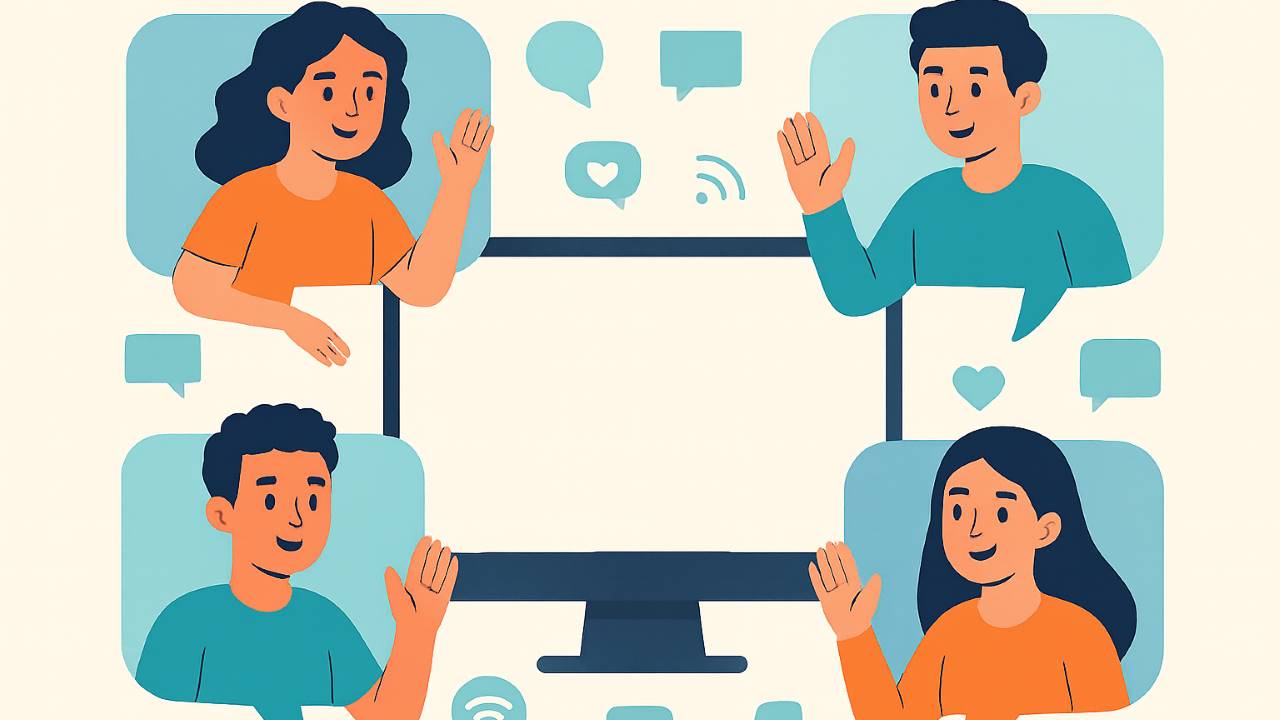
Social interaction isn’t limited or confined to physical spaces in today’s age. In fact, most socialising these days occurs over the internet on social media platforms, online forums, professional networking platforms, and even multiplayer games. People are forming meaningful relationships in the digital realm, and they feel more connected than ever.
Many individuals report that they feel more understood, supported, emotionally connected, and heard online than in their offline lives. But what exactly makes people feel connected in an online, virtual environment? Let’s find out by taking a look at various platforms that facilitate bonding online.
One of the top reasons why people feel more connected online is that you can find whole communities built around common topics. Online forums, Facebook groups, Discord servers, and subreddits are designed to bring people together around specific interests. Whether it is photography, coding, fitness, or mental health, these platforms provide a space where participants feel immediately understood and heard.
On these platforms, people can talk about their interests and interact with other people who are also fond of the same things. Online communities provide a common ground from the very first interaction, remove awkward small talk, and establish trust and comfort early on.
The constant availability on digital platforms increases closeness and fosters online connections. Unlike in-person interactions, online communication is not limited by physical distances or schedules. People can chat across time zones, leave messages that others can respond to later, and maintain their relationships regardless of geographical location. This ease of connection has made it possible to foster and grow connections, even when individuals are busy or far apart.
Moreover, on online platforms including Omegle, users can engage in daily or even hourly interactions through messages, comments, likes, or reactions. Repeated interactions create familiarity and a sense of intimacy, and strengthen emotional bonds, making people feel connected even when they are physically apart.
As compared to physical interaction, the digital environment provides a sense of emotional safety that encourages people to open up emotionally. Sharing feelings, emotions, or insecurities in person can be intimidating for some people, but in the virtual world, the barrier of a screen reduces vulnerabilities and allows users to express their emotions with less fear of being judged or socially embarrassed.
Plus, many online spaces and communities prioritise empathy and guidance. When individuals receive validation and understanding from others, they feel supported and valued. This emotional reinforcement strengthens their virtual connections.
On online platforms, you get different tools that make communication more enriching. Although nothing can beat the closeness and intimacy of in-person interactions, online platforms offer tools like emojis, voice notes, GIFs, and reactions that allow users to express tone, humour, and emotion without relying solely on text messages. These tools reduce miscommunication and make digital interactions more expressive, helping users feel emotionally connected to each other.
When we compare online platforms with in-person socializing, online platforms make initiating and maintaining conversations so much easier. The barriers to socializing are low on the internet, as compared to in-person, because there is no social apprehension or social anxiety. Many people who feel conscious about their looks, gestures, or body language in real life are able to communicate and socialise comfortably on the internet.
Plus, it is much simpler and easier to start conversations online, as you can like a post, leave a comment, or send a short message to initiate a conversation, which provides low-pressure entry points for interactions.





Hi Everyone, after a due consideration, we have decided that we will be open for donations to help us in managing our website. We will be greatful for any kind of amount we receive. Thanks!
— Midgard Times 🎬 (@Moviesr_net) January 4, 2026
PayPal- [email protected] pic.twitter.com/DlNNz5Npm5
Get all latest content delivered to your email a few times a month.
Bringing Pop Culture News from Every Realm, Get All the Latest Movie, TV News, Reviews & Trailers
Got Any questions? Drop an email to [email protected]



 © Copyrights MOVIESR.NET All rights reserved