


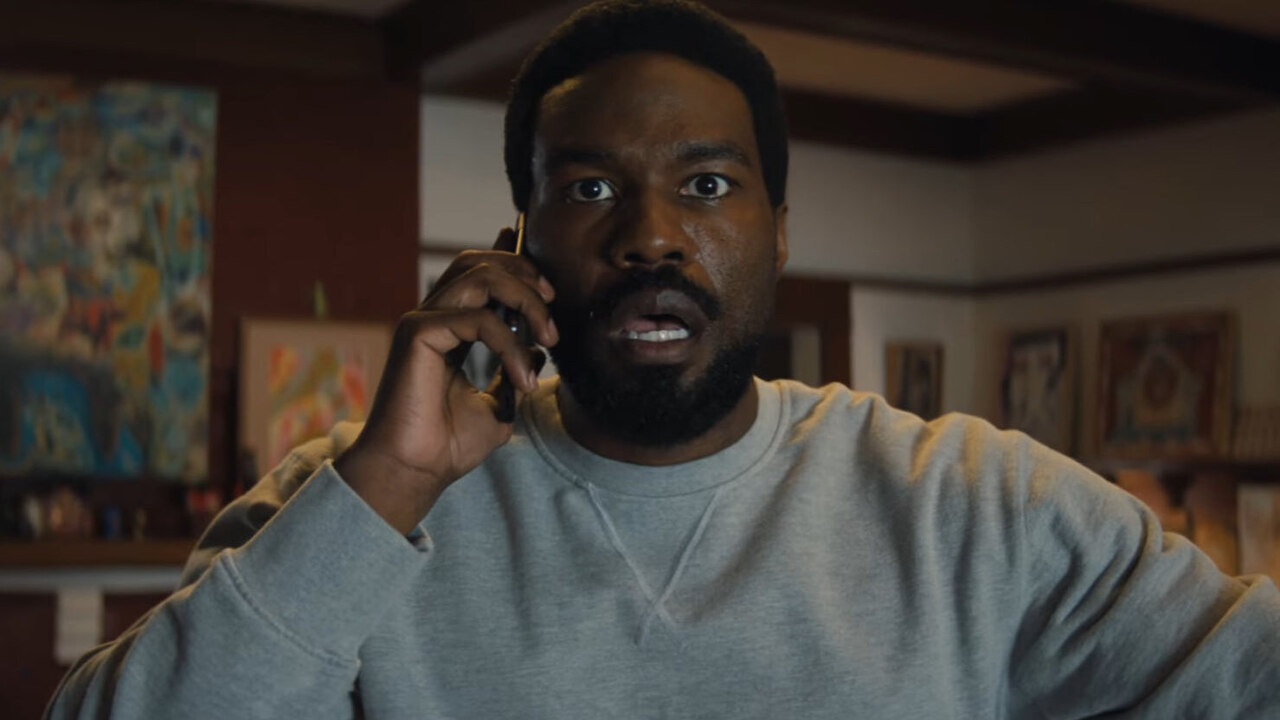
It's telling that Wonder Man, the new Marvel series created by Destin Daniel Cretton and Andrew Guest, is intensely centered on actors and acting. Marvel shows and movies, despite their elaborate multiverse-spanning designs and hectic storytelling, owe little to their writers (and sometimes even their directors) when it comes to drawing in crowds. It is primarily the actors and their superhero personas that sell tickets at the box office. No one should be surprised, then, that the studio has brought back Robert Downey Jr. and Chris Evans. To give credit where it's due, most actors—through performances ranging from mighty to merely good—infuse their flat on-screen figures with a semblance of life. And Deadpool & Wolverine is just one of many Marvel movies that have proven that something called "story" is disposable for this franchise. Simply let the superheroes banter with one another or wink at the fans, and you'll witness an explosion at the box office.
Yes, there was a brief period when these movies were failing, thanks to the so-called superhero fatigue. But it turns out what the studios actually needed to do was merely tweak the formula to mask the stench of unoriginality. The result? Wonder Man, which has managed to trick even critics into giving it their seal of approval and acclaiming it as a "low-stakes superhero fare that boasts high-hearted personal drama as its winning factor." I would argue that the stakes are almost non-existent and that the "high-hearted personal drama" is nothing more than standard Marvel-level sentimental guff. One reason for the critical applause may be that the show deals with the world of movies. Almost every production focused on filmmaking tends to be well-received, regardless of whether the results are good or mediocre. And the results in Wonder Man are firmly of the mediocre kind. Its concern with acting functions mostly as catnip for cinephiles and critics alike.
Cretton and Guest, however, understand the basics of securing an audience's allegiance. In Wonder Man, they spotlight a struggling actor, Simon Williams (Yahya Abdul-Mateen II), and his friendship with a once-great star, Trevor Slattery (Daniela Lavender), who is also struggling. At his mother's (Shola Adewusi) birthday party, Simon is urged by his elder brother, Eric (Demetrius Grosse), to join him at his insurance company, since Simon's creative life has failed to prove financially viable. At director Von Kovak's (Zlatko Burić) mansion, Simon nearly sabotages his chances of landing the lead role in a superhero film. In the first episode, his part is cut from an episode of American Horror Story, and when he returns home, his girlfriend, Vivian (Olivia Thirlby), leaves him. When Simon reaches his lowest point and considers quitting altogether, he and Trevor receive a callback for the Von Kovak movie.
These scenarios are designed to make viewers recognize aspects of their own lives. You might point at the screen and exclaim, "That's so me," or "That's exactly what happens to me." Cretton and Guest rely heavily on this recognition to do the heavy lifting because they strip Simon's life of specificity. How exactly was Simon and Vivian's relationship? We see only the breakup and hear a complaint that he never confided in her. How did Simon's parents react when they discovered that their son was not an ordinary human being? How did they accept and embrace his powers, and what steps did they take to hide his abilities from friends, neighbors, and relatives? Does Eric feel even a trace of jealousy that Simon gets to chase his dreams, is a superhero, and was also their father's favorite child? Did Eric choose insurance because he likes it, or did he abandon his own dreams to become the responsible one? And if so, what were those dreams?
Simon is presented as a movie geek, yet Wonder Man never bothers to establish what his favorite film is or who his favorite actor might be. He is absorbed in every movie he watches and compliments every actor he meets. The only thing we learn is that he hates Baby's Day Out and Joe Pantoliano—though this seems driven less by genuine taste and more by Pantoliano's condescension toward Slattery.
All this matters because in one scene, Trevor tells Simon that he must tap into his sadness, his pain, his loss, and his memories to excel at acting. But based on what Wonder Man shows us, Simon has no discernible experiences, interests, or emotional range beyond what the plot mechanically requires. I would have liked to see scenes in which Vivian notices the effects of Simon's frustration or anger—and how he tries to cover it up. How did a young Simon manage himself in front of bullies? Did he ever talk to his parents about his powers and what they made him feel? What did Simon feel when he first discovered he had superpowers? How did he adjust to his body? Was there ever a crush or a friend he avoided out of fear of hurting them? Wonder Man shrugs and moves on. It offers only Simon, the "self-centered dick," a trait justified through the tired "artists are eccentric" stereotype—one that the show also extends to Kovak, the famous director in the series.
Underdog stories have an appeal that audiences instinctively cherish. Watching a failure's dreams come true offers the vicarious satisfaction of winning. Simon is written with just enough generality to allow viewers to project their own experiences onto him. On top of that, Abdul-Mateen II is more than capable of pulling you in, giving a stick figure the illusion of multidimensionality and lived memory. But beneath the genial fun and light theatrics—an actor's death mid-shoot feels something lifted straight out of The Boys—Wonder Man is ultimately just another forgettable, blank-filling entry in the Marvel franchise. Its sole distinguishing feature is its faux-sitcom tone (one episode revolves around a GoPro camera and homemade candies), and even that delivers emptiness devoid of personality or style.
In one episode, Simon and Trevor attempt to impress a writer from The New York Times, yet her article is never mentioned, and we never learn what she ultimately writes. Toward the end, Simon performs a rescue operation, and once again we are left asking: When and how did he learn to control his powers? What research did he do? Did he ask for help? Did he talk to anyone? Had the creators been genuinely imaginative—or reckless—they might have pressed Simon harder by turning his entire life into something resembling The Truman Show. That would have been devastating. But, predictably, they play it safe, because the "M" in Marvel stands for monotony. Wonder Man, in the end, is little more than a greeting card for the actors working in this billion-dollar franchise. It's Kevin Feige's way of thanking them for keeping his mediocre machine alive.
Final Score- [3/10]
Reviewed by - Vikas Yadav
Follow @vikasonorous on Twitter
Publisher at Midgard Times


Hi Everyone, after a due consideration, we have decided that we will be open for donations to help us in managing our website. We will be greatful for any kind of amount we receive. Thanks!
— Midgard Times 🎬 (@Moviesr_net) January 4, 2026
PayPal- [email protected] pic.twitter.com/DlNNz5Npm5
Get all latest content delivered to your email a few times a month.
Bringing Pop Culture News from Every Realm, Get All the Latest Movie, TV News, Reviews & Trailers
Got Any questions? Drop an email to [email protected]

 © Copyrights MOVIESR.NET All rights reserved