


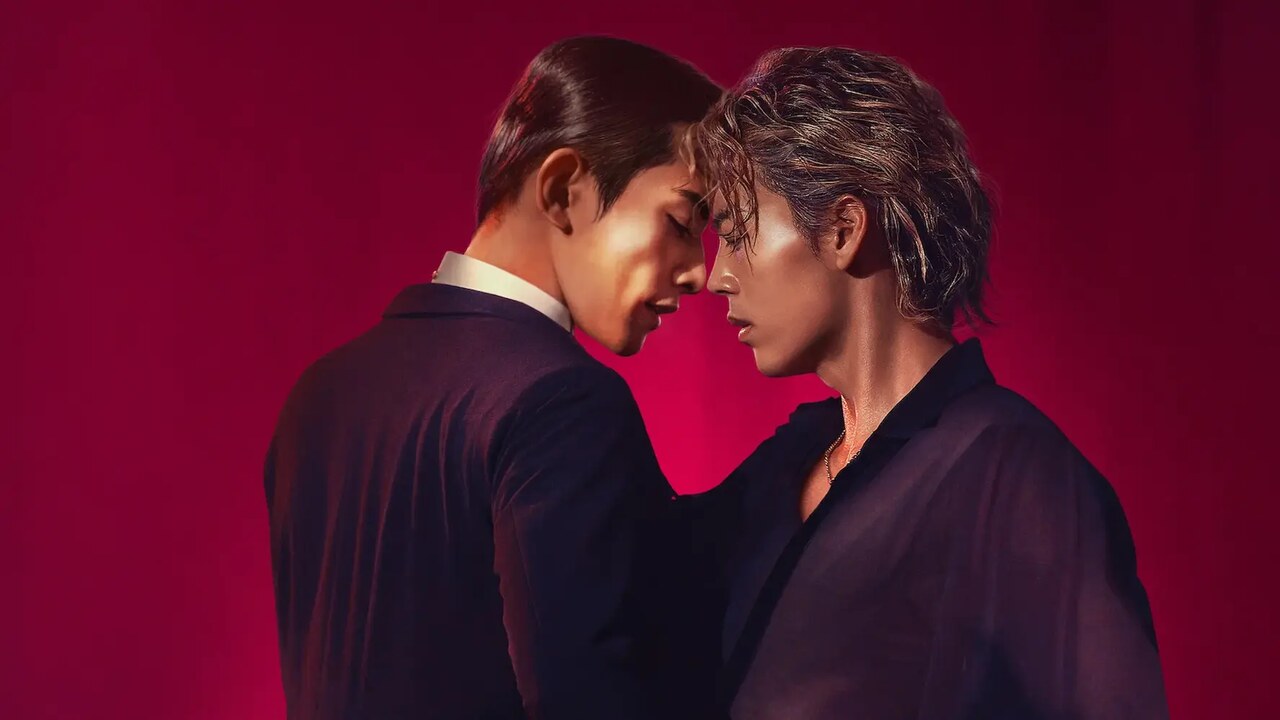
I entered 10 Dance with cautious optimism and a slightly judgmental mindset, mostly because dance movies have a habit of either underestimating the audience or drowning everything in dramatic slow motion and inspirational speeches that feel written by someone who has never actually competed in anything. Thankfully, 10 Dance is smarter than that. Not perfect, not revolutionary, but smart enough to know that the real drama of competitive dance lies less in glitter and more in ego, discipline, and the quiet terror of being evaluated by strangers with clipboards.
The film wastes no time establishing its two leads as absolute experts in their own domains. Suzuki, the Latin dancer, is all intensity, flair, and unapologetic confidence. His movements are bold, expressive, and borderline aggressive in the way only elite competitors can afford to be. He knows he’s good, he knows people watch him, and he uses that attention like oxygen. Sugiki, by contrast, embodies restraint. As a Standard ballroom specialist, his dancing is about precision, control, posture, and emotional containment. Every movement feels measured, every expression filtered. Watching them separately, it’s obvious why they dominate their respective styles. Watching them together, it’s obvious why this partnership should not work.
And that’s where the movie gets its first major win. The conflict between them doesn’t feel manufactured. It feels inevitable. Latin and Standard are treated not just as dance styles, but as philosophies. Suzuki dances outward, Sugiki dances inward, and neither initially respects the other’s approach. Their early interactions are sharp, petty, and frequently hilarious in a dry, almost passive-aggressive way. There are no big shouting matches, just carefully delivered insults disguised as technical feedback. If you’ve ever watched professionals argue while pretending to be polite, you’ll feel very seen.
What I appreciated most is that the movie doesn’t rush the shift from rivalry to cooperation. The transition is slow, uncomfortable, and full of setbacks. They don’t magically sync after one emotional conversation. Instead, progress comes in fragments: a corrected hand position, a grudging acknowledgment of skill, a moment where one adjusts instead of dominating. These small shifts feel more satisfying than any grand gesture because they’re rooted in realism. Respect is earned through competence, not confession.
Performance-wise, the leads carry the film almost entirely on their shoulders, and they largely succeed. The acting is restrained, especially from Sugiki’s character, but that restraint works in context. Competitive dance at this level is about control, and emotional expression leaks out despite attempts to suppress it. Suzuki’s character is more openly expressive, sometimes to the point of arrogance, but the performance avoids turning him into a caricature. His vulnerability emerges not through speeches but through frustration when he realizes raw talent is not enough in a category that demands balance, symmetry, and submission to structure.
The dance sequences are easily the film’s strongest element. They are shot clearly, respectfully, and with an understanding of rhythm and space. The camera doesn’t flail around trying to manufacture excitement. It lets the choreography speak. You can see footwork, posture, mistakes, and improvement. Training scenes emphasize repetition and fatigue rather than instant mastery, which makes the eventual competition performances feel earned. This is not a movie that pretends excellence comes without suffering.
That said, the film is not without its issues, and most of them live in the emotional pacing. While the rivalry arc is handled well, the romantic progression occasionally feels undercooked. There are moments where emotional tension is clearly intended to peak, but the film pulls away too quickly. Scenes that should linger end abruptly, as if the movie is nervous about sitting in emotional discomfort. The result is a relationship that feels authentic in foundation but slightly rushed in payoff.
Another issue is that the film sometimes overexplains things it doesn’t need to. Competitive dance rules, stakes, and expectations are occasionally spelled out through dialogue that feels unnecessary, especially when the visuals already communicate the point. The audience is capable of understanding that this competition matters without being reminded every few scenes. These moments aren’t frequent enough to derail the film, but they do interrupt its otherwise confident storytelling.
The supporting cast exists mostly to reinforce the leads’ journeys, and while they serve their function, they are thinly drawn. Coaches, rivals, and judges appear when needed and vanish just as quickly. None of them is bad, but none of them leaves a lasting impression either. Given how dramatic and political competitive dance environments can be, this feels like a missed opportunity to deepen the world beyond the central pairing.
Visually, the film is clean and professional, if a bit conservative. Competition scenes are well-lit and dynamic, but the movie rarely takes stylistic risks outside of performance moments. This isn’t necessarily a flaw, but it does mean the film feels more functional than daring. It prioritizes clarity over flair, which suits the subject matter but limits its cinematic identity.
The final competition sequence is effective without being overblown. The tension comes not from wondering who will win, but from whether the partnership will hold under pressure. The film wisely avoids turning the ending into a simplistic victory narrative. What matters more is synchronization, trust, and mutual respect, and the movie stays true to that theme. The emotional resolution is subtle, maybe too subtle for viewers expecting overt romance, but consistent with the characters as written.
By the time the credits roll, 10 Dance had won me over despite its imperfections. It’s a film that respects its audience, its subject, and its characters, even when it doesn’t fully capitalize on its emotional potential. The humor is dry, the character dynamics are sharp, and the dance is treated as a serious, demanding craft rather than a decorative backdrop.
Is it flawless? No. Does it occasionally hold back when it should push harder? Absolutely. But it’s thoughtful, well-performed, and far more engaging than it has any right to be. I started the movie expecting to nitpick choreography and roll my eyes at forced intimacy. I ended it invested in posture, frame alignment, and whether two emotionally repressed professionals could figure out how to move together without imploding. And honestly, that feels like a win.
Final Score- [7.5/10]
Reviewed by - Anjali Sharma
Follow @AnjaliS54769166 on Twitter
Publisher at Midgard Times
Hi Everyone, after a due consideration, we have decided that we will be open for donations to help us in managing our website. We will be greatful for any kind of amount we receive. Thanks!
— Midgard Times 🎬 (@Moviesr_net) January 4, 2026
PayPal- [email protected] pic.twitter.com/DlNNz5Npm5
Get all latest content delivered to your email a few times a month.
Bringing Pop Culture News from Every Realm, Get All the Latest Movie, TV News, Reviews & Trailers
Got Any questions? Drop an email to [email protected]


 © Copyrights MOVIESR.NET All rights reserved