


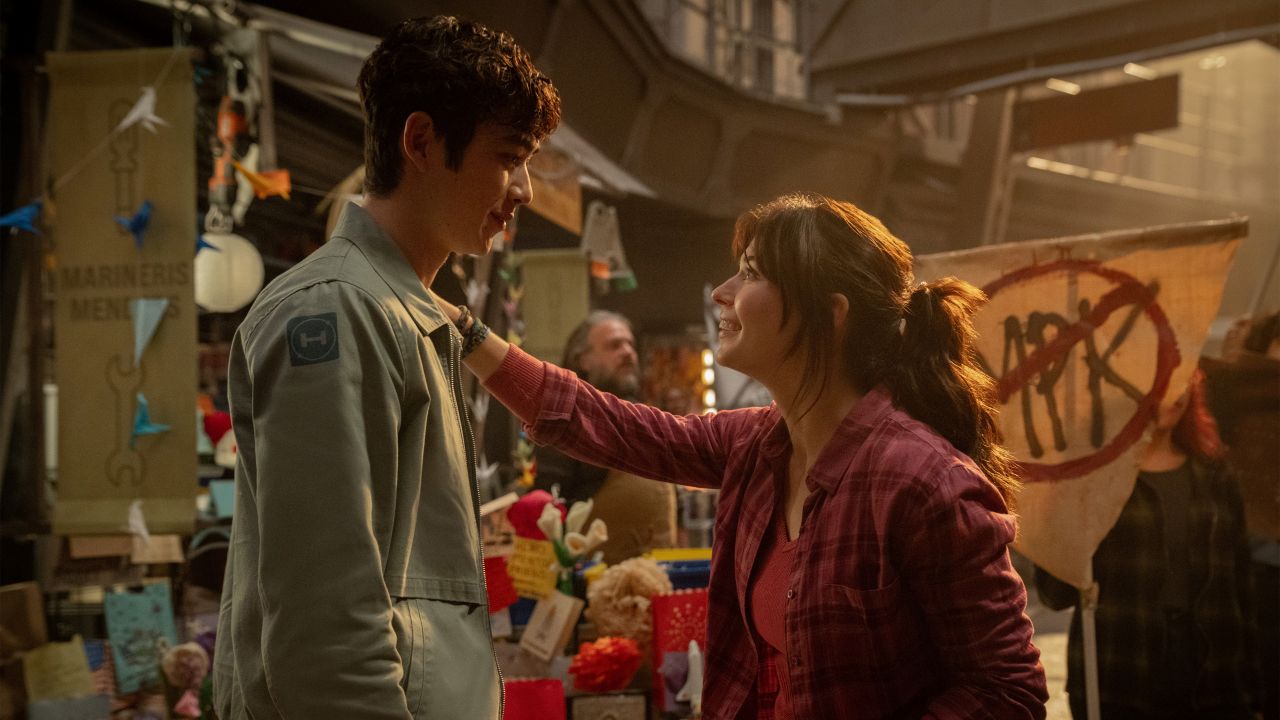
There’s a particular kind of tension that For All Mankind has always handled better than most large-scale sci-fi dramas, the slow, political kind that simmers beneath technical achievement. “Svoboda” is where that tension finally snaps into something immediate and human, and I found myself completely locked in for most of its runtime. After a few episodes that leaned more toward setup than payoff, this one feels like the season confidently stepping into its core conflict, and it does so with a level of control and clarity that’s hard not to admire.
What struck me first was how deliberately the episode frames Mars not as a frontier anymore, but as a contested society. The revelation that sets everything off lands with weight because the show has spent time building the socio-political ecosystem of Happy Valley. There’s a clear divide between those who see Mars as a corporate extension of Earth and those who consider it a place with its own identity. When that divide finally erupts into chaos, it doesn’t feel sudden or manufactured; it feels overdue. That sense of inevitability is one of the episode’s biggest strengths.
The writing leans into this conflict without over-explaining it. Characters react in ways that feel grounded in their histories, especially Ed Baldwin, who continues to be one of the most compelling figures in the series. His arc this season—aging, sidelined, yet still deeply influential—gains a new layer here. There’s a quiet intensity in how he processes the unfolding crisis, and Joel Kinnaman plays it with restraint. He doesn’t dominate scenes through volume or spectacle; instead, he holds them through presence, which works particularly well in an episode driven by ideological clashes rather than physical action.
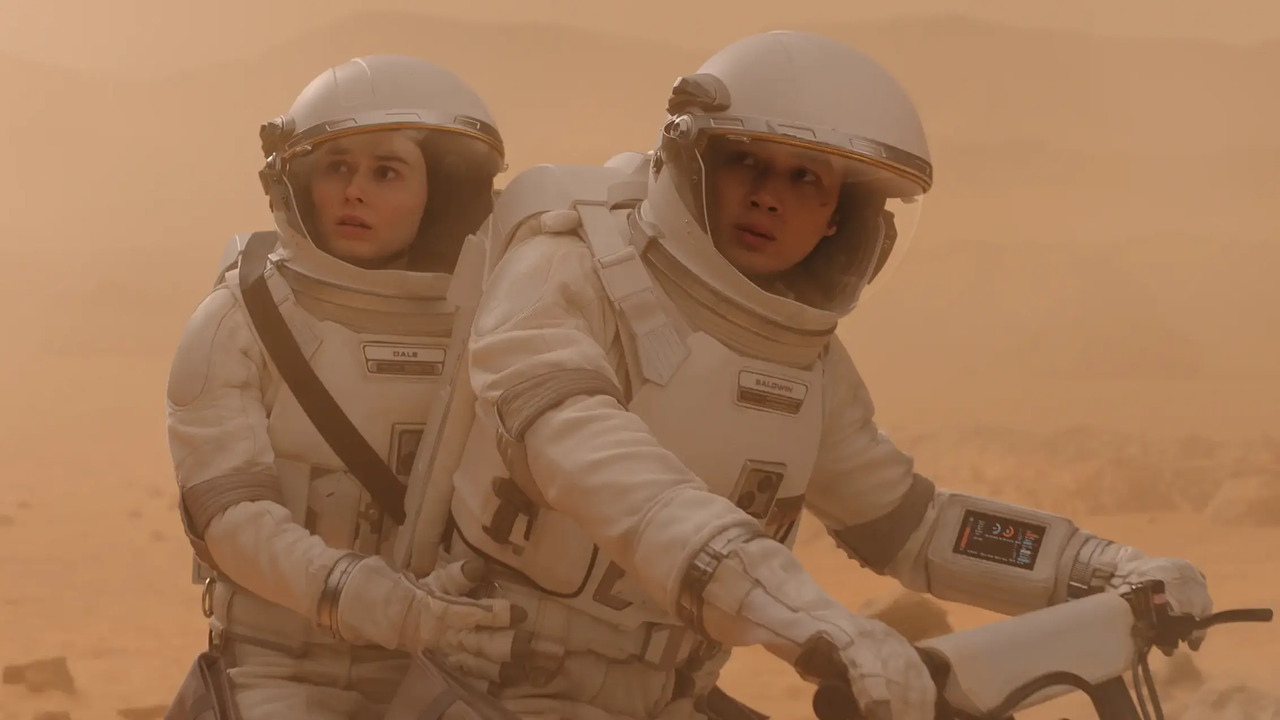
At the same time, the younger generation on Mars brings a different kind of energy. Their perspective feels less burdened by Earth’s legacy and more focused on what Mars could become. I appreciated how the episode lets their voices matter in the broader conflict. It avoids turning them into symbolic placeholders and instead gives them agency in shaping the narrative. That balance between legacy characters and newer ones is something the show has struggled with in the past, but here it feels more natural.
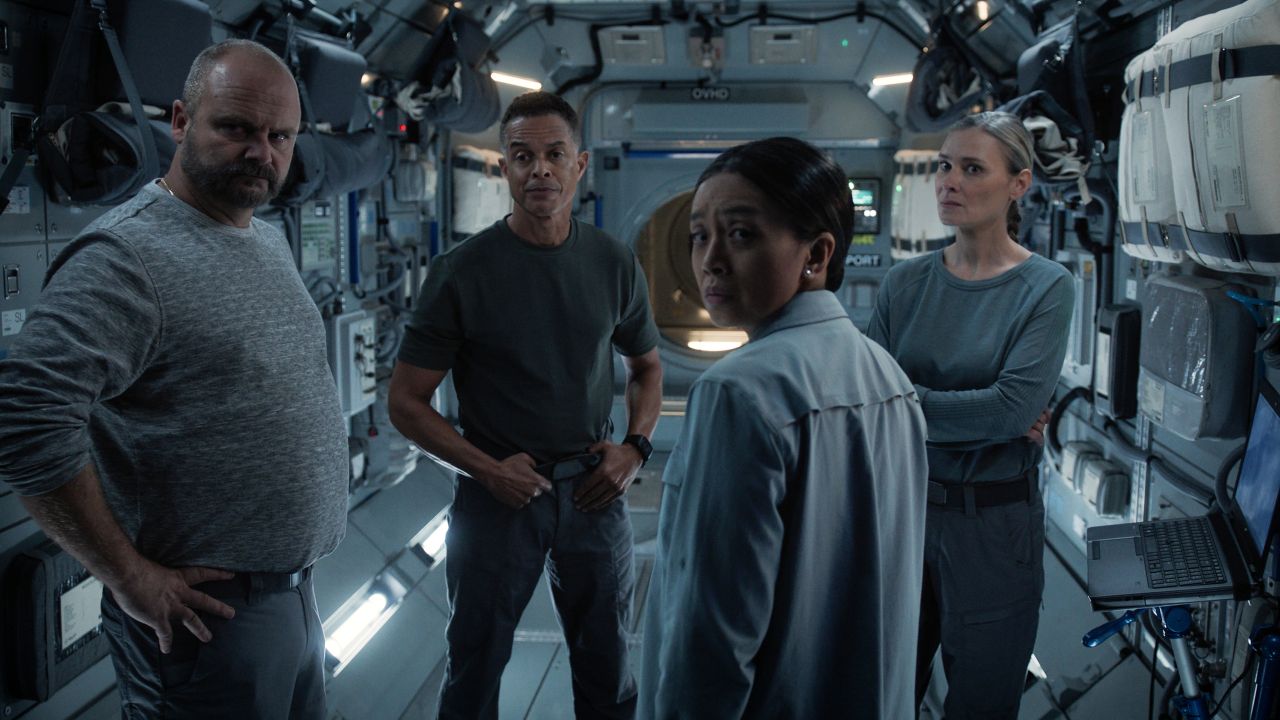
Visually, “Svoboda” is as strong as anything the series has done. The production design continues to sell the idea of a lived-in Mars, but what stood out to me was how the direction uses space—both literal and emotional. Crowded interiors, tense group scenes, and moments of isolation all contribute to a sense of a community under pressure. There’s a sequence involving a public confrontation that’s staged with impressive clarity. The camera doesn’t rush; it observes, letting the tension build organically. It’s a reminder that spectacle doesn’t always require scale; it can come from how a scene is constructed.
The pacing, for the most part, is tight. The episode moves with purpose, and each thread feeds into the central conflict. However, this is also where one of my few reservations comes in. A couple of secondary storylines feel slightly compressed, as if the episode is more interested in hitting its major beats than fully exploring every angle. There are moments where I wanted just a bit more breathing room, particularly in how certain characters process the revelation. The emotional transitions are mostly effective, but not always as layered as they could be.
Another minor issue is that the episode occasionally leans on familiar narrative rhythms. If you’ve been following the show closely, you can anticipate some of the turning points before they happen. That predictability doesn’t ruin the experience, but it does take away a bit of the edge in a story that thrives on uncertainty. The show is at its best when it surprises through character decisions rather than plot mechanics, and while “Svoboda” gets close to that, it doesn’t fully commit in every instance.
That said, the dialogue remains sharp throughout. It avoids grand speeches and instead focuses on direct, purposeful exchanges. Characters argue, negotiate, and clash in ways that feel authentic to the world the show has built. There’s a noticeable effort to keep the language grounded, even when dealing with big ideas about governance, autonomy, and survival. That approach makes the episode more accessible without diluting its complexity.
What I particularly enjoyed is how the episode handles the idea of “freedom,” which is embedded in its title. It doesn’t present a single definition or a clear answer. For some characters, freedom means independence from Earth’s control. For others, it means stability and order. The episode allows these perspectives to coexist without forcing a resolution, which adds depth to the conflict. It’s not about choosing a side; it’s about understanding why each side exists.
By the time the episode reaches its final stretch, there’s a palpable sense that the season has shifted gears. The stakes feel higher, not because of a single dramatic event, but because of how interconnected everything has become. Personal choices now have broader consequences, and the line between political and personal continues to blur. It’s a direction that suits the show well, especially at this stage in its run.
Overall, “Svoboda” is a strong, confident episode that delivers on the promise of the season’s premise. It balances character work, thematic depth, and narrative momentum with impressive control, even if it occasionally rushes through some of its quieter moments. I came away from it feeling like the show has fully settled into what it wants to explore this season, and that’s an exciting place to be. If the episodes that follow can build on this foundation while allowing a bit more space for nuance, this could end up being one of the more memorable stretches of For All Mankind in a while.
Final Score- [8.5/10]
Hi Everyone, after a due consideration, we have decided that we will be open for donations to help us in managing our website. We will be greatful for any kind of amount we receive. Thanks!
— Midgard Times 🎬 (@Moviesr_net) January 4, 2026
PayPal- [email protected] pic.twitter.com/DlNNz5Npm5
Get all latest content delivered to your email a few times a month.
Bringing Pop Culture News from Every Realm, Get All the Latest Movie, TV News, Reviews & Trailers
Got Any questions? Drop an email to [email protected]


 © Copyrights MOVIESR.NET All rights reserved