



Brillante Mendoza is not a filmmaker I typically associate with softness. When most people think of Mendoza, they think of harsh realities, social critique, and films that often feel determined to leave emotional bruises behind. That’s why Until She Remembers initially caught me off guard. This is a gentler film than much of his previous work, a quiet drama built around memory, regret, aging, and love that never got the chance to fully exist in public. For large stretches, it’s genuinely moving. And then it occasionally trips over its own storytelling choices in ways that left me more conflicted than I expected.
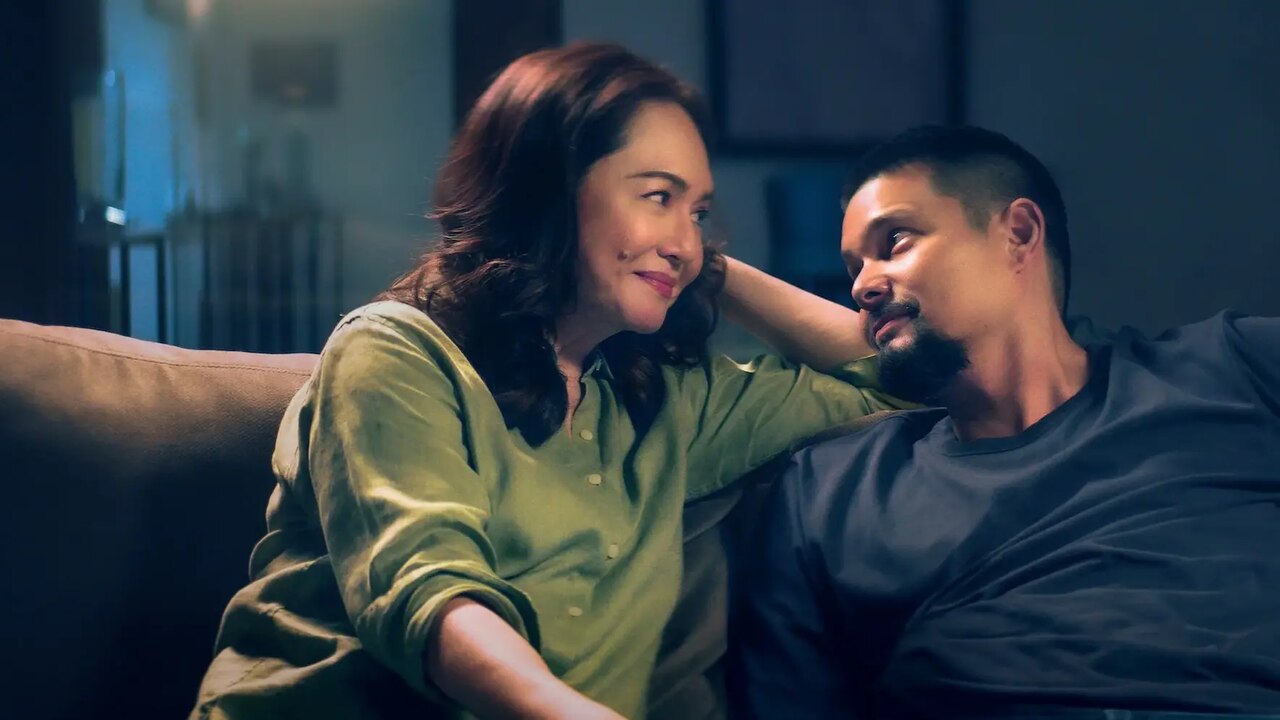
The film is anchored by three excellent performances from Charo Santos-Concio, Boots Anson Roa-Rodrigo, and Barbie Forteza. If the movie works at all—and I think it mostly does—it’s because these three actresses carry enormous emotional weight while the screenplay quietly drifts in and out of focus around them. Charo Santos-Concio is wonderful as Concha. There’s a particular skill involved in portraying a character carrying decades of emotional history without constantly explaining that history through dialogue. Santos understands exactly how much to reveal and how much to leave unsaid. Concha feels like someone who has spent most of her life learning how to live alongside loss rather than overcome it. The performance is remarkably understated. You simply believe this woman has spent years carrying memories she never fully processed.
Boots Anson Roa-Rodrigo brings similar dignity to Catherine. The chemistry between the two women works largely because neither actress tries to turn their relationship into a grand romantic spectacle. Instead, they create something quieter and sadder: two people confronting the possibility that the most important relationship of their lives never truly disappeared. That emotional foundation is easily the strongest aspect of the film.
Meanwhile, Barbie Forteza provides much-needed energy as Angel. Angel’s storyline initially seems like a framing device, but Forteza gives the character enough personality and emotional sincerity that she becomes an important bridge between generations. The film smartly uses Angel’s perspective to explore questions about family, acceptance, and the different social realities faced by younger and older generations. Forteza is especially effective because she never overplays the role’s emotional beats. Her curiosity feels natural. Her compassion feels earned. And her presence helps prevent the film from becoming emotionally static.
Visually, Until She Remembers is quite beautiful. Mendoza’s filmmaking is noticeably restrained here. The camera often lingers on faces, silences, and ordinary moments rather than dramatic confrontations. The result is a film that frequently feels intimate, almost observational. There’s a warmth to the cinematography that suits the story well. The film also benefits from its slower rhythm. In an era where many dramas seem terrified of stillness, Until She Remembers is willing to let scenes breathe. Conversations unfold naturally. Emotional revelations emerge gradually. The movie trusts its actors enough to allow silence to do some of the work. Most of the time, that patience pays off.
Thematically, there’s a lot to admire here. The film tackles aging, memory, loneliness, family fracture, and queer love through a perspective that rarely receives this level of attention in mainstream cinema. Stories about older LGBTQ+ characters remain surprisingly uncommon, and the film deserves credit simply for centering women whose emotional lives are often ignored by the industry.
The film’s biggest weakness is not technical. It’s conceptual. Without diving into spoilers, the historical origins of Concha and Catherine’s relationship introduce a dynamic that I struggled to fully reconcile with the film’s romantic framing. I found myself increasingly uncomfortable with aspects of the relationship’s foundation, and the film never fully addresses those concerns in a meaningful way. The problem isn't that difficult material is being explored. The problem is that the film doesn't seem particularly interested in examining those complications. Instead, it often treats them as minor details within a larger love story. That decision weakens the emotional impact because it introduces questions the film never fully addresses. It’s frustrating because everything else is working so hard to earn your investment.
There’s also the issue of structure. Mendoza’s decision to embrace a more improvisational style creates moments of authenticity, but it occasionally comes at the expense of narrative momentum. Several scenes feel longer than necessary. Conversations sometimes wander without adding much dramatic value. Certain supporting characters drift into the story and then quietly disappear.
There were stretches where I was completely absorbed. And there were other stretches where I became very aware that the film was taking the scenic route toward points it had already made. Even so, I kept coming back to the performances. That’s ultimately why the film succeeds more often than it fails. Santos and Roa-Rodrigo bring so much emotional honesty to their roles that they elevate material that occasionally struggles under closer scrutiny. Forteza provides warmth and accessibility. Together, they create a film that remains emotionally engaging even when its storytelling becomes uneven.
By the final act, I found myself feeling something I wasn't entirely expecting: Sadness. Not because the film is relentlessly tragic. But because it understands how much of life is shaped by timing. The people we meet. The opportunities we miss. The versions of ourselves that never quite get the chance to exist. Those ideas resonate throughout the film. Even when the screenplay stumbles.
Until She Remembers is heartfelt, beautifully acted, and refreshingly focused on characters rarely given this kind of emotional space. Charo Santos-Concio, Boots Anson Roa-Rodrigo, and Barbie Forteza deliver excellent performances, and Mendoza's quieter approach often works in the film's favor. However, the story's central romance is complicated by elements the screenplay doesn't examine deeply enough, and the loose narrative structure occasionally drifts into repetition. It's a thoughtful film, an admirable film, and at times a genuinely moving one—even if it never quite becomes the great love story it clearly wants to be.
Final Score- [7.5/10]
Reviewed by - Anjali Sharma
Follow @AnjaliS54769166 on Twitter
Publisher at Midgard Times


Hi Everyone, after a due consideration, we have decided that we will be open for donations to help us in managing our website. We will be greatful for any kind of amount we receive. Thanks!
— Midgard Times 🎬 (@Moviesr_net) January 4, 2026
PayPal- [email protected] pic.twitter.com/DlNNz5Npm5
Get all latest content delivered to your email a few times a month.
Bringing Pop Culture News from Every Realm, Get All the Latest Movie, TV News, Reviews & Trailers
Got Any questions? Drop an email to [email protected]


 © Copyrights MOVIESR.NET All rights reserved