


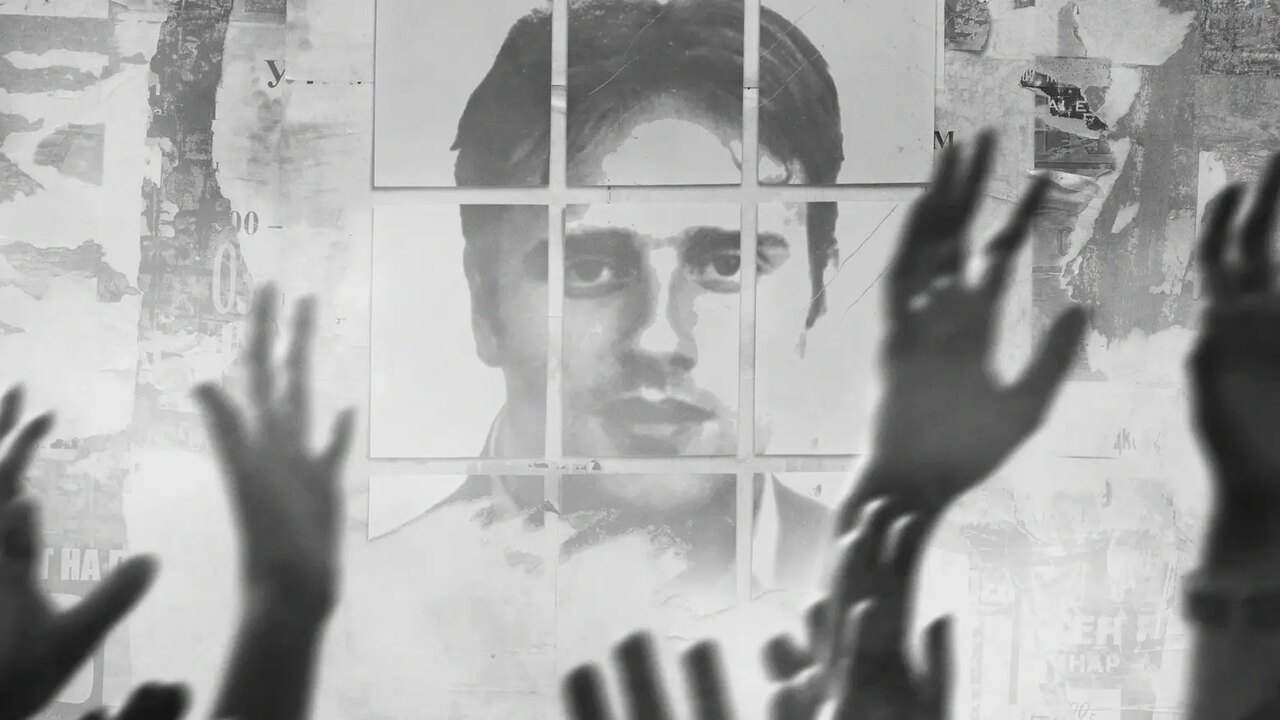
Some documentaries try to explain history. Others try to recreate it. Miguel Ángel Blanco: The 48 Hours that Changed Spain does something far more effective. It asks you to experience uncertainty. Even if you already know how the story ends.
That's no easy feat for a documentary built around one of Spain's most widely remembered tragedies. The outcome has never been the mystery. The emotional experience of living through those 48 hours is. Rather than turning the events into a conventional true-crime investigation, directors Jon Sistiaga and Juanjo López focus on the unbearable passage of time—the countdown, the hope, the negotiations, and the growing realization that an entire country was watching the same clock. It's an approach that gives the documentary remarkable emotional weight. One of its greatest strengths is restraint.
This could easily have become sensationalist television. Instead, it relies heavily on archival footage, contemporary interviews, and careful chronology to immerse viewers in the atmosphere of July 1997. The demonstrations, televised appeals, and ordinary citizens gathering in public squares become just as important as the political decisions happening behind closed doors. The documentary repeatedly reminds us that this wasn't simply the story of one kidnapped politician. It became the story of a nation confronting fear together. That perspective makes the film accessible even for viewers unfamiliar with Spanish history.
The archival material is exceptionally well curated. Watching the real news broadcasts, public vigils, and emotional reactions unfold in real time creates an immediacy that dramatizations rarely achieve. There's something uniquely powerful about seeing history through the eyes of the people who actually lived it rather than actors recreating it. The documentary trusts those images to speak for themselves. And often, they do.
The interviews are equally compelling. Rather than overwhelming the audience with endless talking heads, the film balances personal testimonies with journalists, political figures, family members, and individuals who experienced those days firsthand. Their recollections rarely feel rehearsed. Instead, many still carry the emotional exhaustion of an event that permanently altered both their personal lives and Spain's collective memory. That authenticity is difficult to manufacture. What also impressed me was the film's pacing.
Despite covering only two days, the documentary never feels artificially stretched. In fact, limiting itself to those 48 hours turns out to be one of its smartest creative decisions. Rather than attempting to explain every aspect of ETA's history or Spain's political landscape, it remains tightly focused on a single national crisis. That narrower scope gives the story far greater emotional clarity. Sometimes history becomes easier to understand when viewed through a single defining moment rather than an entire century.
Visually, the documentary is understated but effective. The editing allows archival footage to breathe without excessive stylistic flourishes, and the narration avoids becoming intrusive. It understands that the material itself carries enough emotional power without constant cinematic embellishment. That's a sign of confidence. Thematically, the documentary is ultimately less about terrorism than solidarity. Again and again, it returns to the unprecedented public response—the millions who gathered, protested and hoped that collective action might still change the outcome. Whether or not viewers know the historical context, the film succeeds in communicating why those demonstrations became such an important turning point in Spain's social consciousness.
If I have one criticism, it's that the documentary's deliberate focus occasionally comes at the expense of broader context. Viewers with little knowledge of ETA or Spain's political climate may occasionally wish for a slightly deeper explanation of the wider conflict. The filmmakers intentionally keep the lens narrow, which strengthens the emotional narrative, but it also leaves certain historical complexities only lightly explored. Recent commentary in Spain has similarly noted that while the documentary is a powerful tribute, it omits broader historical context of the period.
I also found myself wanting a little more reflection on the long-term consequences after the 48-hour window concludes. The documentary understandably commits to its central structure, but because those events had such profound political and social repercussions, a slightly longer epilogue might have provided an even more complete sense of their lasting significance. Still, those are relatively minor reservations. The documentary knows exactly what story it wants to tell. And it tells it with dignity.
What stayed with me wasn't any individual interview or archival clip. It was the overwhelming sense that history is often experienced not through grand speeches or dramatic victories, but through ordinary people standing together, hoping that compassion might arrive before tragedy does. Sometimes it doesn't. But remembering those moments still matters.
Miguel Ángel Blanco: The 48 Hours that Changed Spain is a thoughtful, emotionally powerful documentary that avoids sensationalism in favour of careful reconstruction and human perspective. Through exceptional archival footage, measured direction and deeply personal testimony, it transforms a well-known historical event into an intimate portrait of collective grief, courage and solidarity. While a broader exploration of the surrounding political context would have strengthened the film for international audiences, its disciplined focus on those defining 48 hours makes for a compelling and deeply affecting piece of historical storytelling.
Final Score - [8.5/10]
Reviewed by - Anjali Sharma
Follow @AnjaliS54769166 on Twitter
Publisher at Midgard Times



Hi Everyone, after a due consideration, we have decided that we will be open for donations to help us in managing our website. We will be greatful for any kind of amount we receive. Thanks!
— Midgard Times 🎬 (@Moviesr_net) January 4, 2026
PayPal- [email protected] pic.twitter.com/DlNNz5Npm5
Get all latest content delivered to your email a few times a month.
Bringing Pop Culture News from Every Realm, Get All the Latest Movie, TV News, Reviews & Trailers
Got Any questions? Drop an email to [email protected]

 © Copyrights MOVIESR.NET All rights reserved