


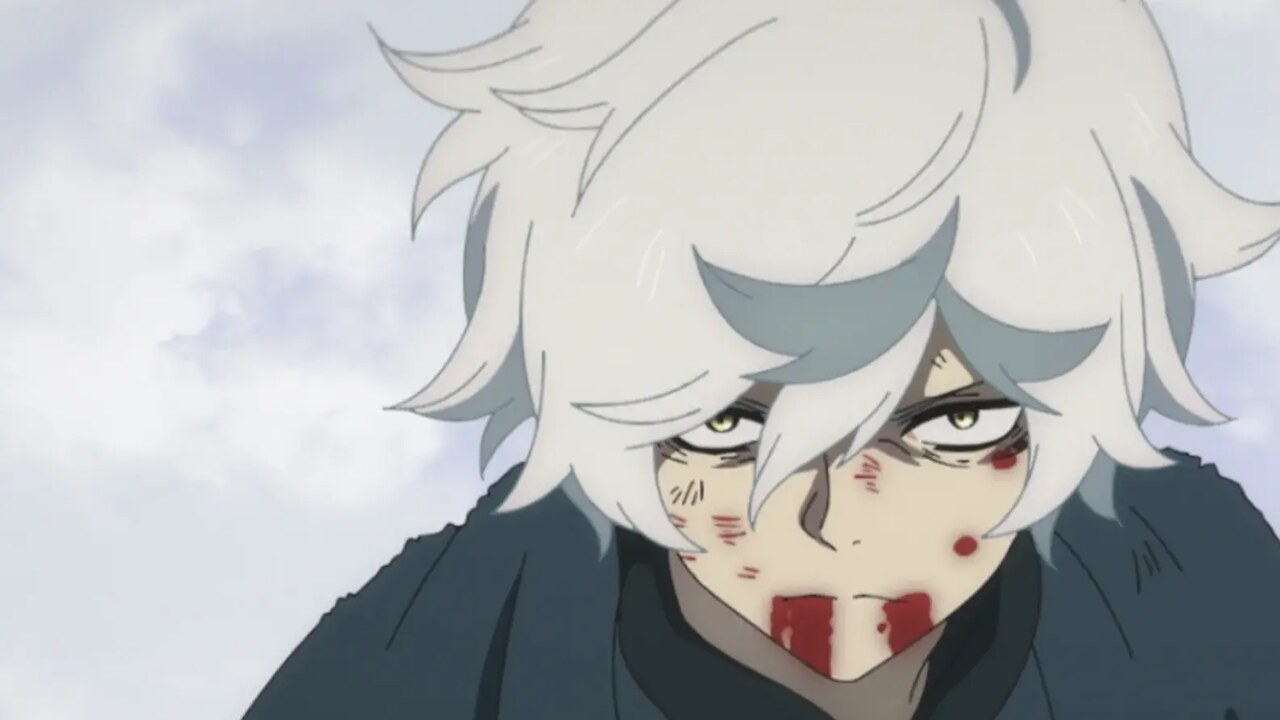
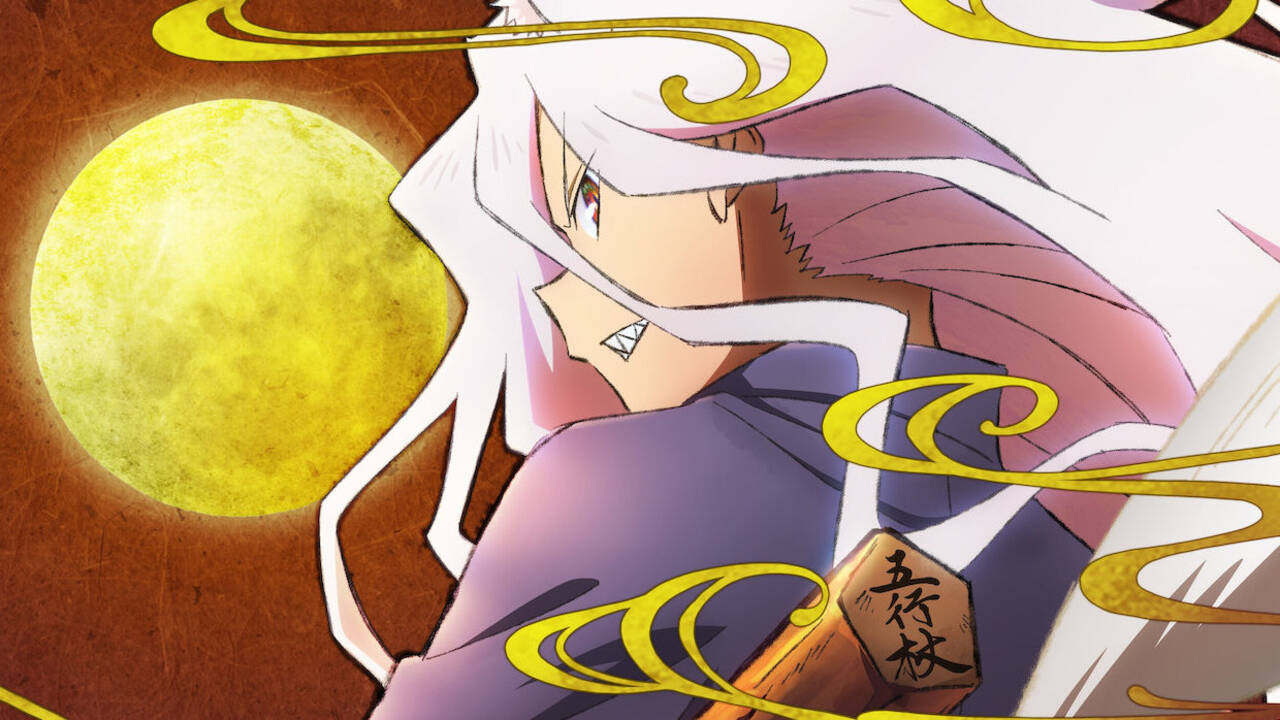
I watched the first two episodes of Hell’s Paradise Season 2 with a mix of excitement and critical curiosity, and what unfolded felt like both a compelling continuation and a hard-edged evolution of what made the first season memorable. Picking up immediately after Season 1’s cliffhanger, the narrative thrusts us back into the brutal world of Shinsenkyo without delay. There’s no soft restart here: the stakes are higher, the dangers more inscrutable, and the emotional terrain more jagged than before. Early on, it’s evident that the creators intend to dig deeper into the psyche of our protagonists while also broadening the mythos of the island’s supernatural forces.
Episode 1 wastes no time establishing that the quest for the Elixir of Life has become even more perilous. Gabimaru, whose defining trait has long been his near-superhuman resilience and strategic mind, arrives back in Shinsenkyo weakened and mentally unsettled. A near-fatal encounter in the previous arc appears to have fractured his memories, eroding the emotional anchor that once guided him. This narrative choice is bold: rather than presenting a straightforward hero resurgence, the writers challenge Gabimaru’s identity, forcing him to confront a fragmented self. It’s a risk that complicates the central arc in a welcome way, and it pays dividends by adding psychological texture to what could easily have been a simple power escalation. The exploration of memory and driving motivations enriches the storytelling, creating layers that go beyond the primal thrill of combat.
That said, the pacing in Episode 1 occasionally feels like it’s racing ahead of itself. There’s a torrent of plot progression, new characters, political machinations, and reconfigurations of alliances—that can be overwhelming. For viewers who haven’t recently revisited Season 1, these early moments may feel slightly tangled. The exposition about the shogunate’s impatience and the dispatch of new Yamada Asaemon executioners is crucial to orienting the story, but it competes with the immediate visceral tension on the island. In a couple of scenes, I found myself wishing for slightly more breathing room to absorb these developments, rather than having to keep up with the rapid narrative shifts.
The introduction of fresh antagonistic forces, particularly the seemingly transformed Aza Chobei, is handled with a stark visual and thematic punch. He returns as something more than a typical foe: grotesque, relentless, and enigmatically powerful. His regeneration abilities and brutal combat style turn his confrontations with Gabimaru into compelling spectacles. These sequences demonstrate MAPPA’s continued excellence in choreography and animation. The fight scenes in both episodes are executed with precision and intensity, balancing fluid motion, stark violence, and environmental detail in ways that feel both cinematic and kinetic. The attention to physicality, grappling with blades, bursts of Tao energy, and sudden shifts in momentum, is consistent with the studio’s reputation for high-caliber battle sequences.
Moreover, the creative team’s decision to expand on the Lord Tensen mythos pays off in Episode 2, where we start to glimpse how these near-immortal beings and their Tao mastery redefine the island’s danger dynamics. Their almost casual indifference to pain and death pushes our heroes into territory where sheer brute strength is insufficient. This narrative development shifts the conflict from tests of survival to examinations of ideology and self-preservation. That evolution makes the series feel narratively richer than a simple action drama.
Performances across the board remain robust. The voice actors imbue their characters with just enough emotional range to anchor even the most outlandish or intense scenarios. Sagiri’s steadfastness contrasts strongly with Gabimaru’s internal disarray, and Yuzuriha’s layered motives add a strategic complexity to the group’s interactions. These dynamics are grounded in well-aimed writing, and when the script leans into character psychology, the results feel thoughtful rather than perfunctory.
Where the series shines most vividly, however, is in its worldbuilding and cinematography. The island of Shinsenkyo remains a character in its own right—strange flora, gnarled landscapes, and eerie horizons all contribute to a constant sense of unease. The visual design is detailed and evocative, capturing a realm that is beautiful in its harshness and alien in its cruelty. The musical score underscores these qualities effectively; moments of tension are heightened without overpowering the action, and quieter beats are supported by subtle ambient cues that enhance immersion.
But as strong as these elements are, there are moments when the storytelling feels uneven. In the rush to escalate conflict and introduce deeper lore, the emotional resonance occasionally takes a backseat. There are times when the stakes are clear, but the human element—the personal cost, fear, hope, or uncertainty—is underexplored. In scenes of high emotional potential, the series sometimes opts for frenetic action over reflective clarity. This doesn’t derail the narrative, but it does temper some of the impact that the writing appears to be striving for.
Finally, it’s worth noting that the broader thematic focus—on the search for immortality and the costs it exacts- continues to be compelling. The show doesn’t shy away from asking tough questions about what it means to survive and what, if anything, makes life worth living. By juxtaposing physical survival with psychological and moral dilemmas, Hell’s Paradise sustains an intellectual tension that keeps its more intense moments grounded.
Overall, the first two episodes of Season 2 deliver a powerful continuation that will satisfy fans of the series’ unique blend of visceral action and existential intensity. While pacing and emotional depth wobble in places, the direction, animation quality, and thematic ambition remain consistently strong. This isn’t a passive viewing experience; it demands attention, rewards engagement, and leaves you eager for what unfolds next. If the season sustains this momentum while sharpening its emotional clarity, it stands to become a standout in the current anime landscape.
Final Score- [8/10]
Reviewed by - Anjali Sharma
Follow @AnjaliS54769166 on Twitter
Publisher at Midgard Times
Hi Everyone, after a due consideration, we have decided that we will be open for donations to help us in managing our website. We will be greatful for any kind of amount we receive. Thanks!
— Midgard Times 🎬 (@Moviesr_net) January 4, 2026
PayPal- [email protected] pic.twitter.com/DlNNz5Npm5
Get all latest content delivered to your email a few times a month.
Bringing Pop Culture News from Every Realm, Get All the Latest Movie, TV News, Reviews & Trailers
Got Any questions? Drop an email to [email protected]


 © Copyrights MOVIESR.NET All rights reserved