


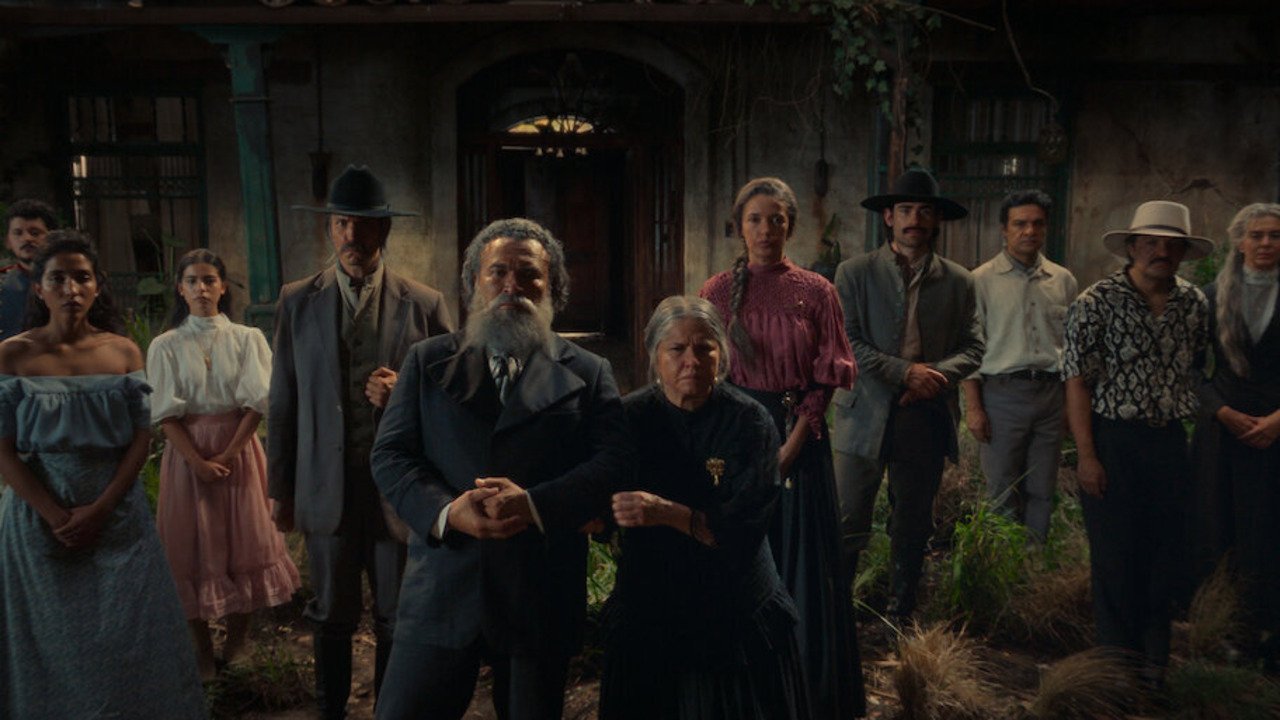
There is something almost perversely appropriate about One Hundred Years of Solitude ending with a story that has, in a sense, already happened. From the beginning, Gabriel García Márquez's novel has treated time less like a straight line and more like a particularly stubborn circle, with generations repeating names, mistakes, desires and tragedies as though the Buendías are incapable of learning from anything that happened five minutes—or five decades—ago. The Netflix adaptation's grand finale understands that perfectly. Rather than trying to manufacture one last surprise, it embraces inevitability. And that is both its greatest strength and its biggest challenge.
Netflix deliberately separated this conclusion from the seven episodes of Part Two, presenting it as a special, practically feature-length episode directed by Laura Mora. That decision makes sense. This isn't r /lly another episode in the conventional television sense; it is the closing movement of a story that has spent two seasons building an entire world, watching it flourish, decay, and finally arrive at the fate that was announced almost from the beginning. Netflix itself describes the finale as the culmination of the entire audiovisual adaptation and specifically conceived it on a more cinematic and emotional scale.
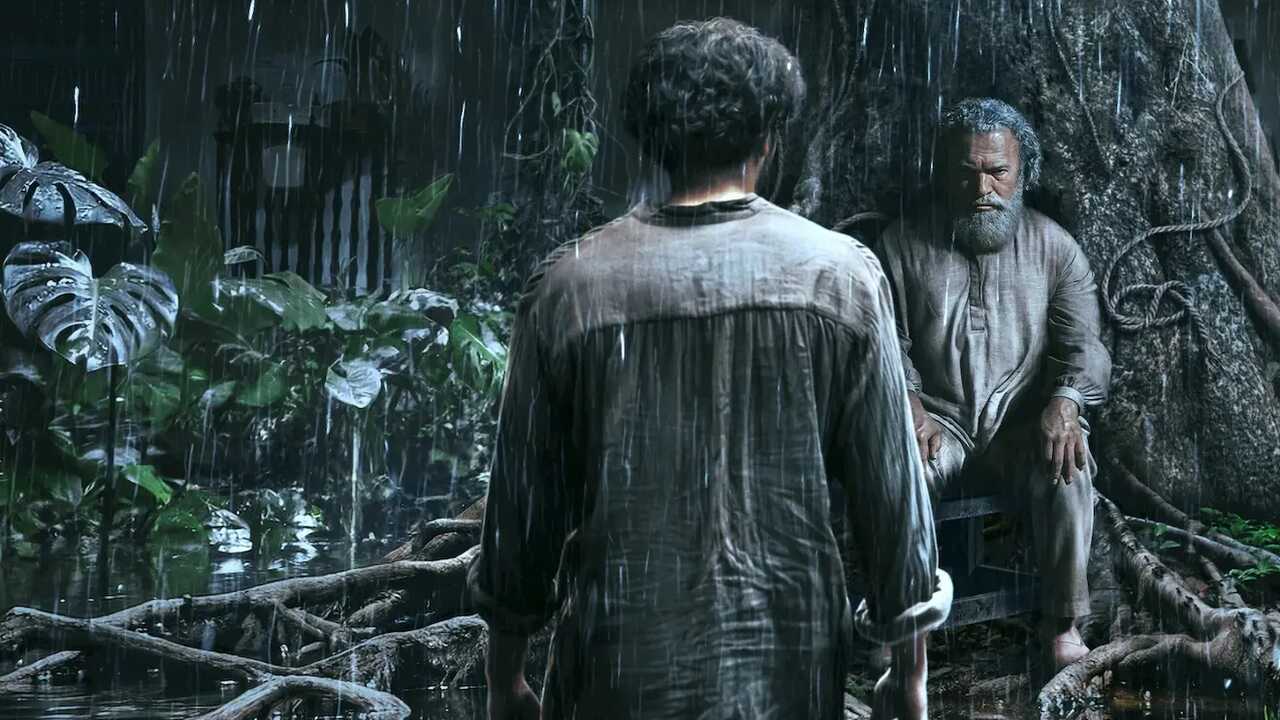
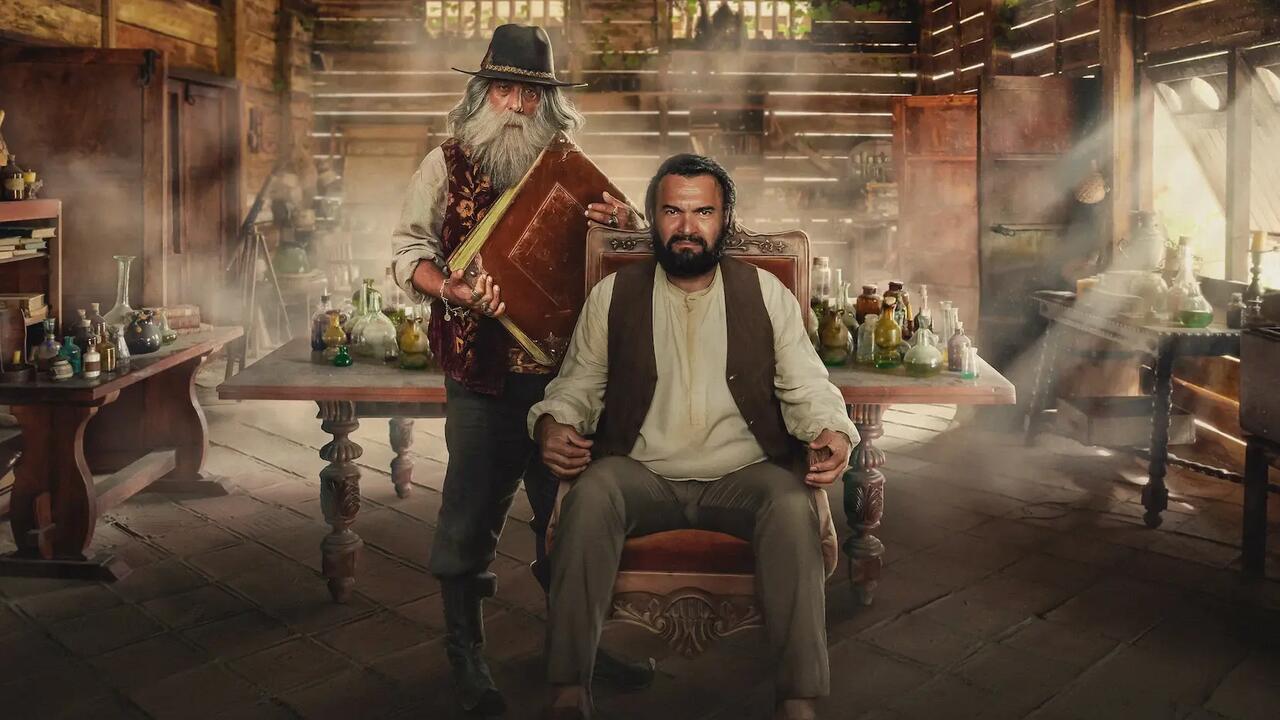
The most impressive thing is how confidently the episode commits to the novel's structure and spirit. Aureliano Babilonia's discovery of the meaning contained within Melquíades' manuscripts gives the finale an appropriately literary quality: the act of reading becomes the act of understanding an entire family. Past and present stop behaving like separate things. The lives we've watched unfold begin to acquire a terrible sense of inevitability, because the end was effectively sitting there in the text all along. That could have made the finale feel emotionally sterile. It doesn't.
There is real melancholy in watching Macondo approach its end. The production has spent years creating this place—its houses, streets, weather, strange inhabitants and increasingly surreal reality—and the finale makes the destruction of that world feel like more than simply ticking off the final plot point. The visual design has always been one of the adaptation's greatest achievements, but here the physicality of Macondo becomes particularly important. The town feels lived-in enough that its disappearance carries weight.
Laura Mora's direction is especially effective in giving the ending an appropriately epic scale without turning it into a conventional fantasy spectacle. The production remains tactile and grounded even when the story becomes completely fantastical. One contemporary review praised precisely this aspect of the finale, noting the meticulousness, physical quality and "decadent elegance" of the visual realisation.
The performances benefit from that restraint as well. Rather than attempting to make every character's final appearance into a grand farewell, the series allows the accumulated history of the Buendías to do the emotional work. By this point, the audience has watched generations of this family repeat variations of the same patterns. Love becomes obsession, passion becomes destruction, isolation becomes inheritance, and memory becomes almost indistinguishable from myth. The finale therefore doesn't really ask whether these characters can escape their fate. It asks whether they ever understood it. That's a much more García Márquez-esque question.
One of the adaptation's most admirable qualities throughout has been its commitment to García Márquez's strange tonal balance: tragedy can sit next to absurdity, the supernatural can appear beside the mundane, and something horrifying can be described with the same calmness as someone making breakfast. The finale maintains that balance rather than trying to make everything solemn simply because it is the ending. There is grandeur here, but there is also the eccentricity that makes One Hundred Years of Solitude feel like itself.
It also helps that the series has remained remarkably faithful to the novel's events and tone. The finale reportedly makes only relatively minor alterations to the source material, with narration drawing substantially from García Márquez's prose. That fidelity is likely to please readers who spent years assuming that the novel was impossible to adapt, although it may also be the source of the adaptation's principal limitation. One Hundred Years of Solitude was never written to behave like conventional television.
Its characters are numerous. Its chronology is deliberately slippery. Its repetitions are meaningful rather than redundant. Its magical events are treated as ordinary. Its emotional arcs can unfold across generations rather than within individual characters. Translating all of that into a screen narrative inevitably requires choices, and occasionally the series feels more like an extraordinarily beautiful illustration of García Márquez than an entirely independent cinematic interpretation.
That criticism applies to the finale too. It is meticulous, but not particularly rebellious. It understands the book extremely well, but rarely tries to fight with it. One review aptly described the adaptation as more derivative than personal and more consensual than radical, even while praising its visual and tactile execution. Personally, I think that's a reasonable trade-off here. Some books should probably be adapted with a little humility. And this is very much one of them.
The result is not the kind of finale designed to leave you screaming at the television. There is no need for an enormous last-minute reinvention of the mythology. The emotional power comes from recognition: recognising names, patterns, relationships and warnings that have been accumulating for two seasons and understanding, finally, how they fit together. The show has essentially spent sixteen episodes telling you that this is where we're going. Then it takes you there. And somehow, despite knowing the destination, it still hurts.
That is the real achievement of the One Hundred Years of Solitude adaptation. García Márquez's ending is famous precisely because it transforms inevitability into revelation: the prophecy doesn't merely predict the family's destruction; understanding the prophecy becomes part of that destruction. The Netflix finale preserves that strange relationship between reading, remembering, and living. Macondo was always temporary. The Buendías were always repeating themselves. The ending was always waiting. And now it has finally arrived.
One Hundred Years of Solitude: Grand Finale is an ambitious, visually sumptuous, and remarkably faithful conclusion to one of the most notoriously difficult novels ever brought to the screen. Laura Mora gives the finale the cinematic scale Netflix promised, while the performances and production design make the final days of Macondo feel tangible rather than merely symbolic. Its biggest limitation is also its most understandable one: the adaptation sometimes feels more reverent than interpretive, translating García Márquez with extraordinary care rather than finding an entirely new cinematic language for him. But for a story whose entire philosophy revolves around cycles, memory and inevitability, perhaps reverence is exactly what the ending requires. The Buendías spent a hundred years trying to escape their history. The finale simply lets them read it. And then, finally, lets the story end.
Final Score- [9/10]
Reviewed by - Anjali Sharma
Follow @AnjaliS54769166 on Twitter
Publisher at Midgard Times
Hi Everyone, after a due consideration, we have decided that we will be open for donations to help us in managing our website. We will be greatful for any kind of amount we receive. Thanks!
— Midgard Times 🎬 (@Moviesr_net) January 4, 2026
PayPal- [email protected] pic.twitter.com/DlNNz5Npm5
Get all latest content delivered to your email a few times a month.
Bringing Pop Culture News from Every Realm, Get All the Latest Movie, TV News, Reviews & Trailers
Got Any questions? Drop an email to [email protected]


 © Copyrights MOVIESR.NET All rights reserved