


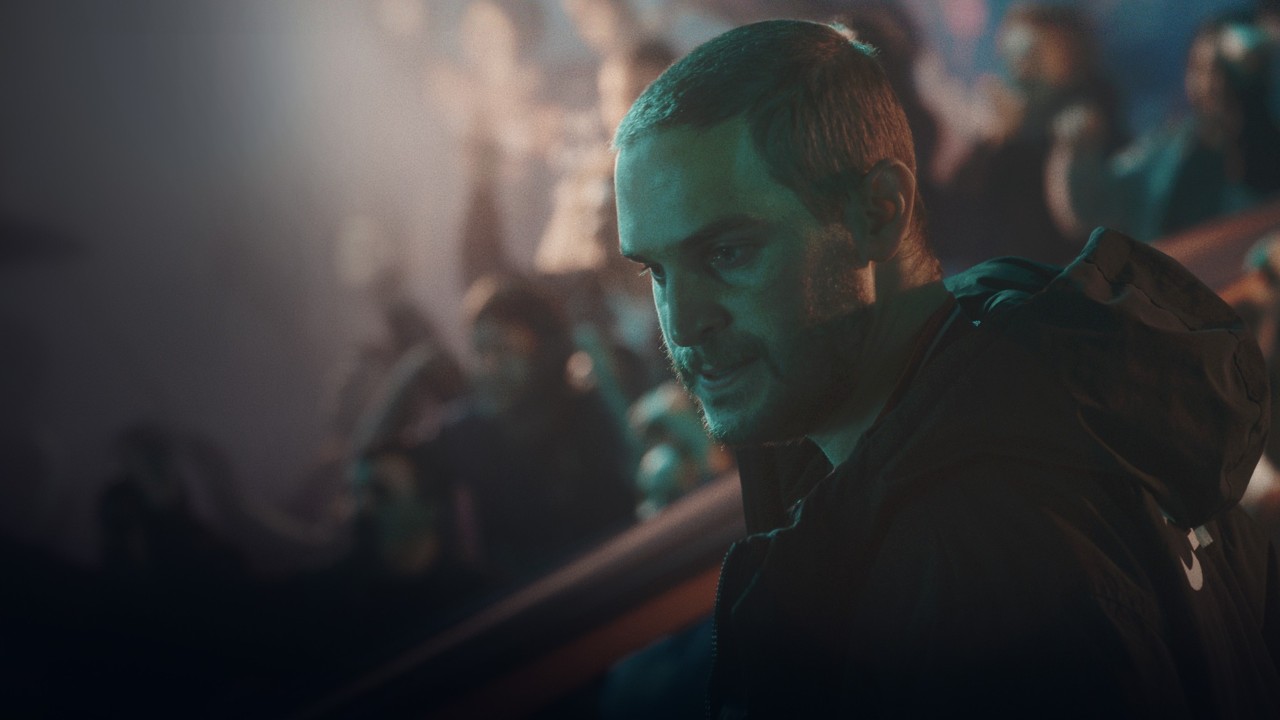
Season two of Barrabrava is one of the most stressful things I’ve watched this year. Not because it’s badly made. Quite the opposite. It’s intense, emotionally ugly, aggressively realistic, and often incredibly well acted. The problem is that spending eight episodes inside this world starts to feel like voluntarily attending group therapy run entirely by men who think screaming in parking lots counts as emotional communication. And honestly, that’s both the show’s greatest strength and its biggest weakness.
What Barrabrava still does exceptionally well is authenticity. This does not feel like a sanitized streaming version of football hooligan culture designed for easy binge-watching. The series understands the barrabrava system as something far bigger than “violent fans.” It’s family structure, political leverage, economic survival, masculine identity, territorial warfare, and emotional belonging all fused into one unstable ecosystem where loyalty matters more than legality and respect matters more than personal safety. That atmosphere remains the show’s secret weapon.
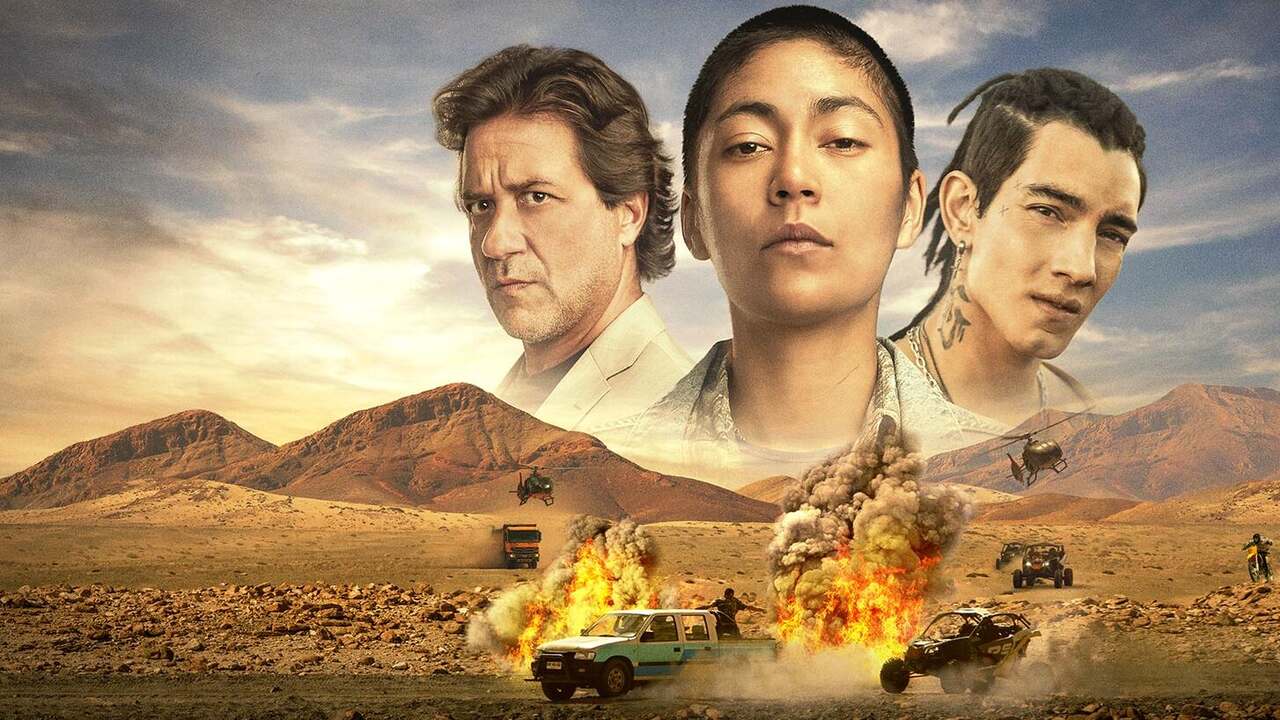
Season two picks up after the fallout of the first season, with Adrián “Polaco” Urrutia trying to survive his unstable rise within the barra while César becomes increasingly consumed by resentment, paranoia, and the need to reclaim power. The conflict between the brothers remains the emotional core of the series, and thankfully, the show never loses sight of that. Underneath all the violence, extortion, political manipulation, and football chaos, this is still fundamentally a story about two brothers who no longer know whether they love each other more than they hate each other.
Gastón Pauls is excellent as César. He gives the character a level of emotional instability that makes every scene unpredictable. César is charismatic, manipulative, deeply insecure, and so obsessed with control that he often seems physically incapable of accepting reality when it stops revolving around him. Pauls plays him like a man constantly trying to convince himself he’s still dangerous, still respected, still necessary. Sometimes he is. Sometimes he just looks emotionally exhausted and one bad conversation away from punching drywall. That contradiction makes the character fascinating.
Matías Mayer’s Polaco is quieter but arguably more tragic. Unlike César, Polaco doesn’t seem energized by power anymore. Leadership feels heavy on him this season. Mayer does a terrific job showing how guilt, responsibility, fear, and pressure are slowly crushing the character emotionally. There’s a sadness to Polaco that gives the series much-needed humanity amid all the testosterone-fueled destruction happening around him.
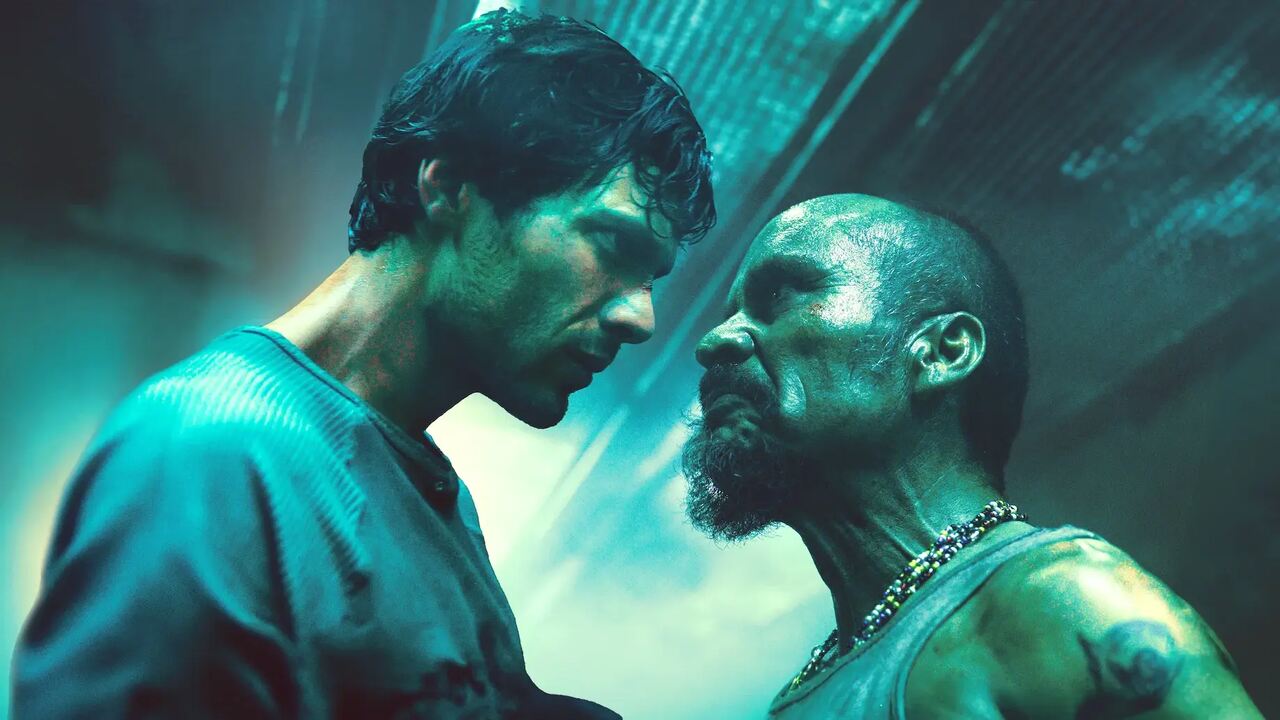
The scenes between the brothers are still the strongest material in the show because neither actor tries to simplify the relationship into good versus bad. They hurt each other constantly, betray each other repeatedly, and still somehow remain emotionally tied together in ways neither fully understands. Every conversation between them feels loaded with years of resentment, admiration, dependency, and disappointment. And because these men are apparently allergic to emotional honesty, most of those conversations eventually become threats.
The supporting cast remains strong, too. Violeta Narvay continues grounding the show as Ximena, one of the few characters who consistently feels emotionally connected to reality while surrounded by men behaving like unresolved childhood trauma wearing football jackets. Angelo Mutti Spinetta, as Enzo, also gets stronger material this season, especially as the show explores how violence and barra culture get inherited across generations, almost like a family tradition.
The political dimension of the season is probably its most interesting expansion. The show digs deeper into how barras are used by politicians, police forces, and local power brokers who publicly condemn them while privately benefiting from them. That hypocrisy gives the series real thematic depth. The barras aren’t portrayed as victims, but the show clearly understands they exist inside systems that exploit their loyalty and desperation. That material works extremely well.
Visually, the series continues looking gritty and grounded in exactly the right way. Nothing feels glamorized. The bars, apartments, stadium corridors, backrooms, police stations, and neighborhood streets all look worn down and emotionally suffocating. Even the football scenes avoid turning violence into spectacle. The crowd sequences feel dangerous because the emotion behind them feels real. The chants, smoke, tension, and mob mentality all carry an unpredictability that makes several scenes genuinely uncomfortable. Which already makes it more believable than half the crime dramas currently streaming.
The direction also deserves credit for understanding restraint. Some of the season’s best scenes are just conversations where everybody already knows violence is probably coming. The tension often comes less from action itself and more from the certainty that nobody in this environment knows how to de-escalate anything. That’s where the show becomes almost darkly funny at times. Because eventually the sheer level of masculine overreaction becomes borderline absurd. Somebody looks at someone the wrong way, and suddenly, three grown men are discussing betrayal like the Roman Empire is collapsing. A disagreement over loyalty turns into a full emotional war summit. At one point, I genuinely wanted to pause the show and ask whether anybody involved had ever experienced a calm afternoon. The answer appears to be no. And this is where season two starts running into problems.
For all its realism and emotional intensity, the show occasionally mistakes repetition for depth. The middle stretch, especially, suffers from cycles of confrontation, retaliation, betrayal, shouting, regrouping, and renewed confrontation that start to blend structurally. I understood what the writers were aiming for—the cyclical nature of violence and power struggles—but after a while, it began feeling emotionally exhausting rather than dramatically escalating. Not every conflict needs maximum intensity. Not every scene needs someone threatening someone else beside a parked motorcycle.
At times, the series becomes so committed to portraying toxic masculinity that it accidentally traps itself inside it. There are stretches where nearly every male character communicates exclusively through intimidation, aggression, or emotional self-destruction, and eventually that emotional monotony starts flattening the drama slightly. There’s also a political subplot involving institutional maneuvering that never becomes quite as compelling as the more personal material involving the brothers. It’s thematically important, and I appreciated the larger commentary about corruption and exploitation, but whenever the story drifted too far into procedural territory, I found myself wanting to return to the rawer emotional conflicts.
Still, even when Barrabrava frustrates me, it remains difficult to stop watching because the performances are so committed and the world feels so authentic. The show understands that barra culture is built on emotional emptiness as much as football passion. These men cling to violence, loyalty, hierarchy, and tribal identity because they genuinely don’t know who they are without those structures. That’s tragic. And the season becomes increasingly aware of that tragedy as it moves toward its final episodes.
By the end, almost everyone looks spiritually destroyed. Brotherhood starts feeling less like family and more like mutual ruin. The barra itself increasingly resembles a machine that consumes every person trying to control it. That darkness gives the series real emotional force.
Barrabrava season two is messy, repetitive, emotionally overwhelming, and frequently excellent. The performances from Gastón Pauls and Matías Mayer remain outstanding, the football culture feels frighteningly authentic, and the show’s exploration of masculinity, violence, and power gives it real dramatic weight. But the season also suffers from uneven pacing and an overreliance on endless cycles of male rage that occasionally become unintentionally funny. When it works, it’s raw, sharp, and painfully human. When it stumbles, it feels like watching emotionally unstable men repeatedly reinvent the concept of “poor impulse control” for eight straight hours.
Final Score- [6/10]
Reviewed by - Anjali Sharma
Follow @AnjaliS54769166 on Twitter
Publisher at Midgard Times

Hi Everyone, after a due consideration, we have decided that we will be open for donations to help us in managing our website. We will be greatful for any kind of amount we receive. Thanks!
— Midgard Times 🎬 (@Moviesr_net) January 4, 2026
PayPal- [email protected] pic.twitter.com/DlNNz5Npm5
Get all latest content delivered to your email a few times a month.
Bringing Pop Culture News from Every Realm, Get All the Latest Movie, TV News, Reviews & Trailers
Got Any questions? Drop an email to [email protected]

 © Copyrights MOVIESR.NET All rights reserved