


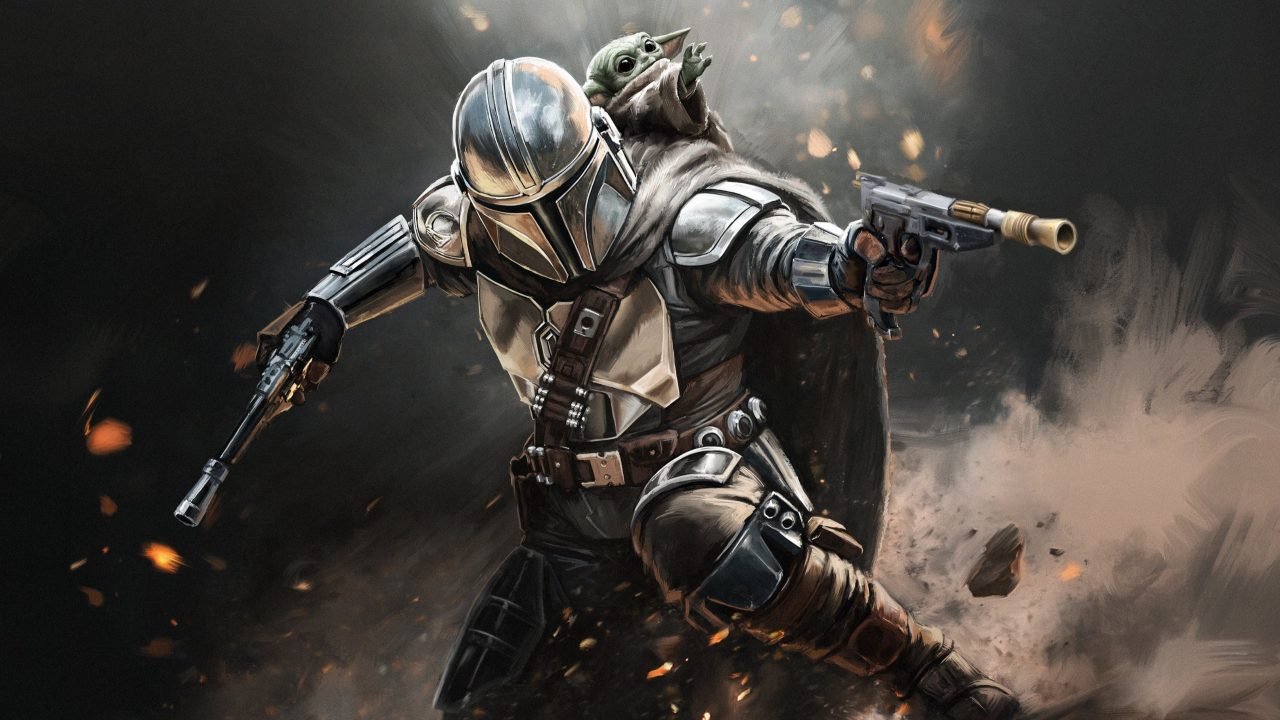
As someone who has loved Star Wars for most of my life—through the highs, the weird lows, the prequel debates, the sequel-era chaos, the animated masterpieces, the books, the games, the “somehow Palpatine returned” trauma, all of it—I walked into The Mandalorian and Grogu carrying a very specific kind of cautious optimism. Because let’s be honest. Modern Star Wars has become emotionally unpredictable in ways George Lucas probably never intended. Sometimes it gives you Andor. Sometimes it gives you space Vespa chases. Sometimes it gives you a scene so beautiful you remember why this franchise matters. Other times, it gives you dialogue that sounds like it was generated by a malfunctioning protocol droid under emotional stress.
So yes, I was nervous. Especially because this movie had a difficult job, it wasn’t just “the next Star Wars film,” it was the first theatrical Star Wars movie in years, the continuation of one of Disney’s most beloved projects, and the cinematic expansion of characters fans have spent half a decade emotionally adopting. And honestly? I think it mostly works. Not perfectly. Not brilliantly in every moment. But genuinely, sincerely, and emotionally enough that I walked out of the theater smiling instead of emotionally negotiating with myself in the parking lot as I did after The Rise of Skywalker. That already counts as progress.
Directed by Jon Favreau, The Mandalorian and Grogu wisely understand that its greatest strength isn’t giant lore reveals, galaxy-shaking mythology, or endless nostalgia bait. It’s the relationship. It always was. At the center of the film, once again, is Din Djarin, played by Pedro Pascal, and what I appreciated most here is that the movie doesn’t suddenly try to reinvent him into some dramatically different cinematic version of the character. Din still feels like Din—quiet, stubborn, emotionally awkward, honorable to a fault, and permanently exhausted by the reality that he accidentally became a father during a bounty job.
Pedro Pascal continues doing an incredible amount of emotional work through a helmet. At this point, it honestly deserves academic study. There are scenes where Din says almost nothing, barely moves, and somehow still communicates frustration, affection, panic, protectiveness, and disappointment simultaneously. That’s not easy. And it’s one of the reasons this character continues working so well. Then there’s Grogu.
I know some people are tired of Grogu discourse. I know there’s an entire section of the internet convinced he exists primarily to sell merchandise, emotionally manipulate viewers, and personally attack anyone trying to take Star Wars “seriously.” I understand all of that. Counterpoint: He’s still adorable. And this movie uses him much better than I expected.
What surprised me most is how much more emotionally active Grogu feels here. He’s no longer just reacting to events or randomly stealing food while committing occasional Force crimes. The film actually treats him like a developing character. You can feel the influence Din has had on him—the caution, the loyalty, the curiosity, the protective instincts. There’s a sequence midway through the film involving Grogu choosing a firefight that genuinely hit me harder than I expected. Not because it’s dramatic. Because it feels earned.
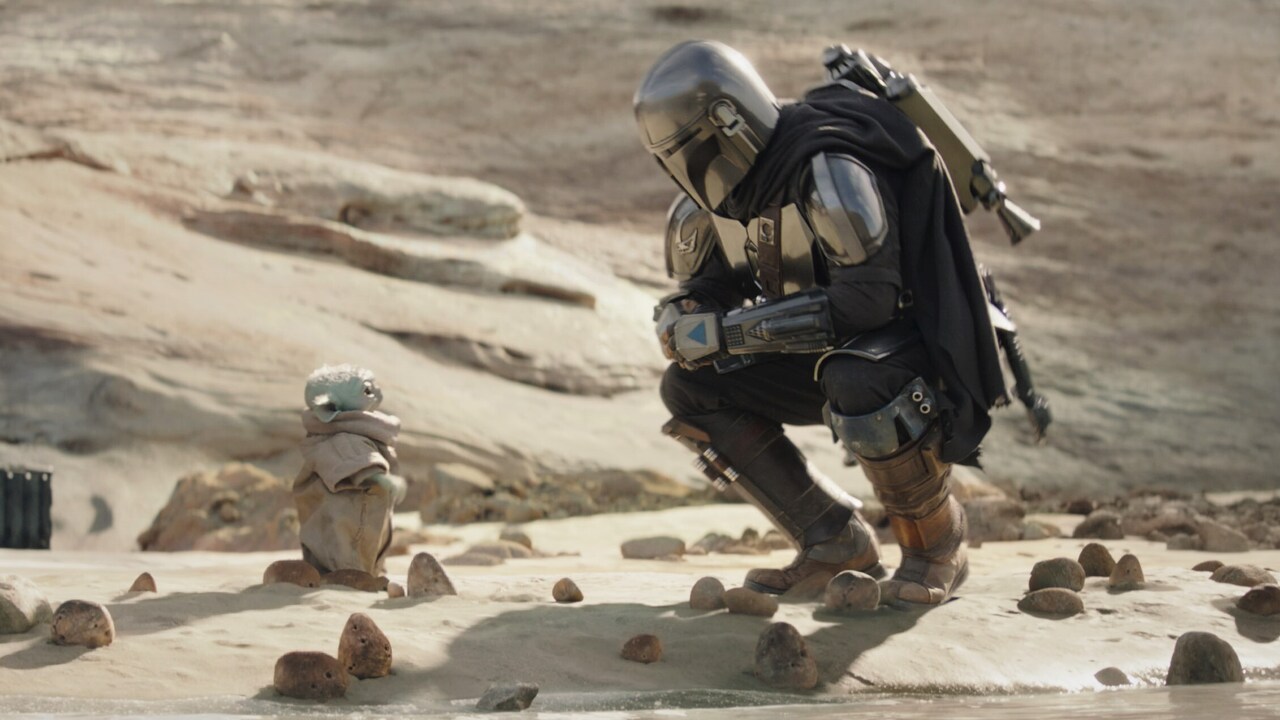
The father-son dynamic between Din and Grogu remains the emotional core of this story, and thankfully, the film never loses sight of that. Underneath all the action, bounty hunting, warlord politics, and New Republic missions, this is still fundamentally a story about a man trying to raise a child while barely understanding his own emotions. Which, honestly… Might be the most universally relatable thing in Star Wars.
The supporting cast is strong, too, particularly Sigourney Weaver as Colonel Ward. She brings exactly the kind of grounded authority this universe occasionally needs—someone who feels competent, battle-worn, politically sharp, and deeply tired of cleaning up galactic disasters caused by arrogant men with fleets. This describes approximately seventy percent of Star Wars history. Weaver fits into the universe surprisingly naturally, and I actually wish the film had given her more to do. Then there’s Jeremy Allen White voicing Rotta the Hutt, which I’ll admit sounded bizarre when I first heard about it. And honestly? It’s still a little bizarre. But it works more often than it doesn’t.
Rotta ends up being one of the movie’s stranger elements tonally—sometimes funny, sometimes weirdly emotional, sometimes feeling like a character imported from a completely different kind of Star Wars story. I never fully settled into him, but I appreciated that the movie at least tried something slightly different instead of giving us another generic Imperial officer with cheekbones and fascist lighting. Visually, the movie looks fantastic in theaters. And I mean genuinely cinematic. That mattered to me.
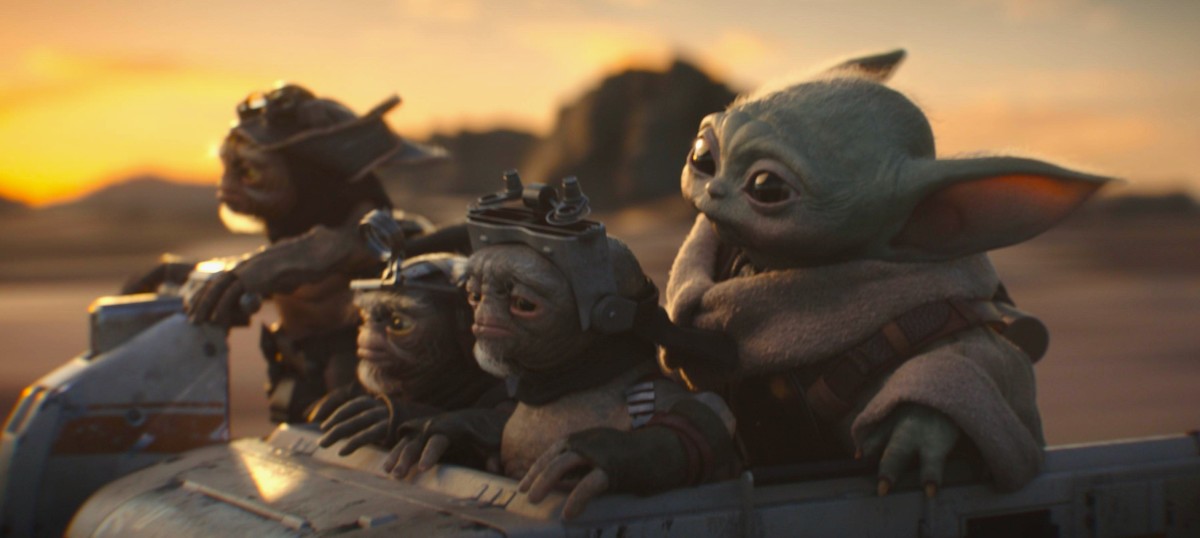
One thing I worried about going in was whether this would simply feel like “a long Disney+ episode with IMAX pricing.” Thankfully, it doesn’t. The scale feels bigger. The environments feel richer. The action sequences breathe more. The sound design absolutely rules in theaters. Blaster fire has weight again. Ships sound massive. Ludwig Göransson’s score feels enormous in the best way possible. There’s an opening action sequence involving a desert ambush that immediately reminded me why the Mandalorian aesthetic works so well on the big screen. Dirty armor. Dust. Silence. Sudden violence. Weird aliens. Practical-looking environments. It felt tactile in a way modern blockbusters often don’t anymore. And honestly? I missed that.
The movie also understands something modern Star Wars occasionally forgets: coolness matters. Din walking through a corridor while alarms flash and the soundtrack quietly builds will not work for me. Sorry. I’m weak. There are also several genuinely great fan-service moments—not the desperate “remember this?” kind, but the satisfying kind that rewards longtime viewers without completely stopping the story to clap at references. The film clearly loves this universe without constantly screaming about it. That balance is important.
Is this a perfect Star Wars movie? No, not even close. And this is where the more conflicted part of my inner Star Wars fan kicks in. For all its emotional sincerity and visual confidence, the movie plays things very safe narratively. Really safe. There’s a noticeable reluctance to fundamentally challenge the status quo or push the larger galaxy forward in a meaningful way. Compared to something like Andor, which constantly interrogates politics, rebellion, fascism, and sacrifice, The Mandalorian and Grogu are much more comfortable being a straightforward adventure story. That’s not inherently bad. But I did leave the theater wishing the movie had just a little more ambition.
The structure also occasionally feels episodic in a way that reminds you this story was born on streaming television. Some sections feel more like connected missions than one fully unified cinematic narrative. I enjoyed almost all of those sections individually, but there were moments where the momentum dipped slightly because the story kept resetting itself into “new location, new problem, new fight.” There’s also one late emotional reveal that absolutely works on a fan level… But logically raises approximately forty-seven questions if you think about it for longer than ten seconds. Naturally, I immediately thought about it for several hours. Because I’m a Star Wars fan, it’s our curse.
Still, despite those flaws, I genuinely had a great time with this movie. More importantly, it reminded me what I personally want from Star Wars at its best—not endless lore homework, not constant franchise setup, not nostalgia weaponized into corporate strategy. Just heart. Adventure. Strange worlds. Lonely people trying to protect each other in a galaxy that keeps demanding violence from them. That’s Star Wars to me. And "The Mandalorian and Grogu" understand that far more often than it doesn’t.
By the time the credits rolled, and Göransson’s score kicked in one final time, I realized something that honestly surprised me: I felt hopeful leaving a Star Wars movie again. Not overwhelmed. Not frustrated. Not exhausted from debating canon logistics in my head. Just happy. And after the last several years of this franchise, that feeling genuinely meant a lot to me.
Final Score- [7/10]
Reviewed by - Anjali Sharma
Follow @AnjaliS54769166 on Twitter
Publisher at Midgard Times
Hi Everyone, after a due consideration, we have decided that we will be open for donations to help us in managing our website. We will be greatful for any kind of amount we receive. Thanks!
— Midgard Times 🎬 (@Moviesr_net) January 4, 2026
PayPal- [email protected] pic.twitter.com/DlNNz5Npm5
Get all latest content delivered to your email a few times a month.
Bringing Pop Culture News from Every Realm, Get All the Latest Movie, TV News, Reviews & Trailers
Got Any questions? Drop an email to [email protected]
 © Copyrights MOVIESR.NET All rights reserved