



There is a particular kind of irony in watching wealthy people try to escape their wealth. They can leave the mansion, change their clothes, take an ordinary job, and insist that they want to be loved for who they are. But money has a rather inconvenient habit of following people around, even when they would prefer it didn't. It determines where they stand, what they can risk, how others treat them and, perhaps most importantly, how easily they can walk away when things go wrong. The Privileged, the 2015 Korean drama also known as High Society, begins with this contradiction and builds two romances around it. The result is a series with an appealing premise, a cast that gives it considerable charm and some genuinely interesting observations about class, even if its storytelling doesn't always have the discipline to make the most of them.
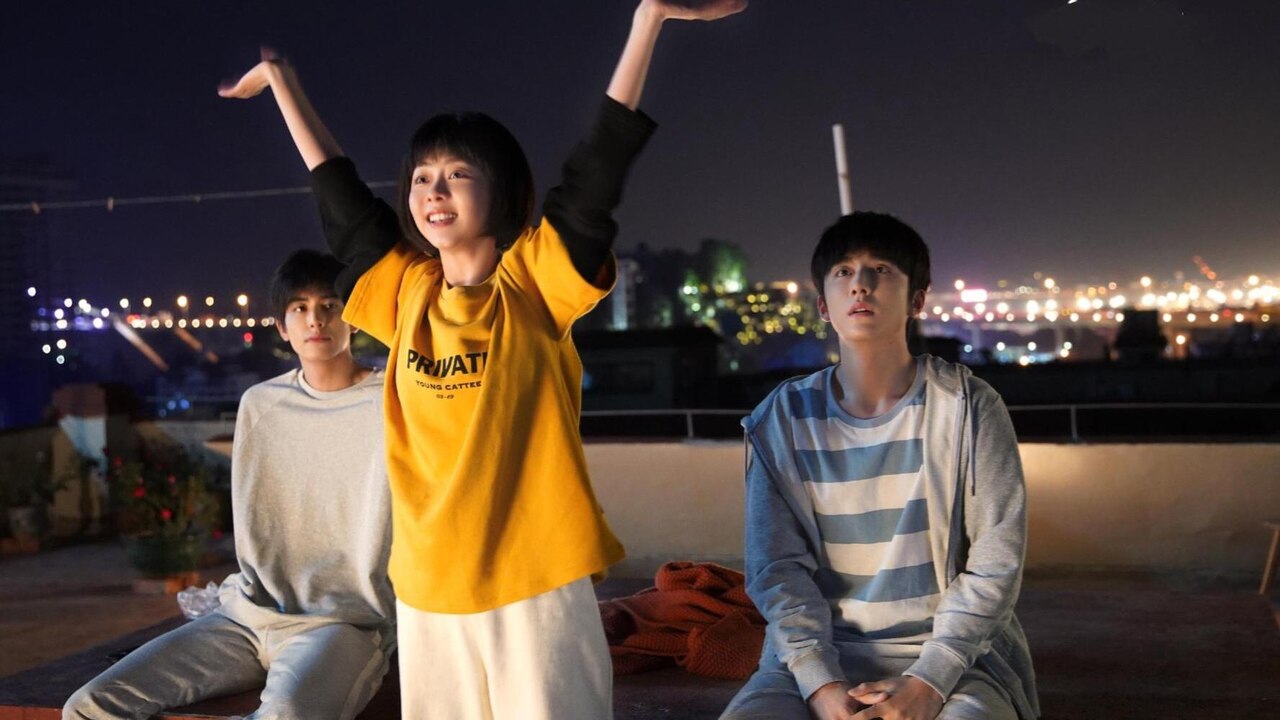
Jang Yoon-ha (Uie) is the youngest daughter of a wealthy chaebol family. Despite having access to extraordinary privilege, she works part-time at the food market in her family's department store, concealing her identity in the hope of finding someone who will love her without knowing her background. There, she befriends Lee Ji-yi (Lim Ji-yeon), an ordinary working woman with a considerably more straightforward approach to life. Their respective romantic interests bring another complication: Yoon-ha becomes involved with Choi Joon-gi (Sung Joon), an ambitious man from a modest background who has his own complicated relationship with wealth, while Ji-yi attracts Yoo Chang-soo (Park Hyung-sik), a rich heir whose carefree attitude conceals the expectations attached to his position.
The premise is familiar enough, but the interesting part is that The Privileged doesn't give us a simple division between wealthy people who are unhappy and poor people who are morally uncomplicated. Almost everyone wants something that their circumstances make difficult to obtain. Yoon-ha wants affection without the influence of her surname. Joon-gi wants upward mobility and sees marriage as one possible route towards it. Chang-soo has money, family connections and a future practically arranged for him, but little freedom to decide what that future should look like. Ji-yi, meanwhile, approaches relationships with a directness that makes her an appealing counterpoint to the calculations taking place around her.
I particularly like the contradiction at the centre of Yoon-ha's story. She wants to be seen as an individual rather than an heiress, which is understandable, but concealing her identity also gives her a certain advantage. She gets to enter an ordinary working environment without having to experience the financial insecurity that makes such work necessary for everyone else. Her experiment with an ordinary life is therefore rather different from actually living one. The show could have interrogated this more sharply. Still, it raises an interesting question about whether people can ever separate themselves from the social conditions that have shaped them. Yoon-ha may want to be loved without her wealth, but she cannot simply pretend that wealth has had no part in making her who she is.
Joon-gi is arguably the more intriguing character in this equation. His ambition makes him difficult to categorise as a conventional romantic lead. He understands how class operates and is prepared to navigate it strategically. His interest in Yoon-ha is complicated by the fact that her background represents precisely the kind of access he has spent his life wanting. This introduces a welcome uncertainty into their relationship. Is affection enough to overcome calculation? Can someone genuinely love another person while also recognising the opportunities that person represents? I found this tension more compelling than the usual romantic misunderstanding, although the series doesn't always sustain the psychological complexity it initially promises.
The other couple, Chang-soo and Ji-yi, often provides the more immediately enjoyable relationship. Park Hyung-sik brings an appealing looseness to Chang-soo, whose privileged upbringing has left him rather ill-equipped for certain ordinary emotional realities. His relationship with Ji-yi gradually exposes the distance between having everything materially and knowing how to build a meaningful connection. Lim Ji-yeon gives Ji-yi a lively presence, and their contrasting personalities create some of the show's lighter, more entertaining moments. Their romance also allows the series to explore class from another direction: Chang-soo may be willing to pursue someone outside his social circle, but his family's expectations make it clear that personal preference and social acceptance are two very different things.
The performances are a significant part of why the series remains watchable. Uie gives Yoon-ha a mixture of determination and vulnerability, while Sung Joon makes Joon-gi's reserved manner difficult to read. That ambiguity works in the character's favour, particularly when the audience is left questioning how much of his behaviour is emotional and how much is strategic. Park Hyung-sik and Lim Ji-yeon have a particularly engaging dynamic, and their pairing gives the drama some much-needed spontaneity. The supporting family relationships add another layer, especially through the expectations placed on the younger generation and the unhappy arrangements that have shaped the older one.
There is also an interesting contrast between the two households and the people who inhabit them. Wealth is presented as a source of security, but also as an institution with its own rules. Family members are expected to protect business interests, maintain appearances and make decisions that preserve the family's position. The children inherit money, certainly, but they also inherit obligations. The series is at its most perceptive when it recognises that privilege can restrict people emotionally even as it expands their practical choices. That said, the drama occasionally comes close to romanticising the very world it wants to examine. Its wealthy characters are surrounded by beautiful spaces and considerable comfort, and the consequences of their privilege can feel rather less severe than the struggles of those without it.
The main weakness is the unevenness of the writing. The initial character dynamics create expectations of a fairly sharp examination of ambition, economic insecurity, and romantic attachment, but the drama sometimes retreats into familiar melodrama. Family conflicts and relationship obstacles recur, and certain developments feel more like mechanisms for delaying resolution than natural extensions of the characters. The series also gives its central relationships more attention than some of the wider family tensions it introduces, leaving parts of its social commentary underdeveloped. With 16 episodes, it has enough room to explore these ideas, but doesn't always use that room particularly well.
Even so, I wouldn't dismiss The Privileged as another disposable rich-versus-poor romance. It has a better question at its centre: if people are shaped by class, can love ever be separated from the advantages, insecurities and expectations that class produces? The show doesn't arrive at a particularly radical answer, and its eventual romantic resolutions are more conventional than its premise might suggest. But its four leads give the question enough personality to remain engaging.
Final Score- [6.5/10]
Reviewed by - Anjali Sharma
Follow @AnjaliS54769166 on Twitter
Publisher at Midgard Times




Hi Everyone, after a due consideration, we have decided that we will be open for donations to help us in managing our website. We will be greatful for any kind of amount we receive. Thanks!
— Midgard Times 🎬 (@Moviesr_net) January 4, 2026
PayPal- [email protected] pic.twitter.com/DlNNz5Npm5
Get all latest content delivered to your email a few times a month.
Bringing Pop Culture News from Every Realm, Get All the Latest Movie, TV News, Reviews & Trailers
Got Any questions? Drop an email to [email protected]


 © Copyrights MOVIESR.NET All rights reserved