


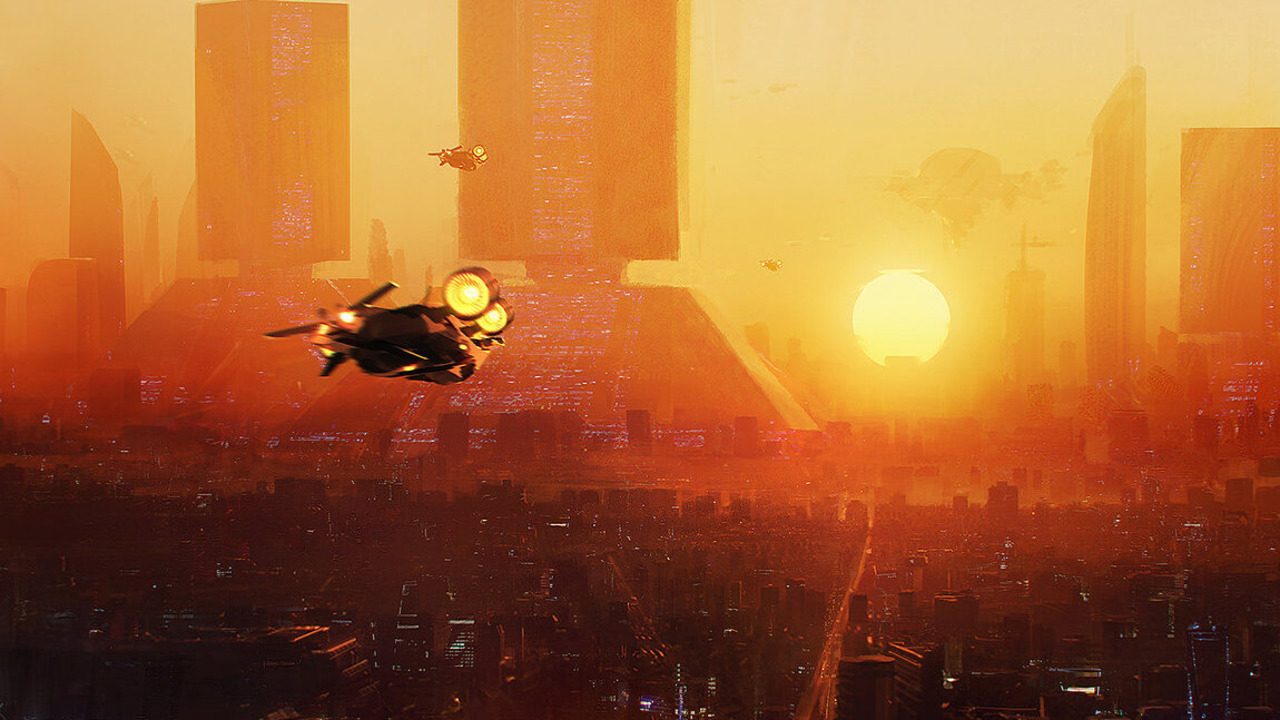
The love of hardware is palpable in Blade Runner 2099. The clacking of keyboards, the whirring of machines, the swooshing of cars as they are thrust upwards into the sky, and the trilling, clicking sounds of a mechanical device used to magnify or pull back from a particular area of video footage for investigative purposes are all quite mechanically seductive. It's a hardware enthusiast's wet dream, and it provides this futuristic dystopia with an aural identity. There is a CRT television with four screens, each viewable from a different side (north, south, west, or east); there is also a phone booth with an LCD screen that allows you to make video calls and receive pictures from the other end (the photograph is printed out inside the booth on your side). The production designers have gone all out to make this world feel lived-in. As in the Blade Runner movies, you do get to see tall skyscrapers lit up at night by advertisements and neon signs, but this series mostly unfolds during the day, in broad daylight. Creator Silka Luisa has aptly referred to Blade Runner 2099 as "sunshine noir." The brightness of daylight makes this dystopian Los Angeles look even more like a junkyard than either of the two films. You can almost smell the rot and pollution in the air—this shabby junkyard of a future looks particularly harsh and unfriendly in daylight.
Alternatively, Blade Runner 2099 is consistently interesting to feast your eyes and ears on, even if its story isn't always terribly interesting. Anyone who has immersed themselves in the dark, rainy noir of Ridley Scott's original sci-fi film and meditated in the bitter cold of Denis Villeneuve's sequel, which is arguably superior to Scott's classic, will find the themes and concerns of Luisa's miniseries to be recycled material. What does it mean to be human in a world where robots, too, look like humans, talk like humans, and even experience the human angst of mortality? How would someone react if they found out that they (or someone close to them) were not made of flesh and blood but coded in binary? Both Scott and Villeneuve have traversed this territory, so it's only natural that you sometimes wish the characters in this show were made aware of the events of the earlier films. Much as Marvel's VisionQuest has its new Vision learn about the experiences of his predecessor through events depicted in earlier installments of the franchise, these characters, too, could have been made to discover that the existential questions they're grappling with and the experiences they believe to be unique to them have already been lived through by others. But to Luisa's credit, she does venture into previously unexplored territory in this expansion of the Blade Runner story, and the biggest twist she brings has something to do with the replicants' inevitable demise.
The implications of this new development are quite fascinating: the process requires alterations at the molecular level, changing the very thing that makes you who you are once it is complete (I will be as vague as possible because the spoiler list is so long that the studio might as well have saved its time and said, "Don't write even a single thing about what happens in the series"). Will you "change" yourself from within to gain, um, the absence of an ending? It's a good idea that Luisa, unfortunately, leaves underdeveloped rather than drilling down on it. It's introduced and then brushed aside without any meaningful exploration of the psychological or fundamental changes that such a profound process would bring about. Luisa also fails to explore the heartbreaking implications of a twist that reveals the person you believed to be your revolutionary leader to be little more than a corporate opportunist. The devastating effect of such a revelation on a devoted follower is another aspect Luisa doesn't bother exploring.
It seems as though the creators first selected their themes and then worked backwards to construct plot threads that would deliver the required messages. Consequently, instead of characters with emotional depth, we get storylines that exist primarily to make the themes emerge neatly. The characters rarely feel as psychologically complicated as the ideas they are made to embody. The series introduces situations that could provoke profound internal conflicts, but its characters seldom get the time or space to grapple with them. Their experiences seem to exist primarily to advance the plot or underline a theme rather than reveal something deeper about the people undergoing them. What's more, Blade Runner 2099 often commits what can be described as "dumb crimes," as is evident in a scene where a Blade Runner, accompanied by other officers, enters an apartment to search for two men based on a tip from a woman in the building. Bizarrely, the replicant doesn't take the woman along to identify the suspects. Instead, he conducts his investigation based solely on the physical description she provides. I was also irked by smaller things, such as a character accidentally stepping on a pair of glasses while cautiously backing away to hide from intruders. These details pull the show down to the level of just another mediocre offering on a streaming service. Couldn't the makers have spared some of their wit and imagination for the writing instead of spending it all on set design?
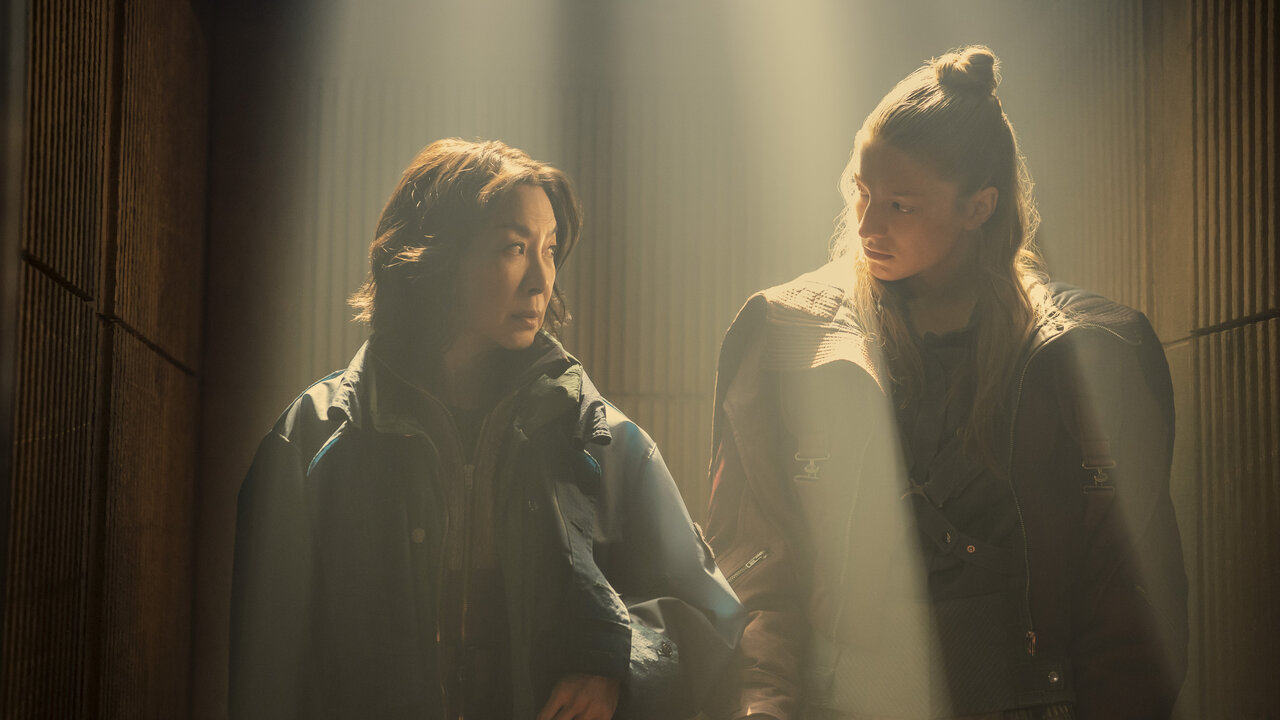
There are also some nods to the movies, such as a close-up of an eye that Blade Runner fans will instantly recognize (that eye, though, comes with a face in the series). There is also a moment when a character hangs precariously from a great height, recalling the scene near the end of the first Blade Runner in which Deckard holds on to a ledge tightly. Joi, who told Officer K in Blade Runner 2049 that he looks lonely, appears in a club repeating the same thing. A character also mentions rain and snow, offering yet another aesthetic reference to Scott's (rain) and Villeneuve's (snow) respective takes on the world created by Philip K. Dick. Curiously, these references can make the series feel more like "borrowed goods" than something conceived and produced with an artistic vision of its own. Still, Blade Runner 2099 is sufficiently serviceable, thanks to its rough, strange architecture and fine lead performances. Michelle Yeoh and Hunter Schafer are more than capable of doing their jobs, though Schafer's Cora often appears so lacking in confidence that you wonder why nobody in the LAPD immediately catches her lies. The show is not as heady as it thinks itself to be, but it's decent enough to help you pass the time. "Not bad" might just be the most precise compliment one can give it. Feel free to check out this cyberpunk dystopia. Just don't expect to be utterly hypnotized by its metallic shine.
Final Score - [5.5/10]
Reviewed by - Vikas Yadav
Follow @vikasonorous on Twitter
Publisher at Midgard Times
Note: All 8 episodes are screened for this review.
Premiere Date: November 25, 2026, on Prime Video


Hi Everyone, after a due consideration, we have decided that we will be open for donations to help us in managing our website. We will be greatful for any kind of amount we receive. Thanks!
— Midgard Times 🎬 (@Moviesr_net) January 4, 2026
PayPal- [email protected] pic.twitter.com/DlNNz5Npm5
Get all latest content delivered to your email a few times a month.
Bringing Pop Culture News from Every Realm, Get All the Latest Movie, TV News, Reviews & Trailers
Got Any questions? Drop an email to [email protected]

 © Copyrights MOVIESR.NET All rights reserved