


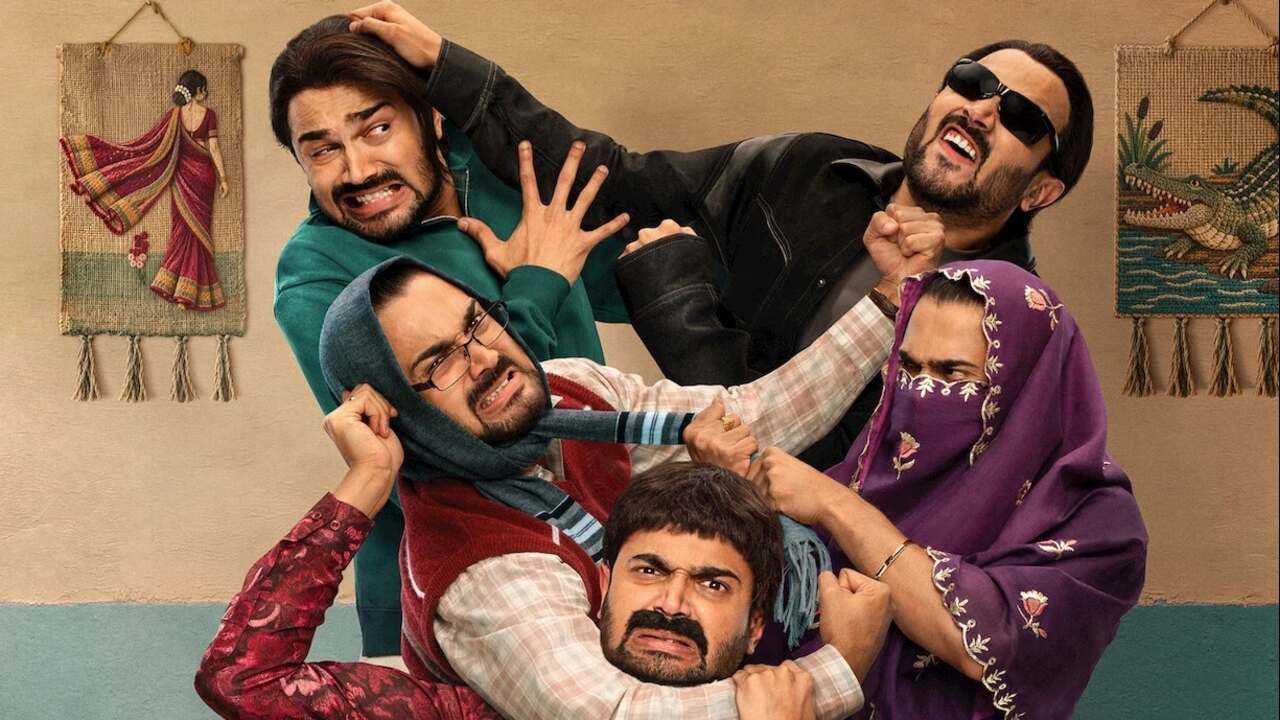
Bhuvan Bam continues to astound me with his multiple, multicolored avatars in Dhindora. I wrote in my review of the first season that it's good news Bam is a good actor; otherwise, the USP of playing multiple characters single-handedly would have been reduced to a shallow gimmick. The way he contorts his face, eyes, and voice to conjure so many personalities from within himself is a fantastic feat of acting. The fact that Bam also happens to have a solid sense of humor is just another of his notable qualities. The unserious, cartoonish world of Dhindora gives Bam plenty of opportunities to let his freak flag fly, and he grabs them with apparent glee. Like its predecessor, Season 2 is packed with a profusion of gags and sight gags, some of which are absolutely, rolling-on-the-floor-holding-my-belly funny. There are naughty plays on words, where, let's say, "Acche karam" is matched with "Acche sperm." There's a scene where a character bows his head and says, "Hey Prabhu," only to find a Prabhudeva poster (the camera pans to reveal a painting of Shiva right beside it). When Titu opens the fridge at his sister Janki's house, he finds a trumpet inside. A sign on the road informs travelers: Village, 11 km. When someone reminisces, "Mai bansuri bajata tha," it's followed by, "Ab toh Bansuri ki shaadi ho gayi hogi." And when a woman says that, for the first time, a man has asked her what she wants, the man responds, "Gurgaon se nahi hun na, isliye."
But Bam, the show's creator and one of its writers, is also an ambitious young man, and that ambition comes through in his propensity to go big and eccentric with both his humor and his storytelling. Hence, there's a James Pond, a talking crocodile (or "Madarmach"), a larger ensemble against which he can play off his eccentricities, and a zeal to incorporate serious issues like caste discrimination, adoption, and patriarchy. Almost every frame is lit up by Bam's infectious energy and his sheer pleasure in doing what he wants with Netflix's budget. It's a feeling one got even from Taaza Khabar, but that show, like Dhindora Season 1, was hampered by a weak directorial hand that didn't know how to channel Bam's "bigness" into a coherent cinematic spectacle. For the first time, with the second season of Dhindora, Bam has collaborated with a new director, Sneha Shetty Kohli, and the change has brought some much-needed improvements (the previous shows were directed by Himank Gaur, and they, to put it mildly, stunk and sank). The difference Kohli makes is apparent from the beginning: Bam seems to have found a filmmaker who understands the very source of his creative powers. Kohli gives Bam's jubilant volatility an amusing outlet, channelling his passions, energy, and excitement into a coherent whole. The result is a season that no longer feels so loose, shaky, or unstable.
I am still not convinced by the mushy good intentions and overly sentimental heartbreaks, but this time, they at least don't bring the story to a halt. There's a constant sense of motion, with a joke always lurking nearby to deflate the sugary, oh-so-cute emotional manipulation (with Gaur, the sappiness almost always led to headaches). In a hospital, for instance, Titu comes across an accountant and a mental patient, both dressed in doctors' uniforms, before meeting the actual doctor, who delivers some bad news about a woman. An elderly couple's "sob story" about receiving threats to vacate their home is humorously "cushioned" by a line about one of the threats being a Sunil Pal stand-up performance. A teary father-son reunion is immediately livened up by talk of strip clubs and private dances. Bam might have learned some lessons from his previous screw-ups, but it's Kohli who helps him apply them effectively this season. Yes, it's risky to draw such definitive artistic conclusions, especially in the case of someone like Bam, who is still at an early stage of his career. However, based on the evidence, one can conclude that Dhindora Season 2 works better than Bam's previous productions. And the most conspicuous difference this time is the person behind the camera. It would therefore be interesting to see Bam work with other filmmakers before drawing a firmer conclusion about his growth as a creator and a performer.
Bam's love for Bollywood is no secret, so it's hardly surprising that the first episode is titled Saajan Chala Sasural, while the last is named La-waaris. Remember that David Dhawan's Saajan Chale Sasural is about a man juggling two women, while Prakash Mehra's Laawaris is about an orphan crossing paths with his biological father, and you'll recognize how the premises of both films have been tweaked for this second season. Titu is married to Kavita (Sanjeeda Shaikh), but he also secretly talks to Chandni. Who is this other woman? Is she his second wife or lover? Then there's the whole business involving an orphanage and orphans meeting their "mother" and "father." Then, of course, there are action sequences, song-and-dance sequences, you-broke-my-heart scenes, and even a training montage. Like a typical mainstream Bollywood hero, Bam gives himself the opportunity to fight, weep, and triumph over evil. He also delivers a message about how a real king lifts his people up. The flavor Bam is going for, then, is what one might call "masala." What he ends up with, however, is something akin to a spoof of "masala," which might be either intentional or unintentional.
There is one area where Bam is still weak: he doesn't write interesting characters. The care and attention he gives his own avatars are conspicuously missing from the others. His multiple personalities are built around distinct quirks, which are further amplified by their individual vocal inflections and expressions. The other characters, by comparison, seem to perform in monotone. They're little more than archetypes (strict dad, gorgeous wife, masculine villain, etc.). This is one area that continues to expose Bam's absorption with himself. He is so preoccupied with "selling himself" as a big-screen lead that he doesn't allow the other actors to stand on the same level. If Bam explodes like a kaleidoscope on screen, the people around him keep hitting the same note throughout the season. No wonder, then, that despite all the steps taken in the right direction, one comes away from Dhindora Season 2 with an experience similar to that of watching a lighthearted Instagram Reel or a YouTube sketch. The authenticity that comes through in Bam's many personalities is missing from the sets and the supporting characters. At best, everybody else is competent enough to fit into this world and do whatever is required of them. In other words, all the world's a stage, and Bhuvan Bam is the only actor. This streak of self-centeredness ultimately prevents even Season 2 from becoming anything substantial. Bam is certainly growing and improving, but for now, Dhindora, like his other shows, remains a showreel for the YouTuber-turned-actor. Bam just needs to start looking beyond himself if he wants to grow as an artist and creator. For now, he can enjoy the fruits of his self-congratulatory and self-satisfied efforts.
Final Score - [6.5/10]
Reviewed by - Vikas Yadav
Follow @vikasonorous on Twitter
Publisher at Midgard Times
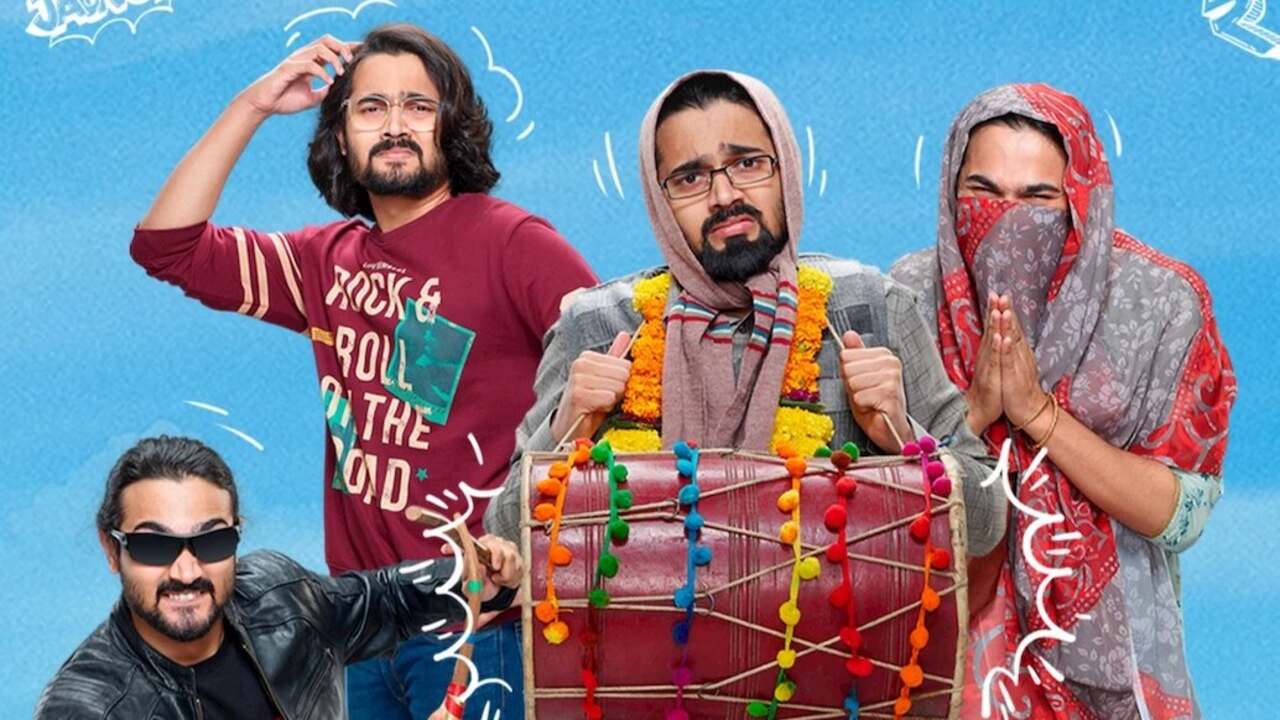
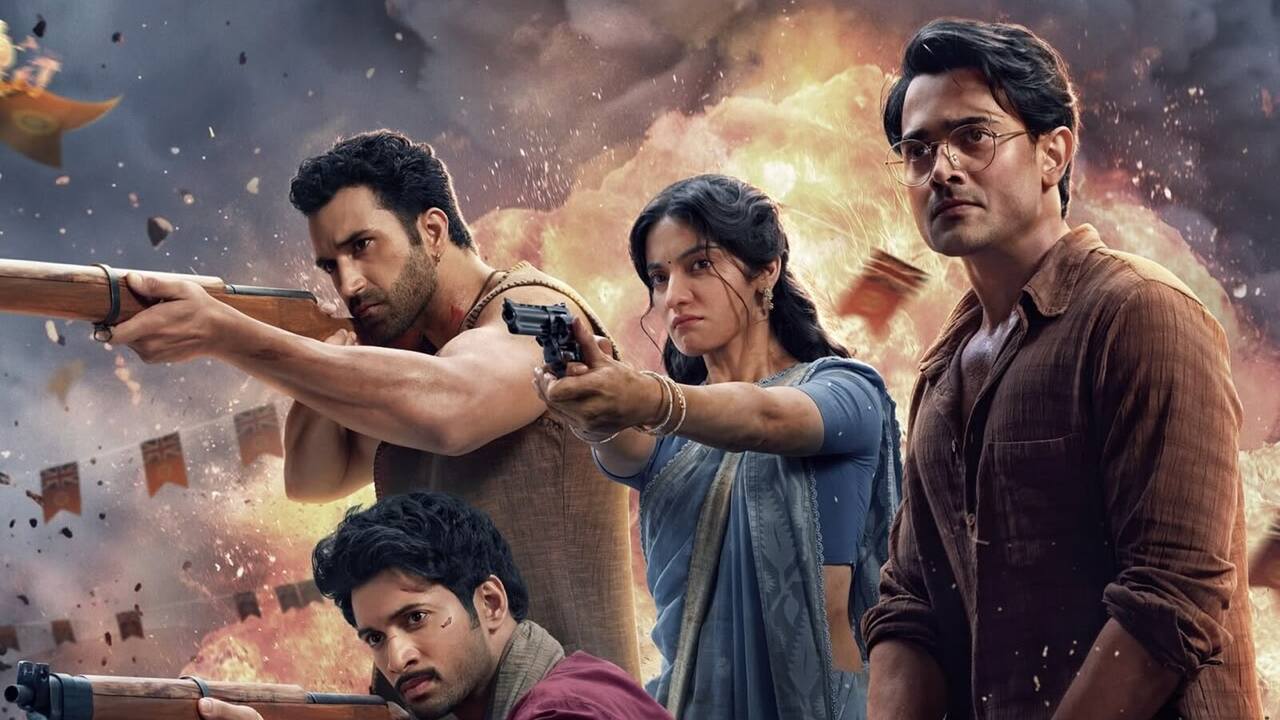
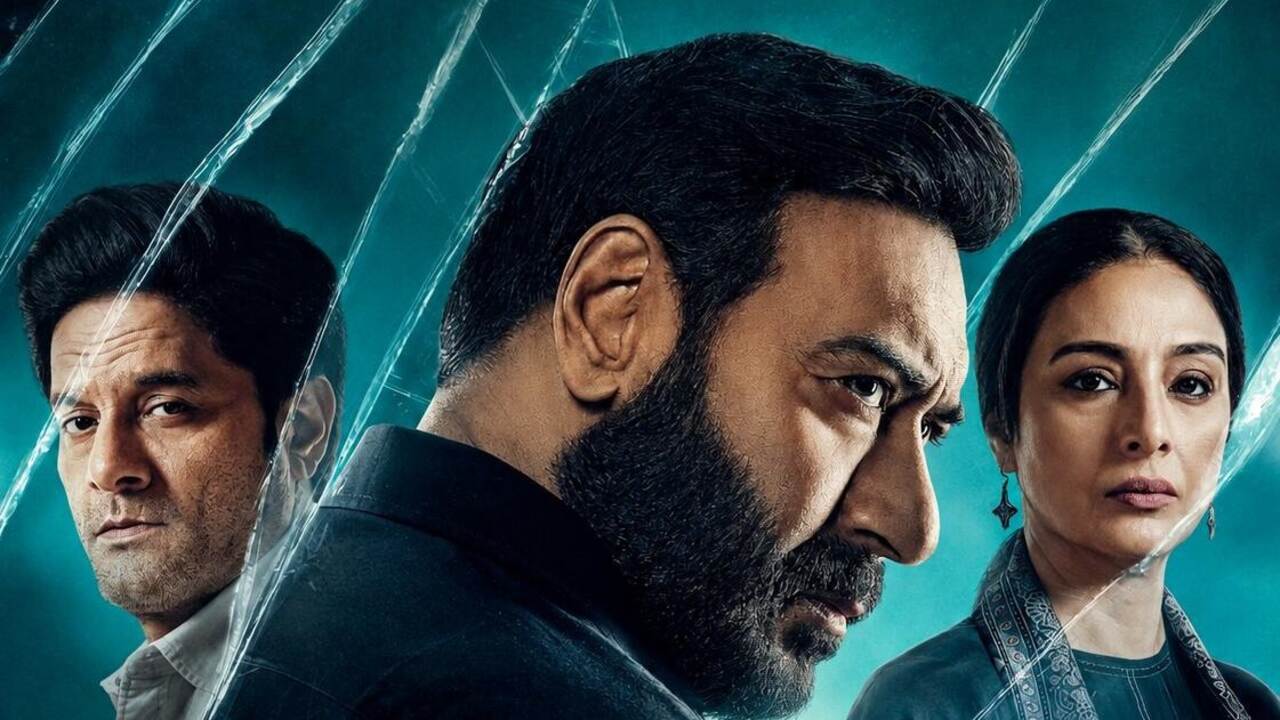
Hi Everyone, after a due consideration, we have decided that we will be open for donations to help us in managing our website. We will be greatful for any kind of amount we receive. Thanks!
— Midgard Times 🎬 (@Moviesr_net) January 4, 2026
PayPal- [email protected] pic.twitter.com/DlNNz5Npm5
Get all latest content delivered to your email a few times a month.
Bringing Pop Culture News from Every Realm, Get All the Latest Movie, TV News, Reviews & Trailers
Got Any questions? Drop an email to [email protected]

 © Copyrights MOVIESR.NET All rights reserved