


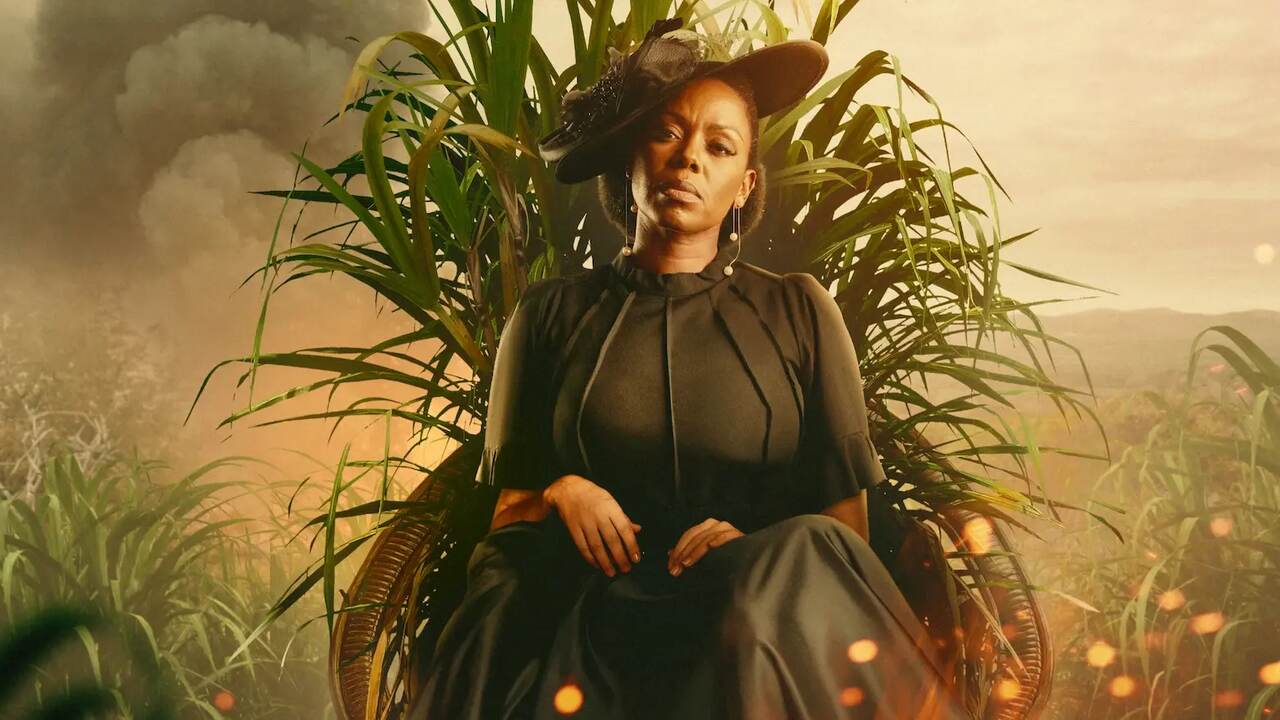
If there is one thing the Ndlovus have demonstrated across two seasons of Blood Legacy, it is that absolutely nobody in this family should ever be allowed to attend a board meeting without legal representation. Season 2 picks up the family saga after the first season's brutal struggle for control of Spear Industries and interestingly changes the central dynamic. The Ndlovu siblings spent much of Season 1 fighting each other for the throne. Now the threat is coming from outside the family as well, forcing Khanyi, Mandla and Siya to confront the deeply inconvenient possibility that they may actually need one another. Netflix's own synopsis frames the season around exactly that tension: the family's business, power and survival are threatened while secrets about the origins of the empire begin resurfacing.
It would have been very easy for Blood Legacy to simply repeat Season 1: another betrayal, another secret, another family member suddenly discovering that someone has been lying to them for twenty years, followed by a dramatic boardroom confrontation. There is certainly still plenty of that here—this is Blood Legacy, not a meditation retreat—but Season 2 gives the conflict a broader dimension. The question is no longer simply who gets Spear? It is increasingly what exactly did the Ndlovus inherit?
That gives the season a more interesting thematic foundation. The family's wealth isn't treated merely as a glamorous backdrop for rich people behaving terribly. The history behind the empire becomes part of the story itself, and the revelations surrounding its origins complicate the family's understanding of what their legacy actually means. The agricultural setting and the sugarcane business also give the series a distinct identity that separates it from the more interchangeable billionaire-family dramas that streaming platforms routinely produce.
At the centre of all this is Xolile Tshabalala as Khanyi, who remains the strongest reason to keep watching. Khanyi has become a considerably more interesting protagonist because she is no longer simply the estranged daughter who returns home and discovers that her family is a nest of snakes. She has been pulled into the machinery of the family business and understands it far better now, but that knowledge comes with its own costs. Tshabalala gives her a combination of authority and exhaustion that works particularly well. Khanyi isn't some effortlessly brilliant corporate superhero. She looks like someone who has realised that being the competent person in a dysfunctional family mostly means everyone gives you more problems to solve.
The sibling dynamics remain one of the show's biggest strengths. Buyile Mdladla's Mandla and Mike Ndlangamandla's Siya continue to provide very different forms of conflict, and the series understands that family loyalty is never particularly straightforward in a dynasty where affection, money and power are permanently tangled together. What I particularly appreciated this season is that the characters aren't simply divided into "good sibling" and "bad sibling." Their motivations keep shifting depending on what is at stake. Someone can be sympathetic in one storyline and infuriating in the next. Someone can make a terrible decision for a reason that is completely understandable. And, naturally, someone can make a terrible decision simply because Blood Legacy requires another terrible decision. That is part of the show's soapier appeal. Because make no mistake: Blood Legacy is a soap opera.
There are conspiracies, affairs, betrayals, political connections, hidden agendas, family secrets, suspicious deaths, and enough conveniently timed revelations to make the Ndlovu family seem incapable of having a normal Tuesday. The season isn't remotely embarrassed by this. Instead, it embraces the melodramatic machinery and occasionally pushes it so hard that I found myself laughing at the sheer audacity of what was happening.
Blood Legacy isn't trying to be Succession with subtitles. It has a different rhythm and a different relationship with melodrama. It is much closer to the long-form family saga, where characters can spend considerable time making increasingly questionable decisions before eventually discovering that consequences exist. Which, judging by the Ndlovus, remains a shocking revelation. The introduction of the A6 syndicate also expands the world beyond the family itself. Rather than making Spear Industries the only battlefield, Season 2 creates the sense that the Ndlovus have become entangled in a much larger network of interests. The result isn't always subtle, but it does prevent the series from becoming entirely claustrophobic.
The supporting cast continues to contribute substantially to the show's appeal. Anthony Oseyemi, Pallance Dladla, Enhle Mbali and the returning ensemble give the series enough competing personalities that even when one storyline slows down, there is usually another character capable of creating trouble somewhere else. Visually, the series continues to benefit from being rooted in South Africa rather than using a generic international corporate aesthetic. The business empire, family homes, landscapes and KwaZulu-Natal setting give the show a sense of place. It looks like a story happening somewhere specific, rather than a collection of expensive rooms in which fictional billionaires discuss fictional problems. That matters because the show's strongest ideas are ultimately about place, inheritance and power. The family isn't merely fighting over money. It is fighting over what the money represents and what their position in society means.
I also think the second season is more confident about its central contradiction: the Ndlovus desperately want to preserve their legacy while simultaneously discovering that the legacy itself may be the source of their problems. That is a much more interesting question than simply asking which sibling gets the CEO chair. The writing doesn't always trust that idea enough. There are times when the dialogue explains things that the story has already made perfectly obvious, and some twists arrive with the subtlety of a fire alarm. But when the series stops announcing its themes and lets the family dynamics speak for themselves, it becomes surprisingly effective. What ultimately keeps Blood Legacy entertaining is that it understands the fundamental appeal of the family saga. You don't watch because you believe these people will suddenly become sensible.
Season 2 isn't a radical reinvention, and it doesn't need to be. It expands the mythology, raises the stakes, and gives the Ndlovu family's history greater significance while retaining the betrayals, secrets, and melodrama that made the first season so bingeable. It is messy. It is occasionally repetitive. It can be gloriously ridiculous. But it is also genuinely entertaining, anchored by a strong central performance from Tshabalala and a distinctly South African setting that gives this otherwise familiar dynasty drama its own identity.
Final Score- [7/10]
Reviewed by - Anjali Sharma
Follow @AnjaliS54769166 on Twitter
Publisher at Midgard Times


Hi Everyone, after a due consideration, we have decided that we will be open for donations to help us in managing our website. We will be greatful for any kind of amount we receive. Thanks!
— Midgard Times 🎬 (@Moviesr_net) January 4, 2026
PayPal- [email protected] pic.twitter.com/DlNNz5Npm5
Get all latest content delivered to your email a few times a month.
Bringing Pop Culture News from Every Realm, Get All the Latest Movie, TV News, Reviews & Trailers
Got Any questions? Drop an email to [email protected]



 © Copyrights MOVIESR.NET All rights reserved