


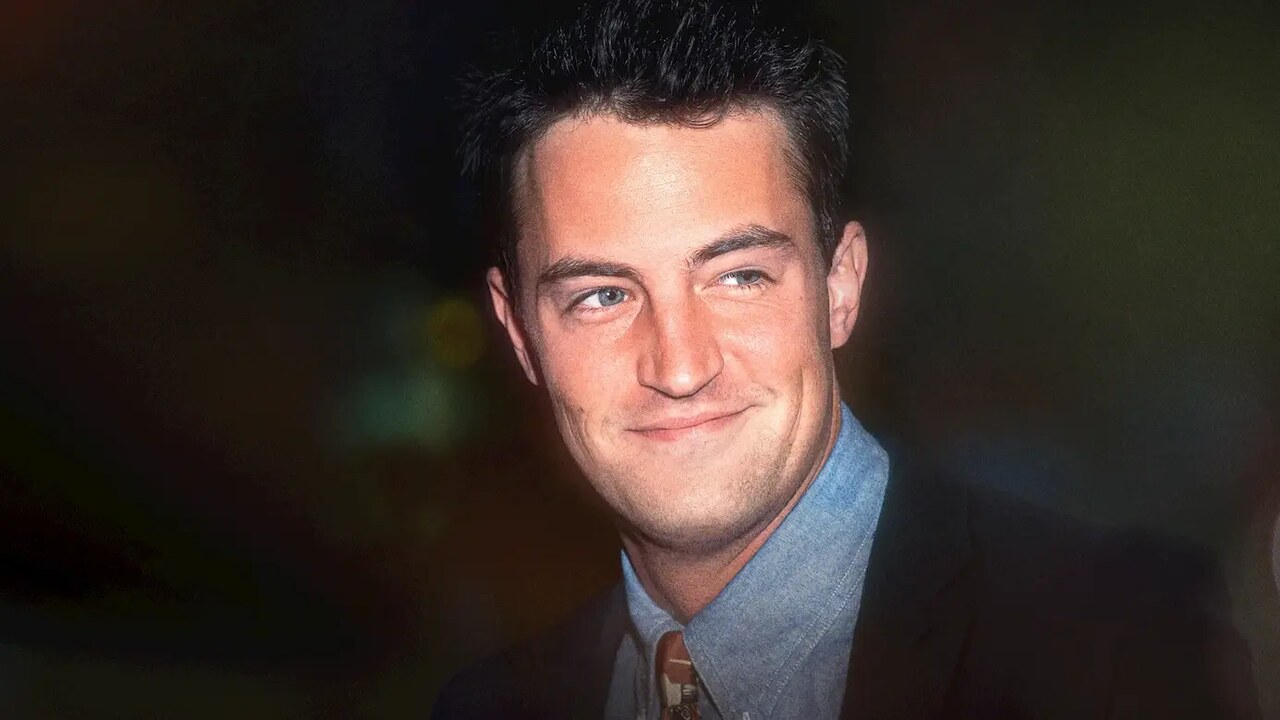
Something about the way audiences remember comedians feels almost cruel. We associate them with the laughter they gave us, sometimes so strongly that we forget the performance was only one part of their lives. A comedian's sadness can become an interesting piece of trivia, a detail that makes their work seem more meaningful in retrospect. When they die, the jokes acquire an additional layer of poignancy. We revisit old performances, notice things we might have overlooked, and wonder whether the person making us laugh was trying to tell us something.
Matthew Perry's story makes that tendency particularly difficult to ignore. Chandler Bing was famously uncomfortable with emotional vulnerability, often responding to sincerity with a joke before anyone could get too close. Perry, meanwhile, spent years speaking publicly about addiction and his attempts to recover from it. The contrast between the character's comic deflections and the actor's real-life struggles is striking, but it would be too easy to treat Chandler as a disguised version of Perry or to assume that every joke concealed a personal confession. The documentary is more interested in the person who existed outside that familiar role, and its strongest moments come when it allows the contradictions in his life to remain unresolved.
The series draws on interviews with Perry's younger half-sister, Mia Perry Bowick, his lifelong friends, former romantic partners, and people who worked with him throughout his career. Private family photographs and archival footage provide a visual record of his life beyond the public appearances and television performances that audiences already know. The result is a portrait assembled from different kinds of intimacy. Some contributors remember a funny, generous friend who could make an ordinary evening memorable. Others describe the exhaustion of watching someone they loved struggle repeatedly with addiction. These accounts do not always sit comfortably together, and that tension is precisely what makes them valuable.
Perry was not simply the troubled actor who played Chandler Bing, nor was he the effortlessly charming celebrity that his most affectionate admirers might remember. He was a person whose relationships, ambitions and personal difficulties could coexist in ways that were not always easy for the people around him to understand. The documentary recognises this without pretending that affection can erase the damage caused by addiction.
The early sections trace Perry's childhood, his complicated family circumstances and his growing interest in acting. Moving between Canada and California, he grew up across two family environments following his parents' separation. The film presents a young man who wanted to succeed, enjoyed making people laugh, and became increasingly determined to establish himself as a performer. His early ambitions eventually brought him to Los Angeles, where the pursuit of acting became inseparable from his desire for recognition.
One of the more revealing ideas running through the documentary is Perry's belief that fame would somehow resolve the dissatisfaction he felt with his life. He had enormous professional ambitions, and his eventual success on Friends gave him almost everything an aspiring actor might imagine wanting. Yet becoming famous did not deliver the lasting contentment he had expected. The series returns to the uncomfortable distance between what Perry thought success would give him and what it actually provided.
The documentary does not suggest that Perry's suffering was somehow inevitable because he became famous, or that success itself was responsible for his difficulties. Instead, it shows how fame and personal vulnerability can exist alongside one another without cancelling each other out. The public saw a successful actor whose comic timing seemed almost effortless. The people closest to him witnessed a more complicated life, one in which periods of stability could be followed by frightening setbacks.
The account of Perry's career inevitably centres on Friends, and rightly so. Between 1994 and 2004, the sitcom gave him a role that would define his public identity for the rest of his life. Chandler's humour was rooted in insecurity, particularly his discomfort with emotional intimacy and his tendency to deflect difficult feelings through sarcasm. Perry's performance gave those characteristics a distinctive rhythm. He could make a single pause or change in delivery funnier than an entire exchange of dialogue, and his timing helped turn Chandler into one of the sitcom's most memorable characters.
There is a sadness in watching those ambitions unfold alongside the account of his addiction. Perry was capable of doing remarkable work, and he continued pursuing professional opportunities even as his personal circumstances became increasingly difficult. Yet the documentary does not reduce his career to a story of wasted potential. That would be unfair to the work he completed or the pleasure he gave audiences. His achievements remain meaningful, even when viewed alongside the experiences that complicated his life. The more difficult material concerns his long struggle with substance use. Perry's addiction was not a brief episode that he overcame before returning to a stable life. It was a recurring problem that affected his health, relationships, and work over many years. The documentary follows the repeated attempts to achieve sobriety, the periods of recovery and the relapses that repeatedly disrupted his progress.
Perry's life did not follow that pattern. He sought treatment, experienced periods of sobriety, and spoke openly about the difficulties he faced. He also relapsed. The documentary's account makes clear how exhausting this cycle could be for him and for the people who cared about him. Mia Perry Bowick is especially important to the series. Her perspective provides a familial account of Perry's life that is distinct from the professional memories offered by his colleagues. As his younger half-sister, she knew him in circumstances that had nothing to do with his celebrity. Her testimony helps establish the difference between the actor the world recognised and the brother whose life became increasingly difficult for his family to navigate.
The friends who appear in the series add another layer to this portrait. Their recollections include the ordinary details that tend to disappear from conventional celebrity biographies: time spent together, private jokes, shared experiences, and the moments when perry's company mattered for reasons unrelated to his fame. Such memories may seem modest beside the scale of his professional success, but they are important because they restore a sense of proportion to the story. Perry was a celebrity to millions of people. To his friends, he was also someone who could be funny, generous, frustrating, and difficult to help. Those descriptions do not need to be reconciled into a single judgement. They are different parts of a life that cannot be adequately understood through either admiration or condemnation alone.
The documentary's treatment of his final years is particularly difficult because audiences already know how his story ends. Perry died in October 2023, aged 54, following the acute effects of ketamine. The circumstances surrounding his death later became the subject of a criminal investigation and prosecutions involving people who supplied the drug and his live-in assistant, Kenneth Iwamasa, who administered the fatal dose.
One of the documentary's more significant limitations is the absence of interviews with Perry's Friends co-stars. Their contributions might have provided a different perspective on the decade that transformed him into an international star. The sitcom was not just a job that happened to make Perry famous; it was a sustained creative collaboration with people who shared his daily professional life during one of the most consequential periods of his career. Their absence does not invalidate the testimony of his family and friends, nor does it make the documentary incomplete in every respect. But it does leave a noticeable gap in the account of the actor's most famous professional achievement. The series has plenty to say about the person behind Chandler Bing, yet the people who shared that experience with him on screen remain outside the conversation.
This is particularly noticeable because Friends occupies such an important place in Perry's story. His performance helped define the series, and the show's success shaped how the world perceived him for the rest of his life. More reflection on that creative environment could have added depth to the documentary's account of his career, especially by distinguishing the experience of playing Chandler from the pressures that came with becoming one of television's most recognisable faces.
The people around Perry had their own lives, responsibilities and limitations. They could offer support, encourage treatment and hope that the next attempt at recovery would be different. They could not make every decision for him, nor could they guarantee that their efforts would produce the outcome they wanted. Recognising those limits does not remove the importance of accountability when people exploit someone's addiction. It does, however, help distinguish responsibility from the impossible expectation that love should always be enough to prevent tragedy.
Matthew Perry made an extraordinary number of people laugh. That achievement should not be diminished by the knowledge that he struggled privately, just as his struggles should not be romanticised because he was famous. The documentary's greatest strength is its recognition that the two facts can exist together. A person can bring happiness to millions and still experience profound difficulty. Neither truth makes the other less real.
Final Score- [7/10]
Reviewed by - Anjali Sharma
Follow @AnjaliS54769166 on Twitter
Publisher at Midgard Times





Hi Everyone, after a due consideration, we have decided that we will be open for donations to help us in managing our website. We will be greatful for any kind of amount we receive. Thanks!
— Midgard Times 🎬 (@Moviesr_net) January 4, 2026
PayPal- [email protected] pic.twitter.com/DlNNz5Npm5
Get all latest content delivered to your email a few times a month.
Bringing Pop Culture News from Every Realm, Get All the Latest Movie, TV News, Reviews & Trailers
Got Any questions? Drop an email to [email protected]


 © Copyrights MOVIESR.NET All rights reserved