


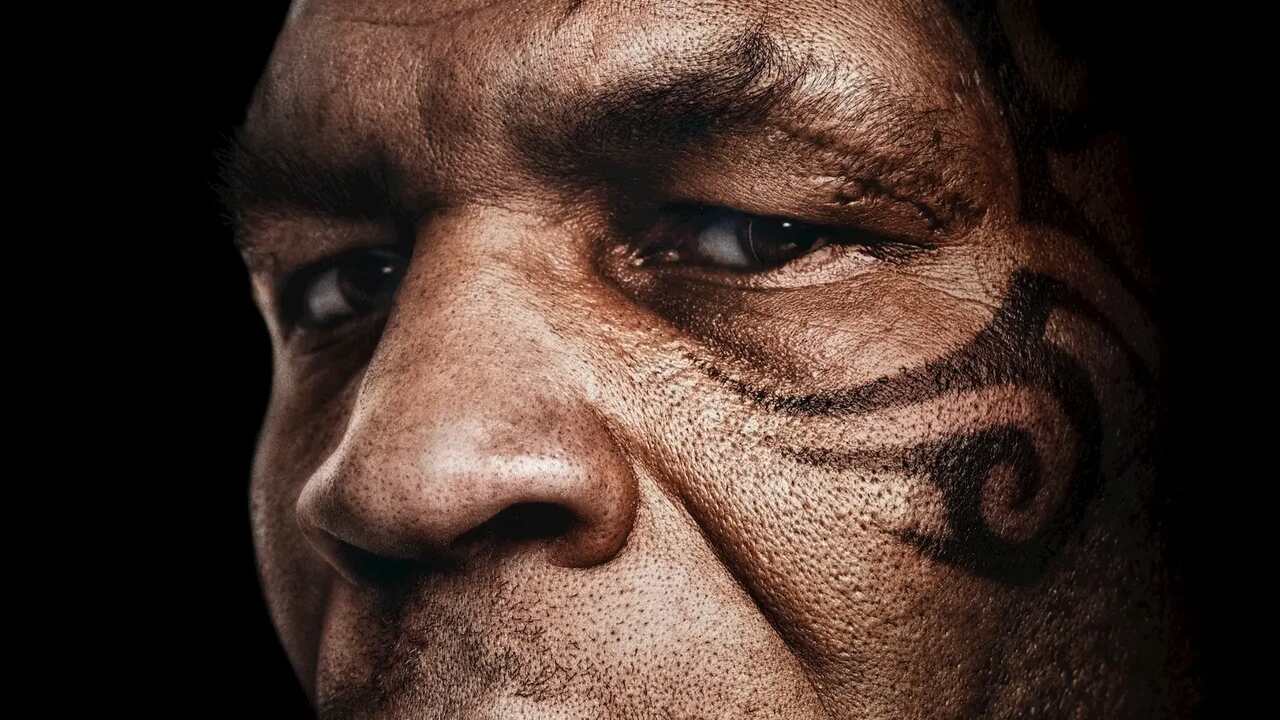
There are few sporting figures whose lives have been as relentlessly dramatic as Mike Tyson's. His rise from a troubled childhood to becoming one of the most feared heavyweight boxers in history would be extraordinary even without everything that followed: the money, the celebrity, the destructive relationships, the prison sentence, the infamous night he bit Evander Holyfield's ear, and the subsequent attempts to construct a life beyond boxing. TYSON has an almost unfair advantage when it comes to source material. Its subject has lived several lifetimes' worth of triumph, disaster, and public reinvention. The frustrating part is that having a fascinating subject and making a genuinely incisive documentary about him are two very different things.
Directed by Floyd Russ, the four episodes — titled “Power,” “Greed,” “Trust” and “Human” — organise Tyson's life around the forces that shaped his rise and contributed to his downfall. The opening episode traces his childhood and his encounter with Cus D'Amato, the trainer who became a crucial mentor and father figure. Subsequent episodes examine his championship years, turbulent personal life, criminal conviction and imprisonment, before turning towards retirement and recovery.
The early material is among the most compelling because it helps explain the origins of Tyson's extraordinary intensity without reducing his entire life to a psychological diagnosis. His relationship with D'Amato is particularly important. The trainer recognised a young man with enormous physical potential and helped give that potential direction, instilling the belief that Tyson could become a champion. Their relationship offers a persuasive account of how discipline, mentorship and an intense desire to prove oneself can transform a life. It also establishes a recurring tension: Tyson's extraordinary success was built partly on the guidance of someone who understood him, yet that guidance could not insulate him from everything that followed.
The boxing footage is naturally a major attraction. Tyson's fighting style was spectacular in its own way: explosive combinations, terrifying speed, head movement, and an ability to overwhelm opponents before they could establish themselves in a fight. Watching the young Tyson in the ring is a reminder that his reputation was not manufactured by publicity alone. He was an exceptional heavyweight whose performances could make a contest feel decided almost as soon as it began. The documentary's account of his rise has an inherent momentum, and the contrast between the young champion's extraordinary physical confidence and the older man's reflections gives the material an additional layer.
But I wanted more from the sporting analysis. Tyson's career deserves more than a collection of highlights and a retrospective explanation of his psychological state. His technique, tactical strengths, vulnerabilities, and changing performances could sustain an entire documentary on their own. How did opponents begin to adapt to him? How did his preparation and training change? What happened when he encountered fighters who could survive his early pressure and force him to work outside his preferred rhythm? The documentary has a remarkable athlete at its centre, but it sometimes seems more interested in the mythology surrounding him than in the boxing itself.
The documentary becomes much harder to assess when it turns to Tyson's personal controversies. His marriage to Robin Givens, his relationships with the people around him, his financial troubles, and his criminal conviction are essential parts of his biography. Leaving them out would produce an incomplete portrait. Including them, however, is not the same as examining them critically. This is where the series becomes troubling.
Tyson was convicted of rape in 1992 and sentenced to prison. He has continued to deny the allegation, but the conviction is a documented part of his history. A documentary can present its subject's perspective, investigate the circumstances, and allow viewers to understand how he remembers events. What it cannot responsibly do is let that perspective become the default version of reality without sufficiently examining the seriousness of the case and its consequences.
The series' handling of this material has drawn criticism for leaning too heavily towards Tyson's own account and giving insufficient weight to the gravity of his actions. That criticism gets at a fundamental problem with personality-driven documentaries: access can easily be mistaken for insight. Having the central figure speak candidly about his life does not guarantee that the resulting portrait will be balanced. Sometimes access simply means the filmmaker has been allowed to get very close to the person whose story they are telling, without necessarily maintaining the distance required to interrogate it.
I don't think a documentary about Tyson needs to approach him with hostility. Nor should it dismiss the possibility that people can change. But there is a difference between understanding a person's history and allowing that history to soften the way their actions are presented. His childhood, his experiences of violence, his addiction, and the pressures of fame can provide context. They do not automatically absolve him of responsibility.
The same tension appears in the series' treatment of addiction and recovery. Tyson discusses his struggles with cocaine and alcohol, including near-fatal overdoses, and describes the experiences he believes helped him change his life. This material can be genuinely affecting. There is value in hearing someone acknowledge the damage caused by years of destructive behaviour and reflect on the possibility of living differently. Tyson's willingness to discuss his vulnerability also complicates the public image of the invincible fighter.
Yet the documentary occasionally appears too comfortable with the language of personal transformation. Recovery is compelling television, but it can become a convenient narrative endpoint: the troubled man confronts his demons, discovers a new perspective, and emerges with a greater understanding of himself. Real life is rarely so tidy, particularly when the story involves harm to other people. A person's recovery matters, but it does not erase the experiences of those affected by their earlier actions.
The series' attempts to connect Tyson's personal evolution with his broader legacy therefore feel uneven. I was interested in his reflections on ageing, fatherhood and the person he wants to be now. I was less convinced when those reflections seemed to carry the weight of a resolution. Self-awareness is valuable, but a documentary should be able to examine the limits of self-awareness as well. A person can sincerely regret aspects of their past while still presenting an incomplete account of what happened.
There are also some peculiar editorial decisions. The documentary's use of Donald Trump defending Tyson's character is an especially jarring inclusion, drawing attention to the celebrity networks surrounding Tyson rather than necessarily deepening our understanding of him. It is the kind of moment that makes you wonder whether the filmmakers are interested in examining the machinery of celebrity or simply adding another recognisable name to an already crowded story.
Across four hour-long episodes, there is certainly no shortage of material, but the series' structure can feel more comprehensive than analytical. The familiar progression from troubled childhood to extraordinary success, excess, collapse and redemption provides a clear framework, yet it also risks making a complicated life feel predetermined. The audience is encouraged to see each development as part of a single narrative arc, even when some events deserve to be examined on their own terms rather than absorbed into a story about personal destiny.
Still, I wouldn't dismiss TYSON outright. Tyson remains a fascinating interview subject, and the documentary offers valuable access to his memories, relationships, and understanding of his own life. The contrast between the fearsome young boxer and the older man reflecting on his choices is compelling. The archival material is an obvious strength, and the series succeeds in reminding viewers why Tyson became such a significant figure in sport and popular culture.
My problem is not that the documentary wants viewers to understand Tyson. It is that understanding him sometimes seems to take precedence over scrutinising the way his story is told. The most interesting version of this series would have held both ideas in view: that Tyson is an extraordinarily gifted athlete who has endured genuine hardship, and that his achievements and suffering do not place him beyond accountability. TYSON is compelling, uncomfortable, and frequently frustrating. It gives us a great deal of material to consider, but it doesn't always do enough with it.
Final Score- [6.5/10]
Reviewed by - Anjali Sharma
Follow @AnjaliS54769166 on Twitter
Publisher at Midgard Times


Hi Everyone, after a due consideration, we have decided that we will be open for donations to help us in managing our website. We will be greatful for any kind of amount we receive. Thanks!
— Midgard Times 🎬 (@Moviesr_net) January 4, 2026
PayPal- [email protected] pic.twitter.com/DlNNz5Npm5
Get all latest content delivered to your email a few times a month.
Bringing Pop Culture News from Every Realm, Get All the Latest Movie, TV News, Reviews & Trailers
Got Any questions? Drop an email to [email protected]

 © Copyrights MOVIESR.NET All rights reserved